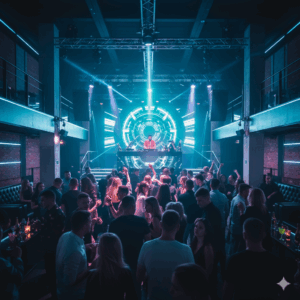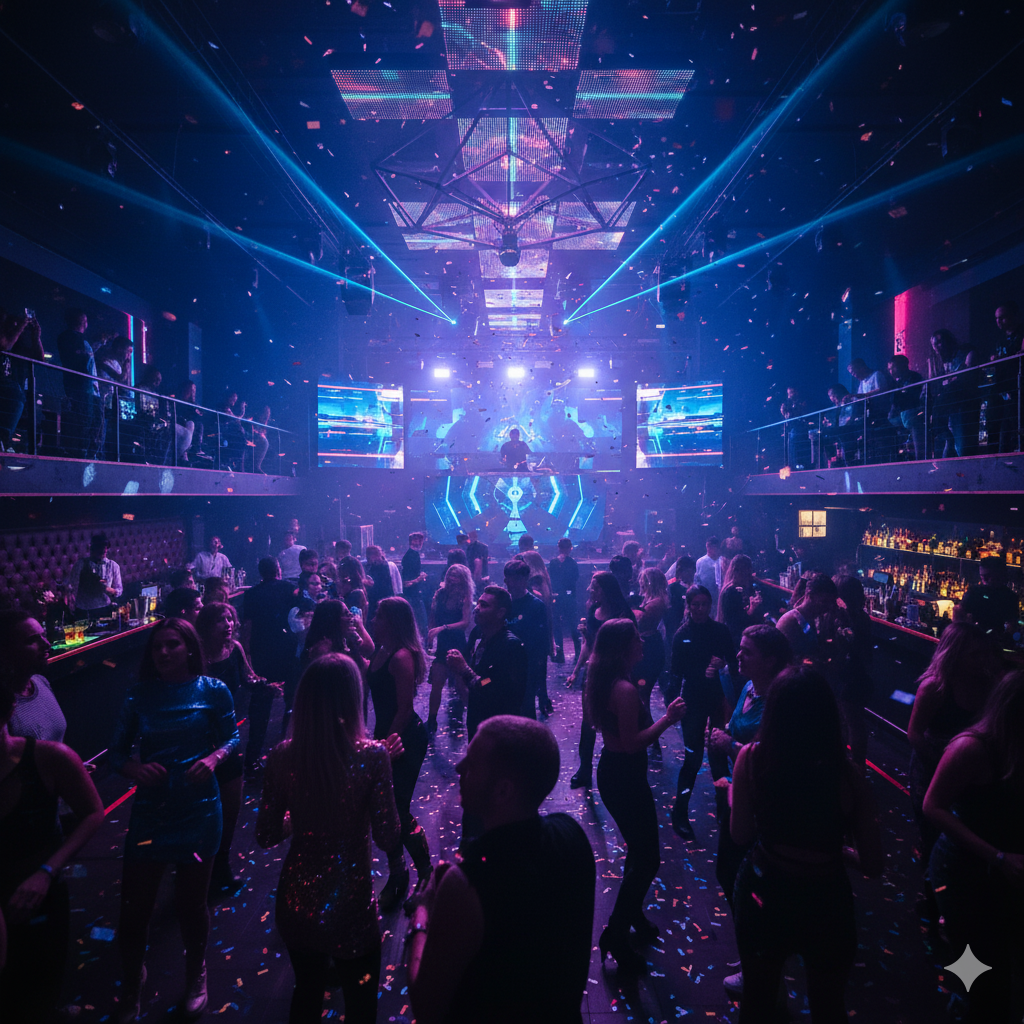
If you want to enjoy Tokyo dance clubs smoothly, start by choosing the right neighborhood (Shibuya vs. Shinjuku), then confirm the club’s entry rules and payment style before you go.
Many venues check photo ID and commonly set the baseline at 20+ for night events; some places are fully cashless and expect card or e-money at the door.
This guide explains how the night is structured, what “door charge” means in Tokyo, how to book VIP tables, and the Japanese phrases that help you communicate politely.
Tokyo’s dance-club culture is built around a clear “flow”: entrance → ID check → wristband or stamp → ticket/door charge → one-drink system → dance floors and side spaces (lounges, smoking rooms, stairs, and corridors that manage movement). The layout is not accidental; it is an urban “night infrastructure” that shapes how strangers share space safely and efficiently.
Compared with many cities, Tokyo clubs often feel “organized”: staff guide the queue, rules are posted, and the venue itself is designed to separate roles—front desk, security, bar service, floor management, and VIP hosting. This institutional structure makes nightlife predictable (in a good way) even if you don’t speak much Japanese.
Service content is straightforward: DJ-led dance floors, bar service, sometimes multiple rooms for different genres, and optional table/VIP plans that create a semi-private “home base” inside a busy crowd. Your biggest success factor is planning: know the area, bring ID, and pick a venue whose music and “entry system” match your night.
Table of Contents
1. Where should you start in Tokyo dance clubs?
2. How do you access top areas?
3. What prices, time, and eligibility should you expect?
4. Which venue types and music styles fit your night?
5. How do reservations, etiquette, and phrases work?
1. Where should you start in Tokyo dance clubs?
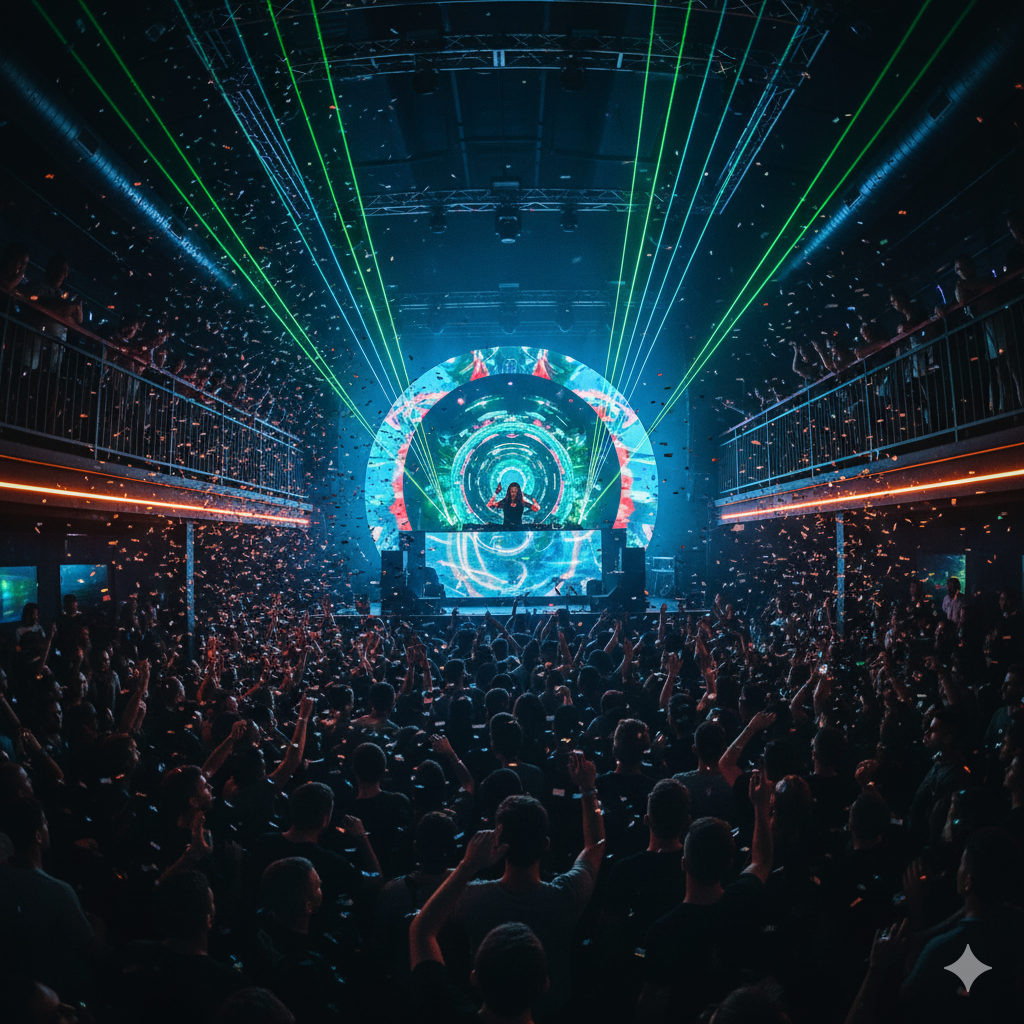
1-1. Shibuya: high density, easy venue-hopping
Shibuya is one of the simplest areas to “learn Tokyo club logic” because venues are close together and the crowd is used to newcomers. A classic example is WOMB (Dogenzaka/Maruyamacho side), known for its long-running role in electronic music culture in Shibuya (official overview here:
WOMB official website (Japanese)).
In the same broader Shibuya zone, clubasia describes itself as a long-standing venue (established in 1996) built around the idea of accepting “all genres,” supporting live shows and DJ nights in one flexible space:
clubasia official website (Japanese).
1-2. Shinjuku (Kabukicho): big-scale nightlife, one building can be “the night”
Shinjuku’s Kabukicho area is built for late-night movement: big stations, many exits, and a strong concentration of entertainment venues. ZEROTOKYO positions itself inside the Tokyu Kabukicho Tower as an “entertainment junction” with multiple floors and frequent event scheduling:
ZEROTOKYO official website (Japanese).
If your goal is a “single destination” that still gives you variety (different rooms, different vibes), Shinjuku-style complexes can reduce friction: fewer street decisions, more in-building choices.
1-3. Your first-night checklist: music, rules, and comfort
Tip: For your first club night, pick a venue with clear English-friendly pages (fees, access, VIP info). Then choose the music first (techno/house vs. all-mix) and treat the “system” (ID, payments, dress rules) as part of the experience—not a barrier.
Many Tokyo clubs emphasize a predictable entrance process. For example, WOMB’s FAQ explains how door charges are presented on event pages and that same-day tickets are often available at the venue:
WOMB FAQ (English).
2. How do you access top areas?
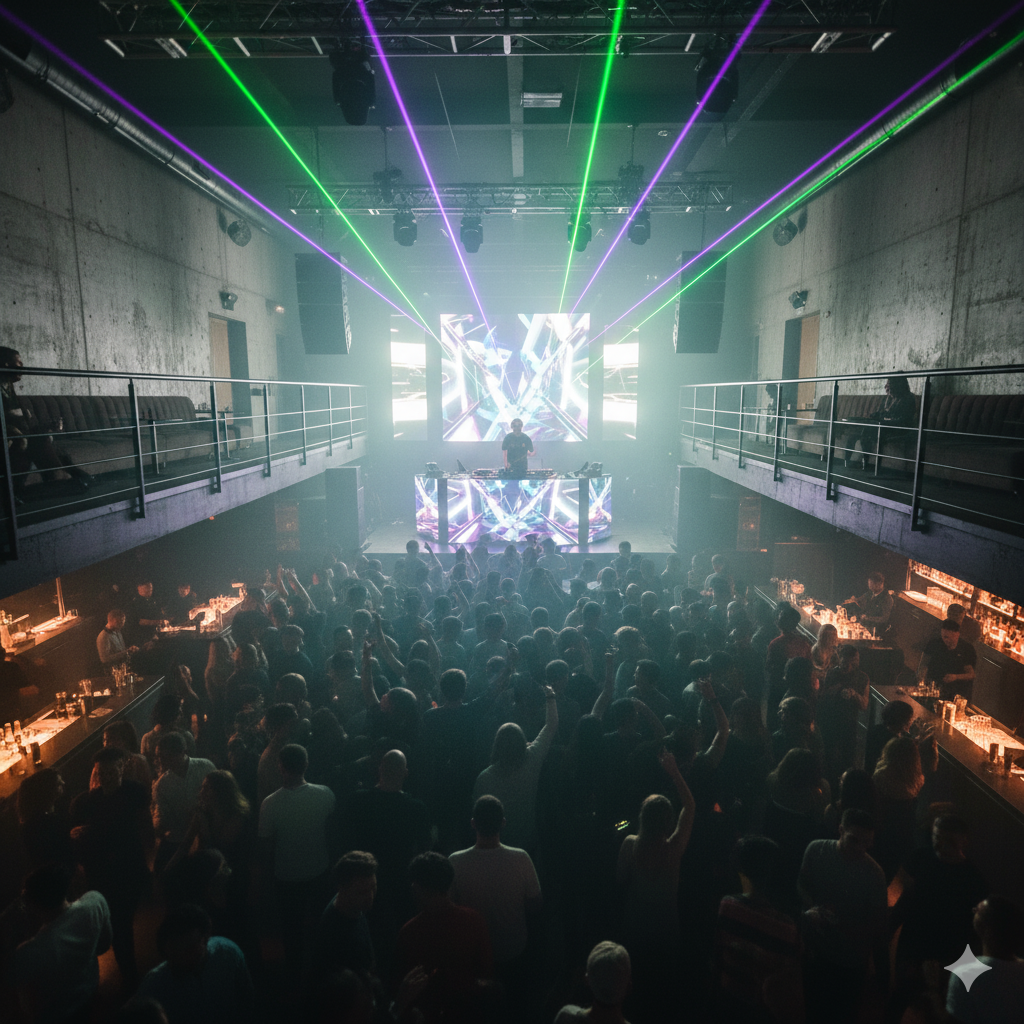
2-1. Shibuya walking logic: Dogenzaka and the “five-way” landmark
WOMB’s access page describes a route that uses Dogenzaka as the backbone—walk up for about “5 minutes,” then turn into a smaller street before the final short straight:
WOMB access (Japanese).
clubasia’s access instructions also lean on Shibuya’s classic “Dogenzaka” orientation: go up from Hachiko exit, turn at a major intersection (near a convenience store landmark), then walk down toward the venue:
clubasia access (Japanese).
2-2. Shinjuku Kabukicho: “tower access” and short transfers
ZEROTOKYO’s access page lists walking times from major stations: Seibu-Shinjuku is 1 min, Shinjuku is 7 min, and Shinjuku-sanchome is 8 min:
ZEROTOKYO access (Japanese).
This is a good “meeting-point” solution for groups, because the area has multiple station choices and clear landmarks.
2-3. Roppongi vs. Shibuya vs. Omotesando: choose by vibe, not prestige
Tokyo nightlife is not one single “club street.” Different districts signal different expectations: Shibuya leans casual and dense; Omotesando/Aoyama can feel curated and sound-focused; Shinjuku can feel large and spectacular.
VENT positions itself as a techno/house specialist and highlights a high-end sound system and clear entry rules (20+ with photo ID; sandals not acceptable):
VENT official website (Japanese).
※参考情報(editor’s note):The official site may occasionally be unstable to load; if so, check again later or use the venue’s own schedule/contact pages when available.
Table 2: Access & Hours
| Station / Area | Walk Time | Hours (official) | Area (JP Link) |
|---|---|---|---|
| Shinjuku / Kabukicho (ZEROTOKYO) | 1–8 min (depending on station) | Varies by event schedule | Official website (Japanese) |
| Shibuya / Dogenzaka (WOMB) | ~5 min (Dogenzaka route) | Check each event page | Official website (Japanese) |
| Shibuya (CLUB CAMELOT) | 5 min (multiple lines) | Event-dependent | Official website (Japanese) |
| Shibuya / Maruyamacho (clubasia) | Route-based (see access) | Open times vary by event (often late) | Official website (Japanese) |
| Shibuya / Udagawacho (TK NIGHTCLUB) | — (check map) | 22:00–4:30 (daily) | Official website (Japanese) |
Numbers shown are taken from each venue’s own access/system pages. Always confirm the specific date’s schedule, because Tokyo club nights are often “event-based.”
3. What prices, time, and eligibility should you expect?
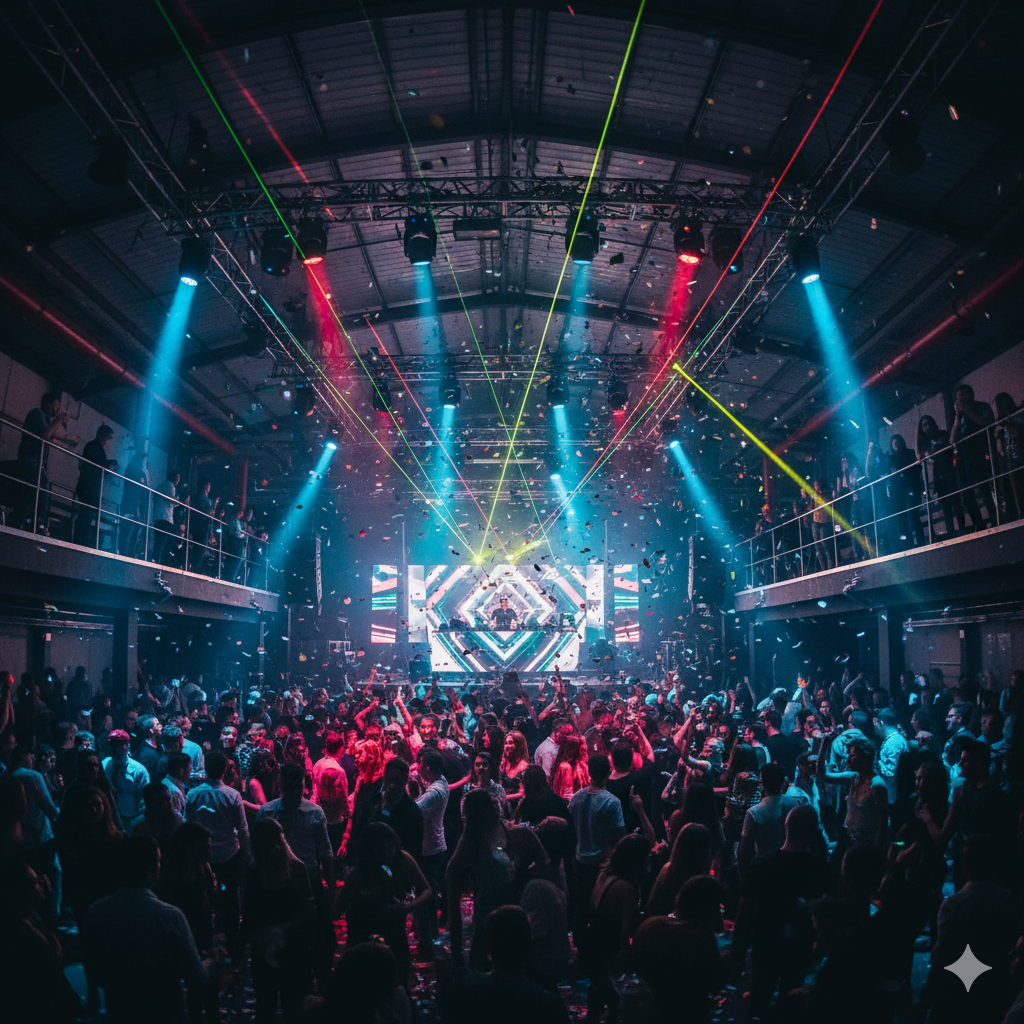
3-1. Door charge in Tokyo: “DOOR,” “ADV,” and the one-drink logic
The most practical rule is: treat the event page as the source of truth. WOMB’s FAQ explains that “DOOR” charges listed on the event page are the same-day ticket prices, and that advance tickets may be optional depending on the event:
WOMB FAQ (English).
Some venues publish a day-by-day entrance fee table. TK NIGHTCLUB shows “Today’s ENTRANCE FEE,” including time bands (22:00–24:00 vs. 24:00–4:30) and a “/1D” notation (one drink):
TK NIGHTCLUB official website (Japanese).
3-2. Eligibility and ID: why “20+” matters at night
Many Tokyo clubs treat night events as adult-only. For example, clubasia states that entry for those under 20 is not allowed for night events and asks for a photo ID at entry:
clubasia access (Japanese).
WOMB’s FAQ similarly notes that under-20 guests are generally not admitted during club hours and that ID is checked before admission:
WOMB FAQ (English).
ZEROTOKYO’s system page states that entry is for 20+ and explains that all guests are subject to ID checks:
ZEROTOKYO system (Japanese).
3-3. On-site costs: lockers, drinks, and VIP plans
Even if your entry includes a drink, you’ll want a small “mobility budget” for lockers and extra drinks. WOMB lists coin lockers at ¥300 / ¥600 and a cloak bag at ¥500 (with capacity for about 2–3 people’s belongings). It also lists drink starting prices: soft drinks from ¥500, shots from ¥600, and beers/cocktails from ¥700:
WOMB FAQ (English).
If you want a seated “base,” VIP plans can be structured and time-limited. CLUB CAMELOT’s VIP page repeatedly notes a 2 hours system for tables and shows multiple plan price points (event-dependent):
CLUB CAMELOT VIP (Japanese).
Table 1: Venue Types & Base Fees
| Venue Type | Typical Fee | Session Time | Area (JP Link) |
|---|---|---|---|
| All-mix “today fee” style (TK NIGHTCLUB) | Door + 1 drink from ¥500–¥3,600 (time band / category) | 22:00–4:30 | Official website (Japanese) |
| Event-based flagship (WOMB) | Varies by event (“DOOR” posted on event page) | Late-night club hours (event-based) | Official website (Japanese) |
| Multi-floor entertainment complex (ZEROTOKYO) | Varies by event (tickets / system rules posted) | Event schedule dependent | Official website (Japanese) |
| Versatile club/live house (clubasia) | Varies by event (genre-flexible nights) | Often opens late (see event pages) | Official website (Japanese) |
| VIP-table heavy “3-floor” venue (CLUB CAMELOT) | VIP plans shown; general entry varies by night | VIP often 2 hours per table | Official website (Japanese) |
“Conclusion → numbers → source” rule: for fixed numbers (hours/lockers/drinks), the official pages above provide the exact values; for event-based entry, the event page is the real “price board.”
Table 4: On-site Add-ons (Lockers & Drink Baselines)
| Item | Typical Cost | Why it matters | Official (JP Link) |
|---|---|---|---|
| Coin lockers (WOMB) | ¥300 / ¥600 | Stay hands-free on the floor | Official website (Japanese) |
| Cloak bag (WOMB) | ¥500 | Useful for coats and bags | Official website (Japanese) |
| Drink baselines (WOMB) | From ¥500 (soft), ¥600 (shots), ¥700 (beer/cocktail) | Quick budget reference after entry | Official website (Japanese) |
These figures are explicitly listed by WOMB and are useful as a “minimum cost baseline” even when other clubs don’t publish full menus publicly.
4. Which venue types and music styles fit your night?
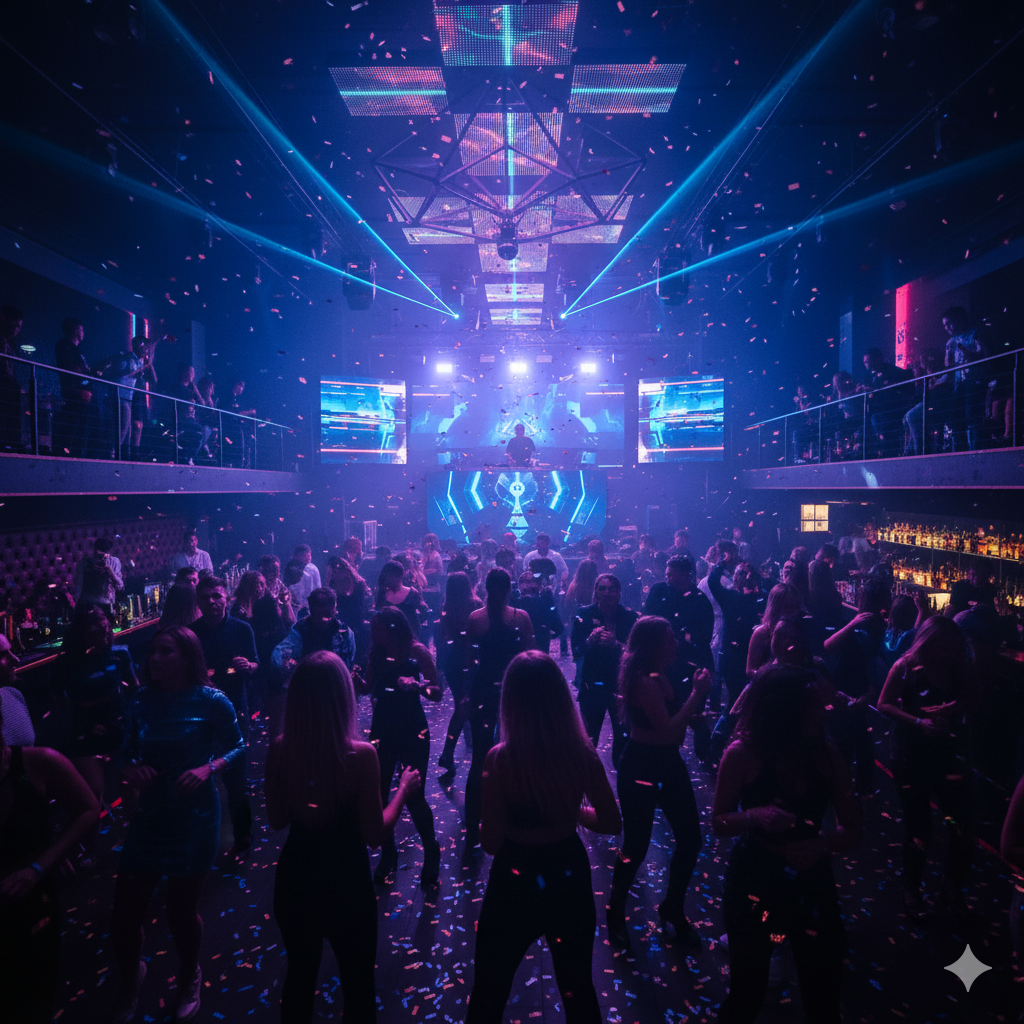
4-1. Event-first clubs: the night is the lineup
“Event-first” venues treat each night as a distinct product: different promoters, different crowd mixes, different door charges. WOMB’s structure (event pages, “DOOR” notation, and guidance on advance vs. same-day tickets) reflects this model:
WOMB FAQ (English).
This model rewards planning. If you like a specific DJ or label night, you can align your schedule precisely. If you just want “any party,” it can be unpredictable—so check the lineup.
4-2. Multi-room / multi-floor venues: variety without taxi rides
Some venues build variety into architecture. CLUB CAMELOT describes its interior as divided into 3 floors with different concepts and genres (EDM, house, hip-hop, R&B):
CLUB CAMELOT official website (Japanese).
ZEROTOKYO’s VIP page also describes distinct floor identities (e.g., a dance-floor “ring,” lounge-like balcony views, and a main hall framed by large LED visuals):
ZEROTOKYO VIP (Japanese).
4-3. Genre-flex venues: live + club as a Tokyo hybrid
Tokyo nightlife often blends “club” and “live house” traditions. clubasia’s official overview emphasizes versatility—live performances, DJ sets, dance events, receptions—under a “welcome all genres” concept:
clubasia about (Japanese).
Tip: If you’re visiting as a traveler, “genre-flex” venues can be the easiest entry point—less pressure to know the local scene beforehand, more chance to find your corner (dance floor, bar, side room) once you arrive.
5. How do reservations, etiquette, and phrases work?
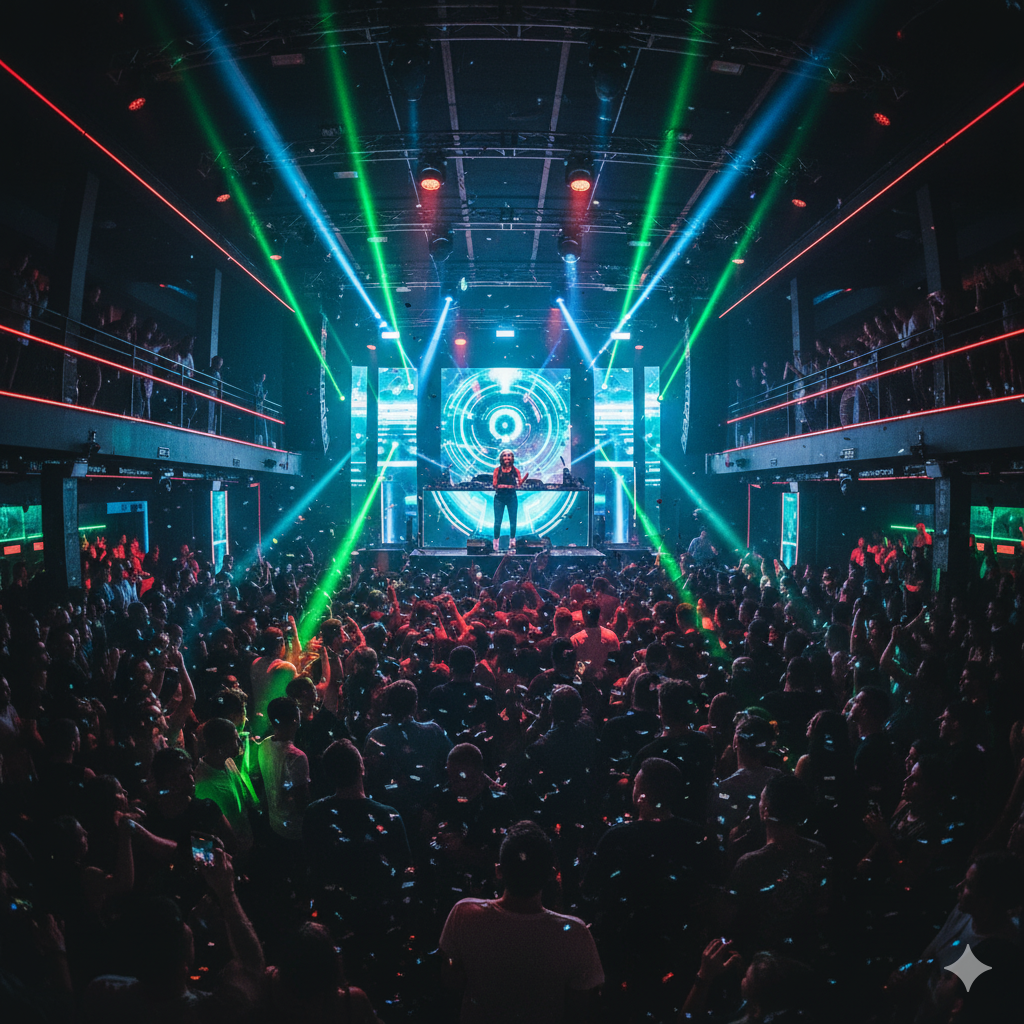
5-1. Reservation patterns: door entry vs. VIP table
For standard entry, WOMB states that advance tickets are often not required and you can purchase a same-day ticket at the entrance (event exceptions apply):
WOMB FAQ (English).
VIP is different: it’s designed to reduce friction (entry, seating, staff support). ZEROTOKYO’s VIP page lists reservation methods (online via event pages, phone, LINE) and notes that VIP plans vary by event:
ZEROTOKYO VIP (Japanese).
CLUB CAMELOT’s VIP page shows a structured table system with a 2-hour baseline and distinct weekday/weekend plan frames:
CLUB CAMELOT VIP (Japanese).
WOMB also offers a Premium Lounge reservation flow through its reservation page:
WOMB reservation (Japanese).
5-2. Etiquette: the “organized crowd” mindset
Tokyo clubs are often friendly to visitors, but they expect cooperation. Typical norms include:
- Bring photo ID and show it smoothly at entry (clubs often check everyone).
- Follow posted dress guidance. For example, clubasia notes restrictions such as sandals for men, and asks for photo ID at entry:
clubasia access (Japanese). - Assume re-entry is not guaranteed. WOMB explicitly states no re-entry once admitted:
WOMB FAQ (English). - Respect the venue’s payment style. ZEROTOKYO states it is a cashless venue (with limited exceptions like coin lockers):
ZEROTOKYO system (Japanese).
Notice: If you only carry cash, you may have problems at venues that run cashless entry and in-venue payments. Check the venue’s “System” page before you go (e.g., ZEROTOKYO’s cashless policy).
5-3. Useful Japanese phrases (plain, polite, and effective)
Tokyo nightlife works best when you keep communication short and polite. Here are practical phrases (no slang):
- Sumimasen (すみません): “Excuse me / sorry” (万能)
- Kore, daijōbu desu ka?(これ、大丈夫ですか?): “Is this okay?” (ID, dress, payment)
- Nyūjōryō wa ikura desu ka?(入場料はいくらですか?): “How much is the entry fee?”
- Wan dorinku-tsuki desu ka?(ワンドリンク付きですか?): “Does it include one drink?”
- Kādo wa tsukaemasu ka?(カードは使えますか?): “Can I use a card?”
- Yoyaku shiteimasu(予約しています): “I have a reservation.”
- Namae wa ____ desu(名前は____です): “My name is ____.”
Table 3: Reservation & Eligibility
| Method | Lead Time | Eligibility | Official (JP Link) |
|---|---|---|---|
| General entry (door ticket) | Same-day is often possible | Night events commonly 20+ with photo ID | Official website (Japanese) |
| VIP table (Camelot) | Book ahead for peak nights | Table system often 2 hours per booking | Official website (Japanese) |
| VIP booking (ZEROTOKYO) | Online / phone / LINE (event-based) | Entry is 20+; ID checks | Official website (Japanese) |
| Venue rules check (cashless / dress) | Before leaving your hotel | Some venues are cashless; dress is staff-judged | Official website (Japanese) |
This table focuses on what actually blocks entry: ID, payment method, and the table system. Always confirm “today’s event” pages for the final rules.
6. Summary and Next Steps
Tokyo nightlife is exciting, but it can feel “procedural” if you’re visiting for the first time: you need the right neighborhood, the right music, and the right entry plan—especially when door fees change by event, some venues prefer cashless payments, and ID checks are strict. The good news is that once you understand the system, Tokyo dance clubs become one of the easiest nightlife scenes in the world to navigate. Your night becomes a series of simple decisions: Shibuya for dense venue-hopping, Shinjuku for big-scale productions, and Omotesando/Aoyama for a more curated sound-and-crowd experience.
SoapEmpire helps you turn that complexity into a clear plan. We organize the essentials (entry fees, access routes, and venue rules) in plain English so you don’t waste your best hours scrolling and guessing. If you’re comparing Shibuya clubs versus Shinjuku nightlife, or choosing between techno-focused rooms and all-mix dance floors, we frame it with practical outcomes: how long it takes to get there, what you will need at the door, and what type of crowd the venue tends to attract. We also help you plan timing around the “late-night reality” in Tokyo—when to arrive, when it gets crowded, and when it’s smarter to secure a table instead of fighting for space.
Our advantage is coverage and support. SoapEmpire is a Japan-based nightlife portal that tracks major cities nationwide, and we treat reservations as a service problem, not a gamble. For travelers and residents who want a smooth experience, SoapEmpire offers a 24-hour booking support service for only $10, which is ideal when you need help communicating details, confirming a VIP table, or aligning your plan with the venue’s system and schedule. You can explore our main site at SoapEmpire, then use our guides to combine Shibuya clubs, Shinjuku nightlife, and techno nights into one coherent route.
The result is simple: fewer surprises, less friction at the door, and more time actually dancing. For reservations or inquiries, please contact us via the inquiry form.
6-1. A simple “one-night plan” you can copy
- Step 1: Decide your base: Shibuya (walkable) or Shinjuku (big complex).
- Step 2: Check the club’s official pages for access + system (ID, cashless, dress).
- Step 3: Pick “door entry” (flexible) or “VIP base” (structured, often time-limited).
- Step 4: Bring photo ID, a payment method that works for cashless venues, and locker money.
6-2. SoapEmpire resources for Tokyo nightlife planning
Continue your planning with these SoapEmpire pages (internal links):
6-3. FAQ
Q1) How much money should I bring for a basic club night in Tokyo?
A) Plan for a door charge plus extra drinks and a locker. Many clubs are event-priced, but you can use published baselines like WOMB’s drinks (from ¥500–¥700) and lockers (¥300–¥600) to set a minimum budget:
Official website (Japanese).
Q2) Do I need to book in advance?
A) Often no for general entry—some venues sell same-day tickets at the door (check the event page). VIP tables are commonly booked ahead and may have a 2-hour system:
WOMB FAQ /
CLUB CAMELOT VIP.
Q3) What ID do I need, and is 20+ strict?
A) Many night events are 20+ and check photo ID for everyone. WOMB and clubasia both describe photo ID checks and under-20 restrictions for night events:
WOMB FAQ /
clubasia access.
Q4) Are Tokyo clubs cashless?
A) Some are. ZEROTOKYO states it is a cashless venue (with limited exceptions like coin lockers). Check the venue’s “System” page before you go:
ZEROTOKYO system.
If you’re interested in visiting any of these places, SoapEmpire offers a 24-hour booking support service for only $10.
Just send the store name, preferred time, and your name (nickname is fine) to:
takuma@skylinks-inc.com.
We’ll take care of your reservation quickly and smoothly.