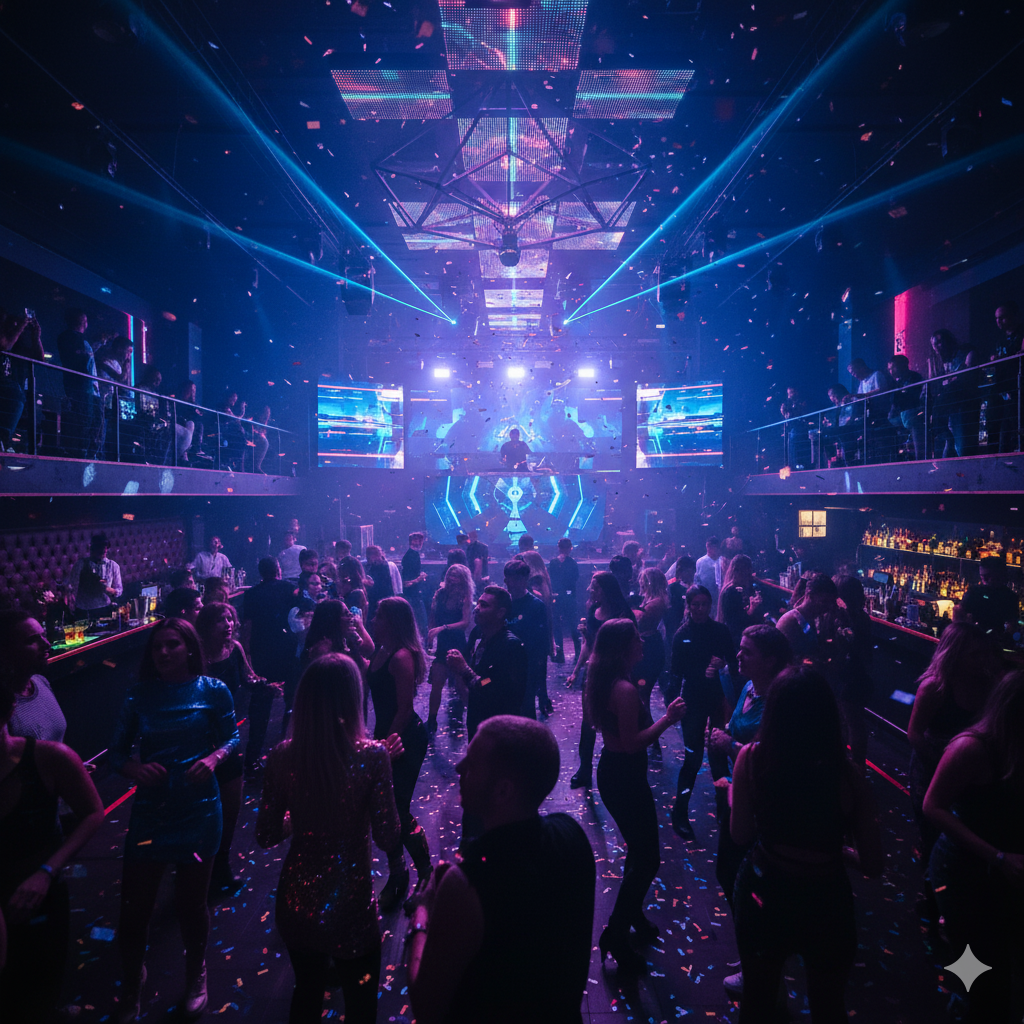
If you want a smooth night at a tokyo dance club, choose your district first (Shibuya / Roppongi / Shinjuku / Ginza), then confirm the venue’s system (fees, hours, cashless, ID).
Many major venues require ID checks and have clear rules for entry and dress—reading official pages before you go saves time and stress.
This guide explains how Tokyo clubs are structured, where to go, how to get in, what it costs, and how to book VIP tables with practical Japanese phrases.
A Tokyo dance club is not just “a bar with loud music.” It’s a managed night space: you enter through a controlled flow (queue → ID check → payment → wristband/stamp → locker → floor),
and the venue design separates roles and moods (main dance floor, edge-of-floor bar negotiations, VIP seating, smoking zones where allowed). That organization is the culture—Tokyo clubs
often prioritize predictable movement, safety-of-flow, and keeping the energy consistent.
Tokyo’s tourism authority also points out that the most active nightlife scenes are concentrated in Roppongi, Shibuya, and Shinjuku, which is why most first-timers do best by picking one of those hubs. Source:
GO TOKYO nightlife (Japanese).
Below, you’ll find district logic, access planning, fees and rules, venue types (including techno/house specialists), and reservation etiquette.
1. Where should you start when choosing a Tokyo dance club?
2. How do you access top Tokyo dance club areas?
3. What do prices, hours, and ID rules look like?
4. Which venue types and music styles fit your night?
5. How do reservations, etiquette, and useful phrases work?
1. Where should you start when choosing a Tokyo dance club?

1-1. District “personality”: Shibuya vs Roppongi vs Shinjuku vs Ginza
Start with geography because Tokyo nights are built around station hubs and walkable clusters:
- Shibuya: dense venue clusters and easy “plan B” switching; good for first-timers who want flexibility.
- Roppongi: international crowds and stronger VIP-table culture; good if you want a polished “dress up” night.
- Shinjuku: late-night intensity and large-scale entertainment facilities; good if you want a big destination venue.
- Ginza: refined club-lounge positioning and early-to-late hours; good for a cleaner, more “social venue” vibe.
Conclusion: If you only have one night, choose the three biggest nightlife hubs first (Roppongi / Shibuya / Shinjuku). Source:
GO TOKYO nightlife (Japanese).
1-2. A simple “first night” decision tree
Use the goal-first approach (it prevents you from ending up in the wrong neighborhood):
- Want easy venue-hopping? Choose Shibuya and stay within a tight walking circle.
- Want VIP tables and bottle service? Choose Roppongi, and consider reserving ahead.
- Want a huge “entertainment complex” club? Choose Shinjuku and commit to one destination venue.
- Want techno/house identity? Choose venues that highlight their sound system and curated programming.
1-3. Why Tokyo clubbing feels organized (and how to use that to your advantage)
Tokyo clubs often publish rules and “systems” clearly (fees, cashless policies, ID requirements). That transparency is part of how the night stays smooth.
For example, ZEROTOKYO publishes that guests must be 20+ and that ID checks are required, plus it details accepted ID types. Source:
ZEROTOKYO system (Japanese).
Tip: Before you pick a club, open the official “SYSTEM / FAQ / POLICY” page. In Tokyo, knowing the rules is part of the experience—and it helps you enter quickly.
2. How do you access top Tokyo dance club areas?

2-1. Shibuya access: cluster strategy and short walks
Conclusion: Shibuya is great for first-timers because many venues are close enough to switch quickly if lines are long or the music isn’t your mood.
For example, WOMB publishes an official access page and describes a walk of about 5 minutes from the “109” area up Dogenzaka. Source:
WOMB access (Japanese).
2-2. Shinjuku access: destination venues with clear station links
Conclusion: Shinjuku clubbing is often “destination-first” (you pick one big venue and stay longer).
ZEROTOKYO publishes walk times such as 1 minute from Seibu-Shinjuku Station and 7 minutes from JR Shinjuku Station. Source:
ZEROTOKYO access (Japanese).
T2 SHINJUKU also publishes access guidance like JR Shinjuku West Exit 3 minutes and Seibu-Shinjuku 1 minute. Source:
T2 SHINJUKU official (Japanese).
2-3. Roppongi and Ginza access: station exits and “door-to-venue” flow
Conclusion: Roppongi venues often optimize quick entry from specific exits—use official guidance rather than guessing.
V2 TOKYO emphasizes Roppongi station access and publishes system details on its official site. Source:
V2 TOKYO official (Japanese).
For Ginza, RAISE has an official listing (Tokyu Plaza Ginza) that publishes day-by-day hours like Fri 20:00–4:00 and Sat 21:00–4:00, plus the floor location. Source:
Tokyu Plaza Ginza tenant page (Japanese).
Notice: If you plan to stay until late, decide your “exit plan” early (taxi/ride-hailing, or leaving in time for your preferred route). This keeps the end of the night calm.
Table 1: Access & Hours (Official examples)
| Hub / Venue | Walk Time (published) | Hours (published) | Area (JP Link) |
|---|---|---|---|
| Shibuya / WOMB | About 5 minutes from the “109” area (route described). | Event-based; confirm schedule before you go. | Official website (Japanese) |
| Shinjuku / ZEROTOKYO | 1 min (Seibu-Shinjuku), 7 min (JR Shinjuku). | Event-based; check system and calendar. | Official website (Japanese) |
| Shinjuku / T2 SHINJUKU | 3 min (JR Shinjuku West Exit), 1 min (Seibu-Shinjuku). | Publishes 22:00–LAST (closing varies). | Official website (Japanese) |
| Ginza / RAISE (Tokyu Plaza Ginza) | Inside Tokyu Plaza Ginza; building access varies by entrance. | Example: Fri 20:00–4:00, Sat 21:00–4:00 (Mon/Tue closed). | Official website (Japanese) |
Hours and walk times are safest when taken from official access/system pages; always re-check on the day (special events can change schedules).
3. What do prices, hours, and ID rules look like?

3-1. Entry fees: think “time tiers,” not one fixed price
Conclusion: Many Tokyo dance clubs publish different prices for early vs late entry, and it can change by event.
TK NIGHTCLUB (Shibuya) publishes example entry fees such as men ¥900 / 1 drink (22:00–24:00) and men ¥1,900 / 1 drink (24:00–4:30). Source:
TK NIGHTCLUB official (Japanese).
CLUB TK SHIBUYA publishes a detailed system page with time blocks (and separate weekend/weekday lines), including examples like men ¥2,000 / 1D (22:00–24:00 on weekends) and men ¥3,500 / 2D (after midnight on weekends). Source:
CLUB TK SHIBUYA system (Japanese).
3-2. Cashless rules and payments: read the system page first
Conclusion: Some high-traffic venues are designed for fast, cashless operation. ZEROTOKYO states it is a cashless venue inside (with exceptions like lockers) and lists accepted payment types. Source:
ZEROTOKYO system (Japanese).
RAISE also publishes a cashless policy for inside payments (with details on how to handle tickets/payments). Source:
RAISE system (Japanese).
3-3. ID checks and age rules: confirm what your venue requires
Conclusion: Many mainstream venues require ID checks at entry, and several large clubs are explicitly 20+.
ZEROTOKYO states 20+ entry and describes required ID checks and accepted ID types. Source:
ZEROTOKYO system (Japanese).
WOMB’s FAQ also explains that standard club-time events refuse under-20 entry and that ID presentation is required (and it lists acceptable IDs). Source:
WOMB FAQ (Japanese).
Table 2: Venue Types & Base Fees (Official examples)
| Venue Type | Typical Fee (published example) | Session Time | Area (JP Link) |
|---|---|---|---|
| Shibuya mainstream dance club (tiered entrance) | Men ¥900 / 1D early, men ¥1,900 / 1D later (example). | Open 22:00–4:30 (example shown). | Official website (Japanese) |
| Shibuya large-format club (published system blocks) | Weekend example: men ¥2,000 / 1D (22:00–24:00), men ¥3,500 / 2D after midnight. | Open 22:00–04:30 (published). | Official website (Japanese) |
| Shinjuku mega entertainment club (cashless inside) | Fees vary by event; cashless policy is published (inside). | Event-based; confirm on system page. | Official website (Japanese) |
| Roppongi premium club (VIP table culture) | Publishes VIP/table structures and system notes on official site (prices vary by seat/event). | Nightly operations; confirm schedule. | Official website (Japanese) |
These are official examples to show the “system logic.” Always re-check because special events can change entry pricing and rules.
4. Which venue types and music styles fit your night?

4-1. Multi-floor variety clubs: one building, multiple moods
Conclusion: If you want to reduce risk, choose venues that give you internal variety—multiple zones so you can switch without leaving the building.
TK NIGHTCLUB frames itself around mainstream dance music (EDM/TECHNO/HOUSE) and publishes a clear system and opening hours, which makes it easy for visitors to plan. Source:
TK NIGHTCLUB official (Japanese).
ATOM TOKYO publishes a venue overview describing multiple floors and zones (including VIP seating), which is helpful if your group has mixed preferences. Source:
ATOM TOKYO venue overview (Japanese).
4-2. Techno/house specialist venues: sound system and curation first
Conclusion: If your priority is music quality and programming identity, look for venues that explicitly emphasize their sound system and curated nights.
WOMB describes itself as a flagship Shibuya club and supports planning with detailed access and FAQ pages (including ID guidance and locker info). Source:
WOMB official (Japanese).
CIRCUS TOKYO also publishes entry attention notes: under-20 refusal for late-night events and photo ID requirements, which is useful when you’re selecting a music-driven event night. Source:
CIRCUS TOKYO official (Japanese).
4-3. VIP-table venues: the club as a seating-and-service system
Conclusion: In Roppongi, VIP seating is not just “extra comfort”—it’s often the social center of the venue, with staff-managed flow and time-based sets.
TK NIGHTCLUB’s VIP page states that VIP seats are 2-hour sets and includes requirements like holding a representative’s ID and credit card for VIP reservations. Source:
TK NIGHTCLUB VIP (Japanese).
SEL OCTAGON TOKYO’s VIP page also states 2-hour seating and notes that pricing can change depending on events/artists. Source:
SEL OCTAGON TOKYO VIP (Japanese).
Table 3: Venue Operations & On-site Convenience (Official examples)
| Topic | What to expect (published) | Why it matters | Official (JP Link) |
|---|---|---|---|
| Lockers & cloak | Coin lockers ¥300 / ¥600, about 300 lockers; cloak ¥500 per bag. | You can dance comfortably without carrying valuables. | Official website (Japanese) |
| Drink price range | Soft drinks from ¥500; beer/cocktails from ¥700 (example). | Helps you budget beyond the entry fee. | Official website (Japanese) |
| Cashless inside | Cashless payment inside (lockers may differ); bring card/QR payments. | Prevents payment surprises at the bar. | Official website (Japanese) |
Convenience details (lockers, cloak, payment) shape your comfort more than people expect—check them before choosing shoes and outfits.
5. How do reservations, etiquette, and useful phrases work?

5-1. Reservations: when booking matters most
Conclusion: If your goal is VIP seating (or you’re going with a group), reserving makes your night more predictable.
TK NIGHTCLUB’s VIP page shows seat categories, pricing blocks, and notes that VIP seats are 2-hour sets. Source:
TK NIGHTCLUB VIP (Japanese).
SEL OCTAGON TOKYO’s VIP page also notes 2-hour seating and provides a contact flow for VIP consultation. Source:
SEL OCTAGON TOKYO VIP (Japanese).
5-2. Etiquette: small behaviors that make the night smooth
Tokyo’s club etiquette is mostly about respecting the venue’s operating flow:
- Have your ID ready before you reach the front (many venues explicitly require ID checks).
- Use lockers/cloak so you’re not bumping people with bags (WOMB publishes locker/cloak details). Source: WOMB FAQ (Japanese).
- Dress for the venue’s atmosphere: some venues say “no strict code,” but still refuse overly casual items (examples include tank tops or sandals depending on venue rules). Source: ZEROTOKYO system (Japanese).
- If you’re unsure, ask staff where to queue or where to place belongings—Tokyo staff are used to guiding first-timers.
5-3. Useful Japanese phrases (entry, payment, and VIP)
These phrases are short, polite, and practical:
- Sumimasen(すみません)— “Excuse me / sorry”
- Koko ni narabimasu ka?(ここに並びますか?)— “Do we line up here?”
- Futsuu de hairitai desu(普通で入りたいです)— “We want general admission.”
- VIP wa yoyaku shiteimasu(VIPは予約しています)— “We have a VIP reservation.”
- Kurejitto kaado wa tsukaemasu ka?(クレジットカードは使えますか?)— “Can I use a credit card?”
- Rokka wa doko desu ka?(ロッカーはどこですか?)— “Where are the lockers?”
Table 4: Reservation & Eligibility (Official examples)
| Method | Lead Time | Eligibility / Rules (published) | Official (JP Link) |
|---|---|---|---|
| Walk-in (general entry) | Same day | ID required; under-20 refused for standard club time (example). | Official website (Japanese) |
| VIP table reservation | Before arrival (recommended) | VIP seats are 2-hour sets; ID/credit card handling can be required (example). | Official website (Japanese) |
| System check (cashless / dress guidance) | Before you go | Cashless inside; entry is 20+ with ID checks (example). | Official website (Japanese) |
| Venue policy (dress + entry age) | Before arrival | Publishes dress guidance and states 20+ entry with ID checks (example). | Official website (Japanese) |
“Eligibility” differs by venue (especially age rules). Always confirm on the official page for the specific night you plan to attend.
6. Summary and Next Steps
Many visitors assume the hardest part of a Tokyo dance club night is “finding the most famous place.” In reality, the hard part is avoiding friction: showing up at the right station exit,
knowing whether the venue is cashless, understanding time-based entrance pricing, and matching your outfit to the venue’s expectations. Tokyo’s club culture is highly systemized, and that’s good news—because the information is often published clearly on official pages.
SoapEmpire is built around that planning mindset. If you want the flexibility of Shibuya, we help you build a walkable route so you can switch venues without wasting the night.
If you’re aiming for Roppongi and a VIP-table experience, we help you choose the right table tier and align your timing with the venue’s entry flow. If your priority is techno/house programming and sound quality, we encourage a calendar-first approach—because in Tokyo, the lineup can matter more than the building.
Our strength is making the “system” readable: prices, access, hours, ID requirements, and reservation steps—so you can focus on music, friends, and the energy of the night instead of last-minute confusion.
We also support visitors across Japan (Tokyo, Osaka, Nagoya, Fukuoka, and more), which is useful if Tokyo is only one part of your trip.
If you want hands-on support, we offer 24-hour booking support for a flat $10. You share the venue name and your preferred time, and we help coordinate the reservation steps so your night starts smoothly.
For reservations or inquiries, please contact us via the inquiry form.
6-1. A practical checklist (use this before you leave your hotel)
- Open the venue’s official “SYSTEM/FAQ” page (fees, cashless, ID).
- Bring acceptable photo ID (some venues are explicitly 20+). Example sources: ZEROTOKYO, WOMB.
- Plan lockers/cloak so you’re not carrying bags (example: WOMB FAQ).
- Decide your district first (GO TOKYO highlights Roppongi/Shibuya/Shinjuku): GO TOKYO nightlife.
6-2. Suggested mini-itineraries (simple, realistic)
- Shibuya (venue-hopping): choose one anchor club → if it’s not your vibe, switch within the cluster (example access: WOMB access).
- Shinjuku (destination night): pick one big venue → commit for a longer session (example access: ZEROTOKYO access).
- Roppongi (VIP-first): reserve a table → arrive earlier → settle into the seating system (examples: TK VIP, OCTAGON VIP).
- Ginza (refined club-lounge): check the building listing for day-by-day hours (example: Tokyu Plaza Ginza tenant page).
6-3. FAQ
Q1. How much does it cost to enter a Tokyo dance club?
A1. Conclusion: Entry is usually time-based and event-based. Example published fees include men ¥900 / 1 drink early and ¥1,900 / 1 drink later at TK NIGHTCLUB. Source:
TK NIGHTCLUB official (Japanese).
Q2. Do I need to carry cash at Tokyo clubs?
A2. Conclusion: Some venues are cashless inside, so card/QR payments are important. ZEROTOKYO states it is cashless (with some exceptions like lockers). Source:
ZEROTOKYO system (Japanese).
Q3. Are Tokyo dance clubs 20+? What ID should I bring?
A3. Conclusion: Many major venues are 20+ and require ID checks, but policies differ by venue and event. ZEROTOKYO publishes 20+ entry with ID checks and accepted ID types. Source:
ZEROTOKYO system (Japanese).
SoapEmpire internal reads: Tokyo nightlife guide /
Shibuya club area guide /
Roppongi VIP table guide /
How to book nightlife smoothly
SoapEmpire URL: https://soapempire.com/
If you’re interested in visiting any of these places, SoapEmpire offers a 24-hour booking support service for only $10.
Just send the store name, preferred time, and your name (nickname is fine) to:
takuma@skylinks-inc.com.
We’ll take care of your reservation quickly and smoothly.
“`