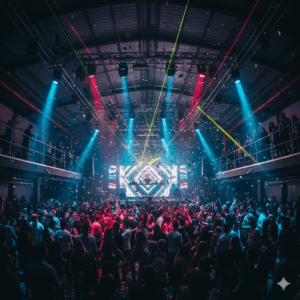
Plan for ¥900–¥4,500 at the door depending on time/day, bring a photo ID, and aim to arrive before midnight for better pricing.
If you want the easiest entry, use official VIP/online booking pages and choose a club with clear system rules.
Modern Tokyo clubs are designed for fast circulation: street-level reception, ID check, payment at the door, and then a flow into multi-floor spaces (main floor, lounge, and VIP).
The “club system” is highly standardized—time-based entry tiers (early/regular), drink tickets, and visible dress rules—so visitors can predict the night even when the music changes.
In practice, hip hop clubs in tokyo japan often means “clubs that reliably book hip hop/R&B sets” rather than one single genre all night.
Table of contents
1. What does “hip hop clubs in Tokyo Japan” really mean?
2. How do you reach the best areas in Shibuya and Roppongi?
3. What should you expect for prices, time slots, and age rules?
4. Which venue types fit your night—main floor, lounge, live-style, or VIP?
5. How do reservations, etiquette, and useful phrases work?
1. What does “hip hop clubs in Tokyo Japan” really mean?

1-1 Open-format is the default (hip hop lives inside it)
Start by assuming most large Tokyo clubs are “multi-genre by design.” Their official pages often describe multiple floors and multiple music lanes in one building.
For example, CLUB CAMELOT explains its three-floor concept covering hip hop/R&B alongside other club music on its official ABOUT page:
CLUB CAMELOT (Official website).
1-2 The easiest way to read Tokyo’s club “system”
Conclusion: you get in faster when you treat entry like a small checklist—ID, time slot, and the venue’s stated rules.
Numbers: many clubs explicitly show time-based tiers (for example, CAMELOT lists weekday and weekend entry windows around 22:00–4:30) on its system section:
CLUB CAMELOT system section (Japanese).
1-3 A practical “scene map” in one sentence
If you want a compact first night: choose Shibuya for dense, walkable club-to-club movement, and choose Roppongi for a polished, international nightclub format.
For official navigation references (station layouts), Tokyo Metro publishes Shibuya station yard maps here:
Tokyo Metro Shibuya station map (Japanese).
2. How do you reach the best areas in Shibuya and Roppongi?

2-1 Shibuya: exits matter more than distance
Conclusion: choose your exit first, then walk—this reduces confusion in Shibuya’s multi-rail station.
Numbers: JR East provides official Shibuya station maps and guidance (including notes about the Hachiko gate):
JR East Shibuya station info (Japanese).
Tokyo Metro’s official Shibuya yard map also lists exits and nearby facilities:
Tokyo Metro Shibuya station map (Japanese).
2-2 Shibuya club cluster: official walk times and directions
Conclusion: pick one “anchor” venue and treat the rest as optional add-ons.
Numbers: CLUB CAMELOT states 徒歩5分 from Shibuya lines on its official page:
CLUB CAMELOT access/system (Japanese).
clubasia provides step-by-step walking directions from the Hachiko exit and states its night-event ID policy:
clubasia Access (Japanese).
ATOM TOKYO SHIBUYA lists its address and a clear “Access” section (including the A0 exit wording) on its official site:
ATOM TOKYO SHIBUYA (Official website).
2-3 Roppongi: station-to-door simplicity
Conclusion: Roppongi is ideal if you want a straightforward “exit → club” route.
Numbers: V2 TOKYO publishes its access as 徒歩1分 from Roppongi station exits (Oedo Line exit 7 / Hibiya Line exit 4B) on its official site:
V2 TOKYO (Official website).
For an official station reference, the Tokyo Metropolitan Bureau of Transportation hosts the Roppongi (Oedo Line) station page:
Toei Subway Roppongi station (Japanese).
3. What should you expect for prices, time slots, and age rules?

3-1 Typical door prices (real numbers from official pages)
Conclusion: if you arrive early, you can often pay closer to the “happy hour” tier; after midnight, you’ll often pay closer to the “regular” tier.
Numbers: ATOM TOKYO SHIBUYA lists men’s entry as ¥900 (happy hour) and ¥1,900 (regular) on Sun–Thu, and up to ¥4,500 at regular hours on Fri/Sat/holiday-eve (1 drink included):
ATOM TOKYO SHIBUYA Price (Official).
CLUB CAMELOT shows men’s entry at ¥1,000 (early) and a “happy hour” tier up to ¥3,900 (1 drink included) depending on time/day:
CLUB CAMELOT System (Official).
TK NIGHTCLUB lists time-tiered entry such as men ¥500–¥3,500 depending on the day and the time window:
TK NIGHTCLUB System/Price (Official).
V2 TOKYO lists a weekday men’s entry of ¥2,000 (1 drink) and a weekend “regular” of ¥4,000 (2 drinks):
V2 TOKYO System (Official).
3-2 Hours: assume late night, confirm per venue
Conclusion: most major clubs operate late, but always confirm exact hours on official pages because event schedules can change.
Numbers: TK NIGHTCLUB shows “OPENING HOUR” as 22:00–4:30 on its official site:
TK NIGHTCLUB (Official).
ATOM TOKYO SHIBUYA lists reception hours as 22:00–04:30:
ATOM TOKYO SHIBUYA (Official).
CLUB CAMELOT’s system section shows night operation into 4:30:
CLUB CAMELOT (Official).
3-3 Age checks, ID, and dress rules (how to avoid a wasted trip)
Conclusion: bring a government-issued photo ID, and dress slightly “smarter” than you think you need to.
Numbers: clubasia states “no entry under 20 for night events” and requests photo ID at entry:
clubasia Access (Official).
ATOM TOKYO SHIBUYA states entry is 20+ and describes examples of clothing that can be refused:
ATOM TOKYO SHIBUYA Attention (Official).
CLUB CAMELOT lists “20+ only” and a dress code policy on its official page:
CLUB CAMELOT Dress Code (Official).
For the legal baseline on alcohol, see:
Under-20 Drinking Prohibition Law (Japanese text).
Table 1: Venue Types & Base Fees
| Venue Type | Typical Fee | Session Time | Area (JP Link) |
|---|---|---|---|
| Shibuya multi-floor “open-format” club (Top 40 + hip hop/R&B) | Men ¥900–¥4,500 / Ladies ¥400–¥900 (time/day tiers) | Reception typically 22:00–04:30 | ATOM TOKYO SHIBUYA (Official website) |
| Shibuya flagship nightclub with stated dress/system rules | Men ¥1,000–¥3,900 (1 drink included, time tiers); Ladies ¥0 entry + drink ticket shown | System windows shown to 4:30 | CLUB CAMELOT (Official website) |
| Shibuya “time-tier” entry club with very clear price table | Men ¥500–¥3,500 / Ladies ¥300–¥600 (time/day tiers) | Open 22:00–4:30 | TK NIGHTCLUB (Official website) |
| Roppongi “international” nightclub format | Weekday men ¥2,000 (1 drink) / Weekend regular ¥4,000 (2 drinks) | Night operation; confirm calendar per date | V2 TOKYO (Official website) |
Fees can change for special events. Use each venue’s official system/price page as the baseline and the specific event page as your final check.
Table 2: Access & Hours
| Station | Walk Time | Hours | Area (JP Link) |
|---|---|---|---|
| Shibuya (JR/Tokyo Metro) → CAMELOT area | 5 min (official listing) | System shows to 4:30 | CAMELOT Access (Official) |
| Shibuya Hachiko exit → clubasia | Route described step-by-step (see official access page) | Event-based (example event opens 24:00) | clubasia Access (Official) |
| Shibuya → ATOM TOKYO SHIBUYA | Exit noted (JR Shibuya A0 wording on official page) | Reception 22:00–04:30 | ATOM SHIBUYA Access (Official) |
| Roppongi (Oedo/Hibiya) → V2 TOKYO | 1 min from listed exits | Night operation; confirm by date | V2 Access (Official) |
| Shibuya station official reference | Use exit list to reduce confusion | N/A | Tokyo Metro Shibuya map |
“Walk time” can vary by exit and crowd density. If you’re meeting friends, share the venue’s official access page link and the station exit name.
4. Which venue types fit your night—main floor, lounge, live-style, or VIP?

4-1 Multi-floor clubs (best for “hip hop + flexibility”)
Conclusion: multi-floor venues give you the best odds of finding a hip hop/R&B pocket even if the main room shifts to open-format hits.
Numbers: CLUB CAMELOT describes three distinct floors and explicitly mentions hip hop/R&B as part of its concept on the official ABOUT page:
CLUB CAMELOT ABOUT (Official).
ATOM TOKYO SHIBUYA also presents multiple floors and a full “Price” section with time tiers:
ATOM TOKYO SHIBUYA (Official).
4-2 Event-based nights (lineup-first approach)
Conclusion: if you care more about a specific party or DJ style than “a general club vibe,” pick a venue where the event page clearly states door price and required drink ticket.
Numbers: clubasia event pages often list door price and drink ticket requirements—for example, one official event page shows Door ¥2,000 and a separate ¥700 drink charge:
clubasia event page (Official).
4-3 VIP tables (predictability, not just luxury)
Conclusion: VIP is mainly a logistics tool—reserved seats, bottle service, and fewer entry surprises—especially when you’re a group.
Numbers: V2 TOKYO states “all seats are 2 hours” and publishes VIP pricing starting from levels like ¥20,000 weekday table tiers and higher weekend tiers (plus service charges) on the official site:
V2 TOKYO VIP/System (Official).
ATOM TOKYO SHIBUYA links to official VIP reservation flow from its site:
ATOM SHIBUYA VIP link (Official).
Table 3: Reservation & Eligibility
| Method | Lead Time | Eligibility | Official (JP Link) |
|---|---|---|---|
| Walk-in (pay at door) | Same day; arrive early for better tiers | Typically 20+ with photo ID (varies by venue) | CAMELOT rules/system |
| Online booking (QR / form-based) | Stated as “fast” booking flow; cancel rules may apply | Photo ID check; venue may recommend smart casual | ATOM TOKYO booking steps (Official) |
| VIP reservation (table service) | Recommended for groups; often fixed time limits | Photo ID required; dress rules apply | V2 VIP/System (Official) |
| Venue-specific access/rules confirmation | Before you leave your hotel | Night events: no entry under 20 stated on site | clubasia Access (Official) |
“Eligibility” is typically enforced at the entrance. If you’re unsure, use the venue’s official access/attention page and bring a passport or Japanese driver’s license/My Number card where accepted.
5. How do reservations, etiquette, and useful phrases work?

5-1 Reservations: when you need them (and when you don’t)
Conclusion: you don’t need reservations for most casual walk-in nights, but reservations reduce friction for VIP or crowded dates.
Numbers: ATOM TOKYO’s official guide page outlines an online reservation flow and notes you receive a QR ticket after submission:
ATOM TOKYO reservation guide (Official).
TK NIGHTCLUB provides a “RESERVATION” section and also posts clear “PRICE” tables for planning:
TK NIGHTCLUB (Official).
5-2 Door etiquette: how to look “easy to admit”
Conclusion: the door staff’s job is to keep entry orderly—help them by preparing your ID and payment before you reach the front.
Numbers: clubasia explicitly states photo ID checks and “no entry under 20” for night events on its access page:
clubasia Access (Official).
CLUB CAMELOT and ATOM TOKYO SHIBUYA both publish dress restrictions (for example, sandals/overly casual items can be refused):
CLUB CAMELOT Dress Code (Official),
ATOM SHIBUYA Attention (Official).
5-3 Useful Japanese phrases (simple, non-slang)
At the door
• 入場料はいくらですか? (Nyuu-jou-ryou wa ikura desu ka?) — “How much is the entry fee?”
• 身分証はこれで大丈夫ですか? (Mibun-shou wa kore de daijoubu desu ka?) — “Is this ID okay?”
• ヒップホップのフロアはどこですか? (Hippu-hoppu no furoa wa doko desu ka?) — “Where is the hip hop floor?”
• 今日は何時までですか? (Kyou wa nan-ji made desu ka?) — “Until what time is it open today?”
Meeting friends
• 入口で待ち合わせできますか? (Iriguchi de machiawase dekimasu ka?) — “Can we meet at the entrance?”
clubasia event page (Official).
6. Summary and Next Steps

When people search for hip hop clubs in tokyo japan, they usually want three things: (1) a place where the music actually matches the vibe, (2) predictable entry rules, and (3) a plan that doesn’t collapse at the door.
That’s exactly where SoapEmpire can help—even if you’re not a regular clubber and don’t speak Japanese.
You might already know the problem: Tokyo nights look simple on social media, but the real experience depends on small operational details—entry tiers, ID checks, dress rules, and which floor is playing hip hop versus open-format.
If you arrive late, the price can jump. If your group is split, you can waste time outside. If the event is “special,” the system can change. None of this is complicated, but it’s easy to miss when you’re traveling.
SoapEmpire is a Japan-based nightlife portal that organizes practical information in Plain English across major cities—especially Shibuya and Roppongi. We focus on the things travelers actually need: where to go, how to get there, what you will pay, and how to enter smoothly. That means we read the official Japanese pages (system/price, access, and event listings) and turn them into an easy plan. If you want a hip hop-friendly night, we also help you match the right venue type to your goal: a multi-floor club (more flexibility), an event-based night (lineup-first), or VIP seating (predictability for groups).
Our advantage is clarity and support. We cover the “sub-keywords” that matter in real life—Shibuya navigation, Roppongi access, entry fees, dress code, and reservations—so you can spend your energy on the music, not logistics. And if you want hands-on help, SoapEmpire offers a 24-hour booking support service for only $10. This is especially useful if you’re booking VIP, coordinating a group, or you simply want to minimize friction at the entrance.
Explore SoapEmpire here: SoapEmpire (Official).
For reservations or inquiries, please contact us via the inquiry form.
6-1 A simple one-night itinerary you can reuse
Conclusion: pick an “anchor” venue with a clear system page, then keep a nearby backup with an easy access page.
Numbers: for Shibuya, venues like ATOM and CAMELOT publish time-tiered entry prices and operate into 4:30 on their official pages:
ATOM SHIBUYA (Official),
CAMELOT (Official).
6-2 “Official page first” links you should bookmark
Conclusion: bookmark station maps plus your venue’s access page to prevent last-minute confusion.
Numbers: the official Shibuya station maps from Tokyo Metro and JR East are the most reliable references:
Tokyo Metro Shibuya map,
JR East Shibuya station info.
6-3 SoapEmpire internal guides (for deeper planning)
If you want more Tokyo nightlife planning in one place, these SoapEmpire guides are built for quick decisions:
- Tokyo nightlife guide (districts, pacing, and costs)
- Shibuya clubs guide (multi-floor venues and entry systems)
- Roppongi nightlife guide (international-style clubs and access)
- How to book nightlife in Japan (what staff need from you)
FAQ
Q1. How much do hip hop-friendly clubs in Tokyo usually cost?
Most major clubs use time-based tiers. On official pages, you can see examples like men ¥900–¥4,500 at ATOM TOKYO SHIBUYA depending on day/time:
ATOM SHIBUYA Price (Official).
Other clubs publish similar tier tables, such as:
CLUB CAMELOT System (Official) and
TK NIGHTCLUB Price (Official).
Q2. Do I need a reservation to go clubbing in Tokyo?
Usually no for walk-in entry, but reservations help for VIP or busy dates. Some venues explain their booking flow officially (for example, ATOM TOKYO’s reservation guide and QR ticket flow):
ATOM TOKYO booking steps (Official).
Q3. Are Tokyo clubs English-friendly, and what ID should I bring?
Many major clubs are used to international guests, but entry rules are enforced in Japanese-style “system” format. Bring a passport or other government-issued photo ID.
Official pages frequently state ID checks and 20+ policies (examples):
clubasia Access (Official),
ATOM SHIBUYA Attention (Official).
If you’re interested in visiting any of these places, SoapEmpire offers a 24-hour booking support service for only $10.
Just send the store name, preferred time, and your name (nickname is fine) to:
takuma@skylinks-inc.com.
We’ll take care of your reservation quickly and smoothly.