If you plan for the charge, pick the right station exits, and learn a few short phrases, your night becomes simple and comfortable.
This guide explains how Bar Ginza Tokyo works in practice—prices, access, venue types, and booking steps—without jargon.
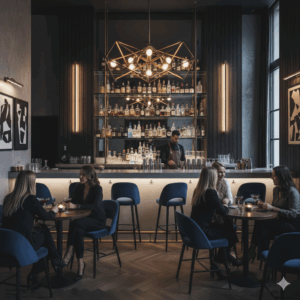
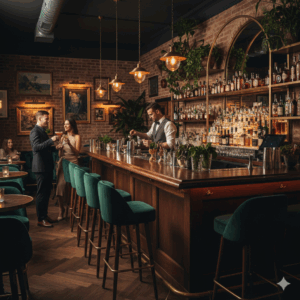
Ginza nightlife is often built around compact interiors: counter seating, dim but precise lighting, and a short “arrival ritual” (greeting, seating, first order).
In many venues, the social experience is intentionally structured: your seat is part of the service, and the bartender’s pacing (water, ice, refill timing) shapes the night.
The “service” in Ginza bars is typically conversation, curated drinks, and controlled atmosphere. Some venues also resemble lounge-style hospitality spaces,
where staff manage comfort and timing through set systems (seat charges, minimum orders, or private-room rates). These are not loud “party clubs” by default;
they are designed for slow drinking, short or long stays, and respectful distance between groups.
For an official neighborhood reference and local editorial picks, see GINZA OFFICIAL (English) and its bar selection article
10 Recommended Ginza Bars.
1. Where should you start in Bar Ginza Tokyo?
2. How do you access top Ginza bar areas?
3. What do prices, time, and eligibility look like?
4. Which venue types and services fit your night?
5. How do reservations, etiquette, and phrases work?
1. Where should you start in Bar Ginza Tokyo?

1-1. What “Ginza bar culture” feels like
Ginza’s bar culture is a blend of precision and restraint. The room is part of the drink: small counters, quiet voices, and staff who control pace through water,
ice, and timing. This is a nightlife style where “hospitality” is institutionalized into routine—greeting, seating, first order, and the careful rhythm that follows.
A key local feature is the seat/cover charge. GINZA OFFICIAL explains that some bars add a charge in addition to what you drink and eat, and that high-end places
may charge ¥1,000+ per person; it’s often closer to a seat fee and may include a small appetizer.
Source: GINZA OFFICIAL: charge system.
1-2. A simple first-night structure (two stops)
If you want a classic experience, begin at a bar that publishes clear hours and policies. For example, STAR BAR GINZA lists business hours
17:00–23:30, “No holidays,” and “All seats non-smoking” on its official page:
Official website (Japanese).
Then add a casual standing bar for a faster pace and easier entry. Ginza 300BAR’s official site describes itself as a “300 yen standing bar” and
publishes branch hours and access in English:
Official website (Japanese).
Standing bars are useful as a second stop because they reduce the “quiet-room pressure” and make it easier to leave whenever you want.
1-3. What to know before you walk in
Think of a Ginza bar as a small stage with simple rules: keep voices low, avoid phone calls at the counter, and expect the first drink order soon after seating.
If you’re unsure about charges or minimums, ask directly and early (use the phrase list in Section 5).
For a neighborhood overview and official local information source, start here:
GINZA OFFICIAL (English).
2. How do you access top Ginza bar areas?

2-1. The three “workhorse” stations
Ginza Station is the most flexible base because it connects multiple lines and has many exits distributed across Ginza.
Tokyo Metro’s official Ginza Station exit guide shows nearby landmarks for each exit, including A3 (near major Ginza facilities) and C4 (toward Yurakucho-side connections):
Tokyo Metro Ginza Station exit guide.
Higashi-Ginza Station is ideal for Kabukiza-area bars and venues that sit slightly east of the main shopping streets.
Tokyo Metro provides an official exit map for Higashi-Ginza:
Tokyo Metro Higashi-Ginza Station exit guide.
For Toei Asakusa Line station data (including basic station information), see:
Tokyo Metropolitan Bureau of Transportation: Higashi-Ginza.
Yurakucho Station (JR) is useful if you’re approaching from central Tokyo or planning a west-edge route.
JR East provides official station information for Yurakucho:
JR East: Yurakucho Station information.
2-2. Practical exit examples (real bar data)
Some venues publish clear station-exit walking times. Ginza Bar L’aurora states it is a 3-minute walk from Ginza Station Exit A3,
and 3-minute walk from Higashi-Ginza Station Exit A1 on its official site:
Official website (Japanese).
Ginza 300BAR’s English page lists each branch with walk-time guidance, including the 5-chome shop as approximately
2 minutes from Ginza Station Exit A3:
Official website (Japanese).
For a central mental map, use Tokyo Metro’s Ginza Station exit guide (it lists major nearby buildings per exit):
Tokyo Metro Ginza Station exit guide.
2-3. Access and hours you can verify quickly
Table 2: Access & Hours
| Station / Reference | Walk Time | Hours | Area (JP Link) |
|---|---|---|---|
| Ginza Station Exit A3 | 3 min | Dinner 18:00–03:00 | Ginza 6-chome — Official website (Japanese) |
| Higashi-Ginza Station Exit A1 | 3 min | Dinner 18:00–03:00 | Near Kabukiza side — Official website (Japanese) |
| Ginza Station Exit A3 | ~2 min | Weekdays/Sun 16:30–00:00; Fri/Sat 16:30–02:00 | Ginza 5-chome — Official website (Japanese) |
| (Address listed) Ginza 1-chome | — | 17:00–25:00 (LO 00:30) | Ginza 1-chome — Official website (Japanese) |
| (Address listed) Ginza 7-chome | ~5 min from Ginza Station (listed) | 20:00–04:30 (LO 04:00) | Ginza 7-chome — Official website (Japanese) |
Notes: Walk times and hours are shown only where the venue lists them on its official site; details can change by season and events, so verify before you go.
3. What do prices, time, and eligibility look like?

3-1. Cover charge (seat charge) is normal in Ginza
Many Ginza venues add a cover/seat charge, and it can range from none to premium levels depending on the venue.
As a general neighborhood explanation, GINZA OFFICIAL notes that higher-end places may charge ¥1,000+ per person:
GINZA OFFICIAL: charge system.
For a concrete example, TANAGOKORO THE BAR lists a cover charge of ¥1,500 plus 10% tax on its official site:
Official website (Japanese).
Another example is BAR Capella, which lists an all-time charge of ¥2,000 plus 10% tax and 10% service fee:
Official website (Japanese).
3-2. Drink pricing: what “normal” looks like (with real menus)
Ginza bars often feel expensive because the drink is only one part of the experience: time, attention, quiet space, and craft. Still, many menus show
“entry-level” cocktail prices that are easy to plan around.
TANAGOKORO THE BAR lists classic cocktails such as Gin Tonic at ¥1,200 and Martini at ¥1,500 on its menu:
Official website (Japanese).
BAR Capella lists beer at ¥1,000 and cocktails from ¥1,000 on its menu:
Official website (Japanese).
In Ginza, bartenders often prefer a short conversation over a long menu debate.
3-3. Eligibility: age and ID checks
If a venue serves alcohol, entry is typically restricted to adults. Ginza Bar L’aurora explicitly states that guests under 20 cannot enter:
Official website (Japanese).
For the national rule, Japan’s under-20 drinking prohibition is explained by the Ministry of Health, Labour and Welfare’s e-Health Net page:
Official website (Japanese).
(This is why you may be asked for ID even if you are clearly an adult.)
Table 1: Venue Types & Base Fees
| Venue Type | Typical Fee | Session Time | Area (JP Link) |
|---|---|---|---|
| Classic cocktail bar (counter-focused) | Cover charge ¥1,500 (+ 10% tax) | No fixed session; pace is bartender-led | Ginza 1-chome — Official website (Japanese) |
| Classic bar (signature ice / non-smoking) | (Fees vary by order; policy-focused) | Hours listed 17:00–23:30 | Ginza 1-chome — Official website (Japanese) |
| Award-style cocktail bar (early close, last entry rule) | (Fees vary by order; entry timing is key) | Mon–Sat 17:00–23:30; last entry 22:30 | Ginza 5-chome — Official website (Japanese) |
| Standing bar (fast, casual, flexible exit) | “300 yen standing bar” concept (ticket exchange) | Weekdays/Sun 16:30–00:00; Fri/Sat 16:30–02:00 | Ginza & Yurakucho — Official website (Japanese) |
| Late-night bar with private-room pricing | Charge ¥2,000 (+ tax/service); VIP ¥10,000–¥15,000 | Open until 04:30 | Ginza 7-chome — Official website (Japanese) |
Notes: “Typical fee” is listed only where the venue provides a clear published charge or concept statement on its official site. Always confirm on the day for updates.
4. Which venue types and services fit your night?

4-1. Classic cocktail bars: craft as performance
In Ginza, bartending can be a form of public craft: ice cutting, measured stirring, and a calm “service choreography” designed to keep the room stable.
STAR BAR GINZA highlights its identity as a Ginza-origin bar and lists clear policies such as all seats non-smoking, with hours
17:00–23:30 and “No holidays”:
Official website (Japanese).
BAR HIGH FIVE publishes detailed entry timing on its official map page, including last entry 22:30 and Mon–Sat hours
17:00–23:30:
Official website (Japanese).
This style is perfect if you want a focused first stop where the bartender leads the experience.
4-2. Standing bars: the “social buffer” of Ginza nights
Standing bars reduce formality. You can enter quickly, drink quickly, and leave without the “closing ritual” common to small counter bars.
Ginza 300BAR describes itself as Japan’s first 300 yen standing bar (founded 1992) and publishes branch hours/access in English:
Official website (Japanese).
As a nightlife practice, standing bars function like a bridge between spaces: they let you reset pace, meet friends, or wait for a reservation time.
If you’re new to Ginza, using a standing bar as your second stop often makes the night feel easier.
4-3. Late-night and “room” systems: privacy and controlled time
Some venues build nightlife around private rooms and published room charges. BAR Capella’s menu page lists a standard charge plus VIP room pricing:
VIP Charge ¥10,000 (19:00–0:00) and ¥15,000 (0:00–LAST):
Official website (Japanese).
This is a different “institutional shape” of intimacy: the venue sells not only drinks, but separation from the crowd and control over your group’s boundaries.
If you want a late-night final stop, this category can work well—just read the menu page carefully so the price logic is clear before you enter.
For more neighborhood context and a local list of bar styles (hideaways, music bars, hotel bars), see:
GINZA OFFICIAL: 10 Recommended Ginza Bars.
5. How do reservations, etiquette, and phrases work?

5-1. Reservation patterns (what venues actually publish)
Some venues publish very specific rules. Ginza Bar L’aurora states that reservations can be made via its email form up to the day before, and that
same-day visits should be reserved by phone:
Official website (Japanese).
This is a clear example of a “two-channel” system: form for planning, phone for same-day timing.
TANAGOKORO THE BAR notes limited seating and encourages contacting by phone (a practical approach for counter bars with few seats):
Official website (Japanese).
BAR HIGH FIVE also publishes contact information on its map page:
Official website (Japanese).
5-2. Etiquette in plain terms (what matters most)
Ginza bars reward calm behavior. The room is small, so your voice travels. If you’re seated at a counter, avoid long phone calls, avoid filming,
and keep bags compact. When the bartender asks questions, short answers help them tailor your drink without slowing the room.
Also, don’t be surprised if the venue sets boundaries through timing (last entry) or policies (non-smoking). For example, STAR BAR GINZA publishes
“All seats non-smoking” on its official page:
Official website (Japanese).
These policies are part of how Ginza maintains a consistent atmosphere.
5-3. Useful Japanese phrases (short, polite, effective)
These phrases are intentionally simple. You can show them on your phone if pronunciation feels hard.
- 予約できますか? (Yoyaku dekimasu ka?) — “Can I make a reservation?”
- 今日、2名で入れますか? (Kyou, ni-mei de hairemasu ka?) — “Can two people enter today?”
- チャージはいくらですか? (Chaaji wa ikura desu ka?) — “How much is the cover charge?”
- おすすめは何ですか? (Osusume wa nan desu ka?) — “What do you recommend?”
- 静かな席はありますか? (Shizuka na seki wa arimasu ka?) — “Do you have a quiet seat?”
- お会計お願いします。 (Okaikei onegaishimasu.) — “The bill, please.”
Table 3: Reservation & Eligibility
| Method | Lead Time | Eligibility | Official (JP Link) |
|---|---|---|---|
| Web form + phone | Form until day before; same-day by phone | No entry under 20 (venue-stated) | Official website (Japanese) |
| Phone inquiry recommended | Best for small-seat counters (call ahead) | Alcohol venues generally for 20+ | Official website (Japanese) |
| Call before you arrive (venue message) | Mind last entry 22:30 | Closed Sun & national holidays (venue-stated) | Official website (Japanese) |
| Walk-in friendly (standing bar) | Flexible entry; check branch hours | Alcohol venues generally for 20+ | Official website (Japanese) |
Notes: Lead time is shown only where the venue publishes a clear rule (e.g., “day before” vs “same-day phone”). Otherwise, the practical best practice is calling ahead.
6. Summary and Next Steps
If you’ve ever searched Bar Ginza Tokyo and felt stuck, it’s usually for one simple reason: Ginza is not confusing, but it is “system-heavy.”
The same neighborhood can contain a silent six-seat counter bar, a ticket-based standing bar, and a late-night private-room venue—each with different rules about cover charges,
entry timing, and reservations. When you don’t know the system, you either overpay by accident, walk too far between stops, or arrive after last entry.
SoapEmpire solves this by turning Ginza’s unwritten habits into a clear plan. We organize choices by what travelers actually need:
Ginza cocktail bars for a quiet first drink, a standing bar when you want flexibility,
and a reservation-friendly venue when you want to lock in timing. We also help you prepare for the most common friction points—cover charges, age/ID expectations,
and the “small-room etiquette” that makes Ginza feel comfortable instead of tense. You don’t need perfect Japanese, and you don’t need to guess where to start.
What makes SoapEmpire different is that we don’t just list places—we help you act. Our guides focus on access (which exit to use), pricing logic (what fees mean),
and the social choreography of the space (how to enter, how to order, how to leave politely). We also cover major cities nationwide, so if your trip includes Osaka,
Nagoya, or Fukuoka, you can keep the same planning style across Japan. And if you want to book smoothly, we offer a fixed-price service that removes language stress
and reduces wasted time on the street.
Explore more guides on SoapEmpire, then use our related reads to build a complete nightlife plan:
Tokyo red-light district overview,
Osaka soapland guide,
How to book in Japan.
When you’re ready, we can help you choose the right venue type (classic bar vs lounge system), confirm eligibility, and secure a reservation at a time that matches your schedule.
For reservations or inquiries, please contact us via the inquiry form.
6-1. A quick checklist for a smooth Ginza night
- Pick your first bar by policy + hours (e.g., non-smoking, last entry).
- Assume a cover/seat charge may exist; ask early: “チャージはいくらですか?”
- Plan for 2–3 venues, not 5+ (Ginza is best when it’s paced).
- Carry ID and be prepared for age confirmation (20+ rule).
- If you need certainty, reserve (form-by-day-before, phone-for-same-day where published).
6-2. Two sample routes (simple and realistic)
Route A (classic-first): Start around 17:00 at a classic bar that publishes quiet policies, then move to a standing bar
for a flexible second stop. STAR BAR GINZA lists 17:00–23:30 and non-smoking:
Official website (Japanese).
Then switch to Ginza 300BAR for a faster, casual atmosphere:
Official website (Japanese).
Route B (late-night finish): Begin at a counter bar with a known cover charge (so the price logic is clear), then finish at a venue that runs late.
TANAGOKORO THE BAR lists cover charge ¥1,500 (+ tax) and hours until 25:00:
Official website (Japanese).
Then move to BAR Capella for a late close (until 04:30) and room options:
Official website (Japanese).
6-3. FAQ (prices, booking, language, timing)
Q1) How much should I budget for a Ginza bar night?
Plan for a cover/seat charge plus drinks. Neighborhood guidance notes that some high-end places charge ¥1,000+ per person:
Official website (Japanese).
Real menu examples include cocktails around ¥1,200–¥1,500 at TANAGOKORO THE BAR:
Official website (Japanese),
and cocktails from ¥1,000 at BAR Capella:
Official website (Japanese).
Q2) Do I need a reservation for bars in Ginza?
Not always, but small bars fill quickly. Follow the venue’s published rule. For example, Ginza Bar L’aurora accepts reservations by form up to the day before,
and requests phone booking for same-day visits:
Official website (Japanese).
Q3) Is English spoken in Ginza bars?
It depends. Many bartenders can handle classic cocktail names, but detailed requests are easier with short phrases.
If you want extra certainty, book ahead and keep instructions simple. You can also use SoapEmpire’s guides and booking help:
Official website (Japanese).
Q4) What time should I go bar-hopping in Ginza?
Early evening is best for classic bars; some list hours like 17:00–23:30 (STAR BAR GINZA):
Official website (Japanese).
Late-night options exist too—Ginza Bar L’aurora lists dinner until 03:00:
Official website (Japanese),
and BAR Capella lists hours until 04:30:
Official website (Japanese).
If you’re interested in visiting any of these places, SoapEmpire offers a 24-hour booking support service for only $10.
Just send the store name, preferred time, and your name (nickname is fine) to:
takuma@skylinks-inc.com.
We’ll take care of your reservation quickly and smoothly.