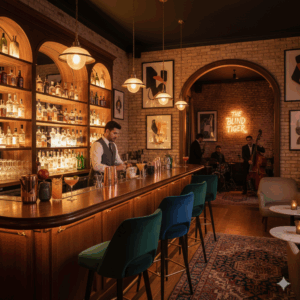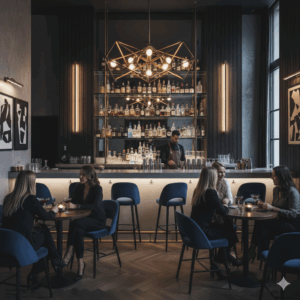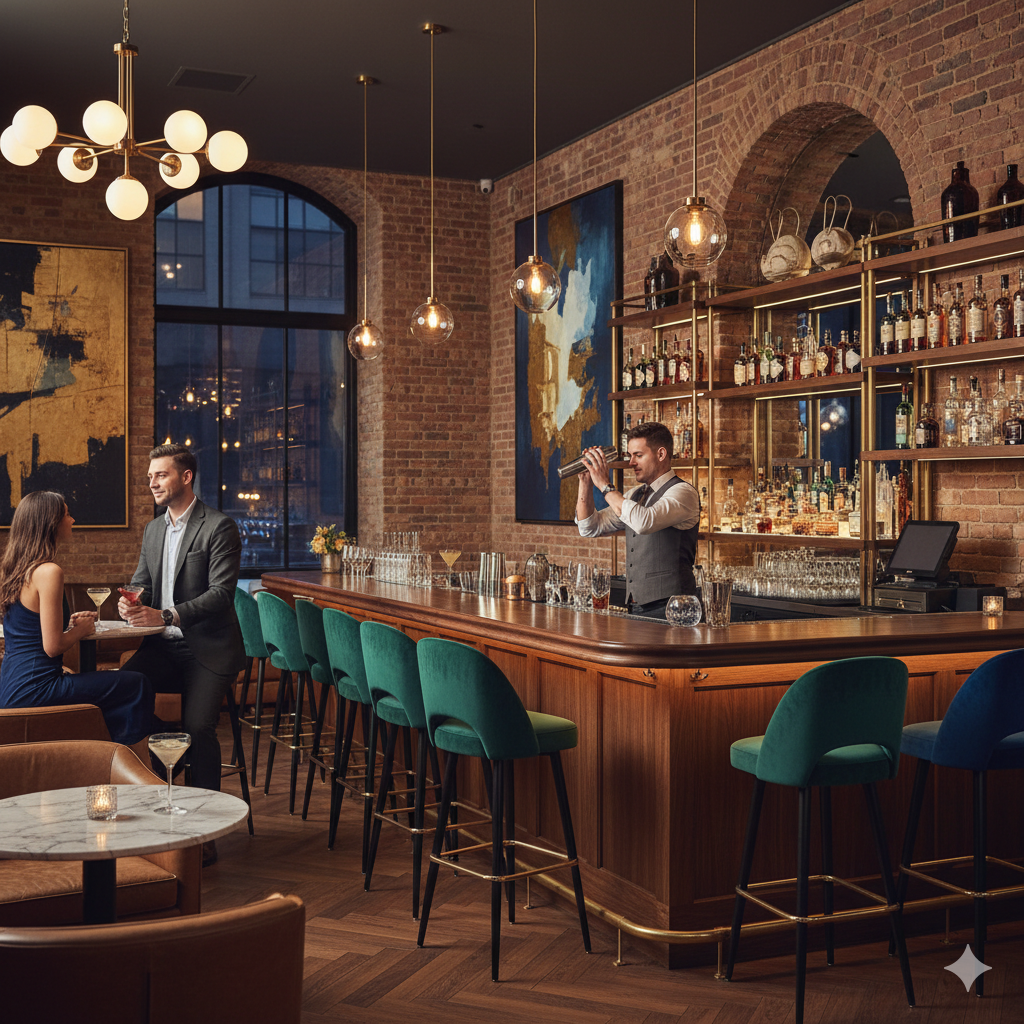
This guide shows you how to pick the right style (cocktails, whisky, hotel lounges, live jazz), what to budget, and how to handle reservations and house rules politely.
If you only remember one thing: start early in a building bar, then shift to a classic counter bar, and finish with a late-night spot near your station.
In Ginza, nightlife is less about loud crowds and more about designed “micro-spaces”: elevator-to-counter rooms, hotel lounges with clear entry flow, and compact concept bars inside commercial buildings.
These spaces guide you through a predictable sequence—greeting, seating, order, careful pacing of drinks—so the experience feels calm and premium even when the district is busy.
The core offering is not spectacle; it’s institutionalized hospitality: bartenders tune sweetness, dilution, temperature, and aroma, while staff maintain a quiet “conversation distance.”
In practical terms, you can request classics (Martini, Highball) or describe flavors (“citrus,” “not too sweet”), and you’ll be guided toward a drink style that fits you.
Typical visitors range from travelers and expats to local office workers and long-time regulars. Weeknights often favor shorter, focused visits, while weekends can become longer “bar-hopping” sessions.
Many venues publish rules and hours on their official pages, which matters in Ginza more than anywhere else: the rules are part of the culture, not an afterthought.
Table of Contents
1. Where should you start when searching for Ginza best bars?
2. How do you access top Ginza bar areas and plan a crawl?
3. What prices, time limits, and eligibility rules should you expect?
4. Which venue types and signature styles define Ginza nightlife?
5. How do reservations, etiquette, and useful phrases work in practice?
1. Where should you start when searching for Ginza best bars?
1-1. Use Ginza’s district identity as your first filter
Ginza’s reputation comes from density and discipline: many bars are small, seating is limited, and the environment is intentionally controlled (sound level, lighting, pace).
For a visitor, that’s good news—once you understand the rules, the night becomes smooth and repeatable.
A helpful starting point is the official Ginza area guide, which outlines the district as a central Tokyo destination and makes it easier to frame your route before you choose individual bars:
Official Ginza guide (Japanese).
1-2. Decide your “first drink” moment
In Ginza, the first drink often sets your whole night. If you want low friction and a clear menu, start in a commercial complex or hotel venue where hours and policies are published.
For example, MIXOLOGY SALON in GINZA SIX explicitly lists opening hours and a compact seating concept on the facility’s official site:
MIXOLOGY SALON (Japanese).
1-3. Choose a route that matches your social comfort level
Not all “best bars” are equally easy. Some are designed for quiet one-on-one conversation at a counter; others work for groups. If you’re traveling solo, a hotel bar or a venue with published reservation steps can feel safer and simpler.
As a reference point for a clearly structured setting and published bar hours, NAMIKI667 (Hyatt Centric Ginza Tokyo) lists its Bar & Lounge hours on its official page:
NAMIKI667 official page (Japanese).
2. How do you access top Ginza bar areas and plan a crawl?
2-1. Pick your base station first
Ginza Station is a practical base because it connects multiple Tokyo Metro lines and has many exits across the neighborhood:
Tokyo Metro Ginza Station (Japanese).
If you’re targeting venues closer to Kabuki-za / Ginza 5–6-chome, Higashi-Ginza can reduce walking:
Tokyo Metro Higashi-Ginza Station (Japanese).
2-2. Build a 3-stop crawl (early / core / late)
A simple structure works well in Ginza:
(1) early drink at a complex or hotel venue with clear hours, (2) core Ginza counter bar, (3) late-night spot near your return station.
If you want a “published-access” venue to anchor the route, Hotel GrandBach Tokyo Ginza lists walk times from Ginza and Higashi-Ginza on its official page:
Hotel GrandBach Bar & Lounge (Japanese).
2-3. Use official access pages when you plan timing
Bars in Ginza often publish exact hours and access notes on their official sites, and those details matter more than “internet lists.”
For example, BVLGARI Ginza Bar clearly publishes opening hours on its official page:
BVLGARI Ginza Bar (Japanese).
Table 2: Access & Hours
| Station | Walk Time | Hours | Area (JP Link) |
|---|---|---|---|
| Ginza Station / Higashi-Ginza Station (Hotel bar base) | 4 min from Ginza, 1 min from Higashi-Ginza | Bar time 17:00–24:00 (Thu–Sat to 25:00) | Official website (Japanese) |
| Ginza Station area (Luxury rooftop / tower bar) | 5–10 min (editor’s note) | Mon–Sat 12:00–23:00, Sun 12:00–18:00 | Official website (Japanese) |
| Ginza Station (Complex bar inside GINZA SIX) | 3–8 min (editor’s note) | 11:00–23:00 (L.O. listed on the official page) | Official website (Japanese) |
| Ginza area (All-day dining bar & lounge) | 5–10 min (editor’s note) | Sun–Wed 11:00–22:00, Thu–Sat 11:00–23:30 | Official website (Japanese) |
| Ginza area (Live music / jazz-style venue) | 5 min from Ginza Station (as listed) | Typically 18:00–23:00 (confirm by schedule) | Official website (Japanese) |
Walk times marked “editor’s note” are practical estimates based on station-area geography. For exact directions, use each venue’s official access page and your map app.
3. What prices, time limits, and eligibility rules should you expect?
3-1. Typical budgets: think in “per-stop” spending
Ginza pricing varies by venue, time, and menu style, but many visitors find it easier to budget per stop (1–2 drinks) rather than “per night.”
A rare case where you can see concrete numbers on an official facility page is MIXOLOGY SALON, which lists example cocktail prices such as ¥1,600 and ¥1,800 on the GINZA SIX shop page:
MIXOLOGY SALON official listing (Japanese).
Table 1: Venue Types & Base Fees
| Venue Type | Typical Fee | Session Time | Area (JP Link) |
|---|---|---|---|
| Concept cocktail bar (tea / modern mixology) | Example: cover ¥880 + cocktails like ¥1,600–¥1,800 | Often 2 hours at reservation venues | Official website (Japanese) |
| Luxury tower / hotel bar | Budget for premium setting (editor’s note: often ¥3,000–¥8,000+ per visit depending on drinks/food) | Commonly 90–120 min if you reserve (editor’s note) | Official website (Japanese) |
| Hotel lounge bar (live piano / relaxed) | Often a comfortable “one more drink” stop (editor’s note: expect ¥2,000–¥6,000) | Easy to stay 60–120 min (editor’s note) | Official website (Japanese) |
| Live music / jazz-style venue | Typically includes a performance component (editor’s note: check music charge / drink minimum) | Often 1 set or 2 sets (editor’s note) | Official website (Japanese) |
Concrete prices vary widely by menu. When official price details are not published, treat ranges as guidance and confirm at the venue. Official links above are provided for reference.
3-2. Time limits and cover charges are part of the system
Many Ginza bars are small; time limits and cover charges help keep the room calm and the service steady.
For a clear example of published policy, MIXOLOGY SALON’s reservation page states a 2-hour seating system and a separate cover charge of ¥880:
Reservation policy (Japanese).
3-3. Eligibility: drinking age and ID expectations
In Japan, alcohol is restricted to age 20. For a legal reference in Japanese, you can check the law text here:
Law text on e-Gov (Japanese).
In practice, many venues may request ID—especially later at night or when the venue’s policy explicitly limits access by time.
4. Which venue types and signature styles define Ginza nightlife?
4-1. The modern concept bar (tea, aroma, technique)
Concept bars in Ginza often use a single theme—tea, seasonal fruit, Japanese botanicals—to structure the whole menu.
MIXOLOGY SALON is a clear example: the official GINZA SIX page describes a tea-based concept and lists published hours and reservation notes:
MIXOLOGY SALON (Japanese).
If you’re new to Ginza, this style is a friendly “first stop” because the theme gives you an easy way to order.
4-2. The luxury tower / hotel bar (space, view, pacing)
Luxury bars in Ginza often feel like “vertical nightlife”: elevator up, controlled entry, then a curated room with a view.
BVLGARI Ginza Bar publishes core information (including hours) on its official page:
BVLGARI Ginza Bar (Japanese).
This style is ideal if you want a clear dress expectation and a consistent experience.
4-3. The classic Ginza counter bar (quiet craft and conversation)
The classic Ginza counter bar is built around a disciplined rhythm: a greeting, a seat, a short order exchange, then careful drink pacing.
You’ll often find them on higher floors with minimal signage.
Examples of official sites you can use to confirm hours and location include:
MORI BAR GRAN (Japanese),
Bar OPA (Japanese),
and Ginza Bar Doulton (Japanese).
• Easy first stop (clear concept): MIXOLOGY SALON
• Hotel base (published access + late hours): Hotel GrandBach Bar & Lounge or NAMIKI667
• Classic bar crawl anchors: MORI BAR GRAN, Bar OPA, Bar Lupin
• Live music finish: Ginza Swing
5. How do reservations, etiquette, and useful phrases work in practice?
5-1. Reservations: when you should book vs. walk in
If the venue uses an official booking partner, booking is usually the smoothest path.
MIXOLOGY SALON publishes reservation conditions (including a time limit and cover charge) on its reservation message page:
Reservation policy (Japanese).
For a luxury venue example, BVLGARI’s reservation message also publishes time-based entry conditions (including age conditions after a certain time):
Reservation message (Japanese).
Table 3: Reservation & Eligibility
| Method | Lead Time | Eligibility | Official (JP Link) |
|---|---|---|---|
| Online reservation (partner booking page) | Same day possible; seating often 2 hours | After 17:00, under-20 entry restricted (published); cover ¥880 | Official website (Japanese) |
| Online reservation (partner booking page) | Reserve ahead for peak times (editor’s note) | After 17:00, bar use is 20+ (published); smart casual noted | Official website (Japanese) |
| Walk-in + phone confirmation (common in small bars) | Call 15–30 min before (editor’s note) | Bring ID; alcohol is 20+ by law | Official website (Japanese) |
Policies can change seasonally. Use official reservation pages and venue sites to confirm current rules before you go.
5-2. Etiquette: the “quiet respect” toolkit
Ginza etiquette is mostly about protecting the room for everyone:
keep your voice moderate, avoid standing behind seated guests, and treat the bartender’s pacing as part of the experience.
If you’re unsure, follow the room—many places are designed so that silence feels comfortable rather than awkward.
5-3. Useful Japanese phrases (simple and polite)
These phrases are plain and practical—no slang, no awkwardness:
- 席は空いていますか? (Seki wa aiteimasu ka?) — “Do you have a seat available?”
- おすすめは何ですか? (Osusume wa nan desu ka?) — “What do you recommend?”
- 甘さ控えめで。 (Amassa hikaeme de.) — “Less sweet, please.”
- ウイスキーのハイボールで。 (Uisukii no haibooru de.) — “A whisky highball, please.”
- チャージはいくらですか? (Chaaji wa ikura desu ka?) — “How much is the cover charge?”
- お会計お願いします。 (Okaikei onegaishimasu.) — “The check, please.”
6. Summary and Next Steps
Many travelers search for Ginza best bars and end up overwhelmed—not because Ginza is “hard,” but because it rewards structure.
Ginza nightlife is built from small rooms with clear boundaries: seating limits, time limits, and carefully paced service. That design creates the signature Ginza feeling—quiet, premium, and surprisingly personal—without needing loud music or crowds.
The easiest way to win your first Ginza night is to treat it like a three-act route. Start at a concept venue (so ordering is easy), move to a classic counter bar (so you can feel the craft up close), and finish at a hotel lounge or a live music venue near your exit station (so your night ends smoothly). This is where your sub-keywords—cocktail bars, whisky bars, hotel bars, jazz bars, and bar etiquette—become a practical checklist rather than a vague idea.
That’s also where SoapEmpire can help. We run an English-friendly nightlife portal covering Tokyo and major cities across Japan, and we focus on the details that actually matter when you’re out at night: how to choose venues, how pricing systems work, how to read access notes, and how to avoid wasting time at the elevator when a small bar is already full. Many venues publish policies on official pages, but they’re not always easy to interpret if you’re new to Japan’s “seat charge” culture or if you’re planning a route across multiple buildings.
If you want a smoother night—especially when you’re aiming for a specific vibe (quiet craft, whisky-forward classics, or a hotel bar finish)—SoapEmpire can turn your preferences into a workable route and handle the contact process.
Our strength is practical coordination in plain English: we translate the small but important details (time limits, last order timing, reservation windows), and we help you pick venues that fit your comfort level and schedule.
For visitors who value clarity, we also offer 24-hour reservation support for a flat $10, so you don’t have to navigate phone calls or Japanese-only booking forms on your own.
Explore more guides on SoapEmpire, including:
Tokyo Nightlife Guide,
Ginza Nightlife Overview,
Japan Bar Etiquette,
and How to Book (Step-by-step).
For reservations or inquiries, please contact us via the inquiry form.
FAQ
How much should I budget for a night in Ginza bars?
Budget “per stop.” For venues that publish specific examples, you can see cocktails like ¥1,600–¥1,800 listed on the MIXOLOGY SALON page, and some venues may add a cover charge (example: ¥880 shown on the reservation policy page). For other bars, prices vary, so plan a flexible buffer.
Do I need a reservation for Ginza cocktail bars?
Not always, but reservations reduce friction—especially for small venues. If a bar uses an official booking partner, follow the published reservation page. If it’s a tiny counter bar, calling shortly before you arrive is a common approach.
Is English available in Ginza bars?
It depends by venue, but many Ginza venues are used to international guests. Starting with a hotel bar or a complex venue can feel easier because rules and hours are clearly stated. Use simple English plus a few Japanese phrases, and the experience usually becomes smooth quickly.
What time should I go to enjoy Ginza without rushing?
Start earlier if you want more choice (late afternoon into early evening at hotel/complex bars), then move to classic counter bars after dinner. If you’re using a reservation venue with a time limit (often 2 hours), plan your night in “blocks.”
If you’re interested in visiting any of these places, SoapEmpire offers a 24-hour booking support service for only $10.
Just send the store name, preferred time, and your name (nickname is fine) to:
artistatakuma@icloud.com.
We’ll take care of your reservation quickly and smoothly.