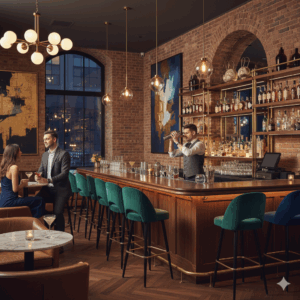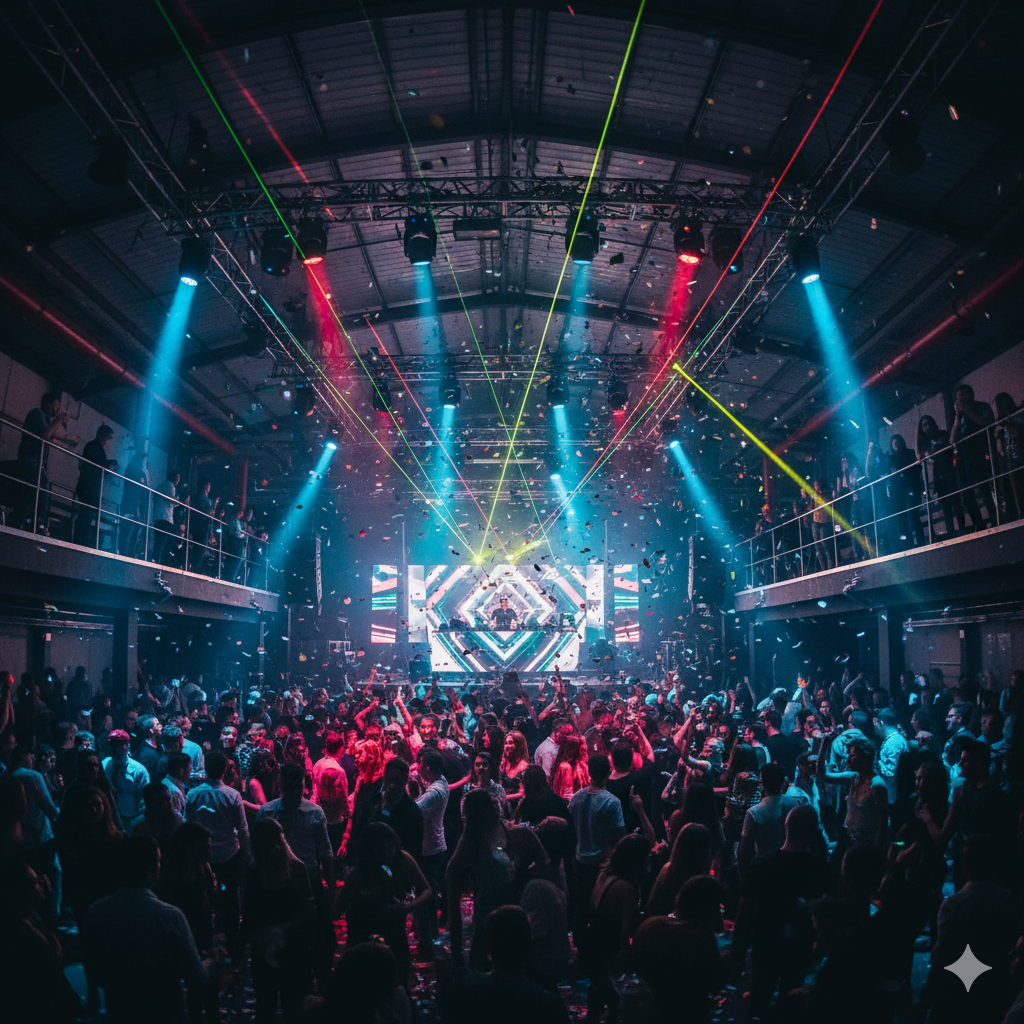
In Shibuya, a club is not just loud music. It is a managed night space designed around movement and mood: controlled entry, clear payment steps, and floor layouts that separate roles (main hall energy, side-floor social talk, lounge recovery, and VIP seating). That organization is part of the culture—it makes crowded nights feel “readable” even when you do not speak Japanese.
The “service” is not a mystery package; it is a set of institutional routines: wristbands or stamps, drink-ticket bundles, staff-guided line handling, and clearly marked zones (bar, smoking area where allowed, stage, VIP). You are paying for a curated environment—sound system, lighting, and the social choreography that keeps the room moving.
If you want a simple starting point, treat shibuya clubs as three connected scenes: Dogenzaka/Maruyama-cho (classic late-night rooms), Udagawa-cho (mainstream dance floors), and the Miyashita Park / Meiji-dori edge (hybrid spaces that feel like café-by-day, club-by-night).
Table of Contents
1. Where should you start when exploring shibuya clubs?
2. How do you access Shibuya’s top club areas?
3. What do prices, time slots, and entry rules look like?
4. Which venue types and music styles fit your night?
1. Where should you start when exploring shibuya clubs?
1-1. Pick a “rules-first” venue before you pick a vibe
Conclusion: Your easiest first night comes from venues that explain entry, ID, and on-site basics in one place.
For example, WOMB’s FAQ explains that door fees depend on the event page and that standard club-time events are generally 20+ with ID checks; it also lists lockers like ¥300/¥600 and cloak service like ¥500 per bag.
Official website (Japanese)
1-2. Use “cluster thinking” (Shibuya is built for it)
Conclusion: Shibuya nights are easiest when you stay inside one cluster so you can pivot quickly.
The Tokyo Metro Shibuya exit guide lists the nearby areas you will actually walk through—like Dogenzaka, Udagawa-cho, and Maruyama-cho—so you can match your venue list to a real map of exits and streets.
Official website (Japanese)
1-3. The “Shibuya club flow” (what happens at the door)
Conclusion: Expect a predictable sequence that you can prepare for.
You typically move through queue → ID check → pay cover (often bundled with drinks) → get a stamp/wristband → use lockers → enter the floor.
JR East’s Shibuya station page is useful because it clearly shows where facilities like coin lockers are located in the station—handy if you want to store items before you even reach the venue.
Official website (Japanese)
2. How do you access Shibuya’s top club areas?
2-1. The exits matter more than the distance
Conclusion: You save time by choosing the right exit, not by “walking faster.”
Tokyo Metro’s Shibuya yard map lists landmark targets (like SHIBUYA109, Dogenzaka, Udagawa-cho, and Maruyama-cho) tied to exits, which is exactly how you should navigate on a club night.
Official website (Japanese)
2-2. Dogenzaka & Maruyama-cho: classic late-night rooms
Conclusion: This hill-and-backstreet zone is where many “stay-late” venues sit.
WOMB publishes an official access page, and HARLEM publishes its Shibuya address and contact info—use those pages as your anchor references when you plan your walking route.
Official website (Japanese)
|
Official website (Japanese)
2-3. Miyashita Park / Meiji-dori edge: hybrid “day-to-night” spaces
Conclusion: If you want a smoother start (and an easy reset point), Miyashita Park works well.
MIYASHITA PARK’s official access page states Shibuya Station is about 3 minutes on foot and also lists other nearby station routes—use it as your “meet here first” location before moving to a club.
Official website (Japanese)
Table 1: Access & Hours
| Spot / Cluster | Walk Time | Hours (Example) | Area (JP Link) |
|---|---|---|---|
| Miyashita Park base (meet-up point) | ~3 min from Shibuya Station | Varies by facilities (meet-up friendly) | Official website (Japanese) |
| Udagawa-cho mainstream club area | (Editor’s note) short walk from central exits | Example opening hour 22:00–04:30 | Official website (Japanese) |
| Dogenzaka classic late-night area | (Editor’s note) hill route—use access pages | Event-based; example show 23:00–04:30 | Official website (Japanese) |
| Meiji-dori “day-to-night” hybrid hub | ~3 min to the park base | Example: café from 11:00, night opens 22:00 (event pages vary) | Official website (Japanese) |
Walk times and hours can change with events. The safest habit is to confirm on the official access or schedule pages on the day.
3. What do prices, time slots, and entry rules look like?
3-1. Entry fees: think “time tiers,” not one fixed price
Conclusion: Early entry is often cheaper; after midnight is often higher.
TK NIGHTCLUB publishes examples like men ¥500 (22:00–23:45) and ¥1,000 (23:45–4:30), with drink bundles shown on its price table.
Official website (Japanese)
3-2. Door vs advance tickets (and why it matters)
Conclusion: For popular nights, buying advance tickets can remove uncertainty.
WOMB’s event pages show advance ticket windows and example pricing; for one listed event, early bird is ¥4,000 and advance tickets are ¥5,000 (door is sometimes listed as TBA).
Official website (Japanese)
3-3. Age & ID: what you should assume by default
Conclusion: Treat late-night club events as 20+ unless the official page states otherwise.
CIRCUS TOKYO publishes that photo ID is required for entry and that events after 22:00 do not allow under-20 entry.
Official website (Japanese)
Table 2: Venue Types & Base Fees
| Venue Type | Typical Fee (Published Example) | Session Time (Published Example) | Area (JP Link) |
|---|---|---|---|
| Big-room techno/house club (event-ticket model) | Early bird ¥4,000 / Advance ¥5,000 (door may be TBA) | 23:00–04:30 (example event listing) | Official website (Japanese) |
| Live-house / club hybrid (ticketed shows + club nights) | Adv ¥2,000 / Door ¥2,500 (example event listing) | Event-based (start times vary) | Official website (Japanese) |
| Mainstream dance club (tiered entrance) | Men ¥500 early / ¥1,000 later (examples shown with drink bundles) | Opening hour 22:00–04:30 | Official website (Japanese) |
| System-page club (weekday/weekend blocks) | Weekend example: Men ¥2,000 (22:00–24:00) / Men ¥3,500 (after 24:00) | Opening hour 22:00–04:30 (everyday) | Official website (Japanese) |
These are official examples. Prices can change by special events, day-of-week, and entry time—re-check official pages before you go.
4. Which venue types and music styles fit your night?
4-1. Music-first rooms: curated nights and clear entry rules
Conclusion: If your priority is music, choose venues that publish event calendars and entry conditions.
CIRCUS TOKYO’s official site is a good example of “music-first clarity” because it states photo ID is required and highlights the 22:00 threshold policy for late-night entry.
Official website (Japanese)
4-2. Multi-floor venues: one building, multiple moods
Conclusion: Multi-floor spaces help groups because you can change energy without changing location.
OR TOKYO describes a three-layer structure (café / gallery / music bar) and also posts night openings like 22:00 (event pages vary), which makes it a good “mixed-purpose” base when your group wants flexibility.
Official website (Japanese)
4-3. On-site convenience: lockers, drinks, and re-entry rules
Conclusion: Convenience affects how long you can comfortably stay.
WOMB’s FAQ lists locker pricing (for example ¥300/¥600), cloak pricing (for example ¥500 per bag), and drink price ranges (soft drinks from ¥500, shots from ¥600, beer/cocktails from ¥700).
Official website (Japanese)
5. How do reservations, etiquette, and useful phrases work?
5-1. Tickets and guest lists: the simplest booking approach
Conclusion: If an event offers advance tickets, that is the lowest-stress option.
WOMB’s FAQ explains you can pay at the entrance for many events and also buy advance tickets online via its calendar when available.
Official website (Japanese)
Conclusion: For ticketed shows at clubasia, event pages often show ADV and DOOR pricing and link to ticket platforms.
Example: one listed event shows ADV ¥5,000 and DOOR ¥5,500.
Official website (Japanese)
5-2. Dress and conduct: “don’t disrupt the flow” is the rule
Conclusion: Shibuya clubs are less about formal dress and more about safe movement.
WOMB states it has no special dress code but may refuse clothing that is not appropriate for public spaces, and it warns about certain footwear (like beach sandals) on safety grounds.
Official website (Japanese)
Conclusion: Some venues publish “system” pages that include entry notices and time-block pricing; reading them helps you avoid surprises.
CLUB TK SHIBUYA publishes weekday/weekend entrance blocks and opening hours 22:00–04:30.
Official website (Japanese)
5-3. Useful Japanese phrases (simple, practical)
Conclusion: You do not need perfect Japanese—short, clear phrases work.
- 入れますか? (Hairemasu ka?) — “Can we enter?”
- チケットあります。 (Chiketto arimasu.) — “I have a ticket.”
- 身分証あります。 (Mibunshō arimasu.) — “I have my ID.”
- ロッカーはどこですか? (Rokkā wa doko desu ka?) — “Where are the lockers?”
- 再入場できますか? (Sai-nyūjō dekimasu ka?) — “Can I re-enter?”
- 予約したいです。 (Yoyaku shitai desu.) — “I want to make a reservation.”
If you are heading to a venue with strict ID rules, CIRCUS TOKYO’s official note is a good reminder that photo ID may be required at entry.
Official website (Japanese)
Table 3: Reservation & Eligibility
| Method | Lead Time | Eligibility | Official (JP Link) |
|---|---|---|---|
| Buy advance tickets via official calendar | From the moment sales open until day-of cutoff (event dependent) | Often 20+ for club-time; ID required (see official FAQ) | Official website (Japanese) |
| Use system page + arrive in the cheaper block | Same day (plan for 22:00–24:00 entry if you want lower fees) | Rules vary by venue; check notices on the official page | Official website (Japanese) |
| Standard door entry (time-tier model) | Same day (fees shown by time slot) | Bring ID; opening hour shown as 22:00–04:30 | Official website (Japanese) |
| Venue with photo-ID attention notice | Same day (event dependent) | Photo ID required; after 22:00 under-20 entry refused | Official website (Japanese) |
“Lead time” depends on event popularity. If a night looks busy, tickets or a VIP inquiry is the safest path.
6. Summary and Next Steps
If you have ever felt that Tokyo nightlife is “hard to read,” the solution is not insider knowledge—it is structure. Start from one keyword goal (Shibuya nightlife that is walkable), then translate that into a plan: one cluster, two venues max, and a clear entry-time target. That is exactly how SoapEmpire approaches shibuya clubs planning for visitors who want results, not random scrolling.
SoapEmpire focuses on plain-English guidance built around real systems: entry fees that change by time slot, ticket links that appear and disappear, and venue rules that can stop you at the door if you miss them (especially ID requirements). Instead of dumping a long list of club names, we frame Shibuya by outcomes: do you want music-first techno/house, a mainstream dance floor with clear price blocks, or a hybrid day-to-night space near Miyashita Park? Once you know your outcome, we point you to the correct official pages and show you what to check (hours, ticket windows, ID rules, drink-ticket bundles, and where you will stand in line).
Our advantage is organization and support. We cover Shibuya, Roppongi, Shinjuku, and other major cities with step-by-step guides, and we can help you book smoothly when the process is unclear—especially VIP tables, ticketed events, or venues that require Japanese-language contact. If you want hands-on help, SoapEmpire offers a 24-hour booking support service for only $10, which is designed for travelers and international residents who want to avoid awkward calls and last-minute confusion.
Use this article as your base, then confirm your chosen venue’s official system page on the day. If you want a second set of eyes on your plan, or you want us to coordinate a reservation, we can do that with the minimum information: your target venue, preferred time, and your name. You can also reference our official site for more guides at
SoapEmpire official website.
For reservations or inquiries, please contact us via the inquiry form.
6-1. A simple one-night template (easy to execute)
- Meet at Miyashita Park (easy landmark), then decide your first venue from official pages.
- Enter your main club before the higher price block (often before midnight).
- If you want a second venue, choose one within the same cluster so your walk is short and simple.
Conclusion: A calm meet-up point prevents the night from starting in “navigation mode.”
MIYASHITA PARK publishes a Shibuya Station walk time of about 3 minutes.
Official website (Japanese)
6-2. A visitor checklist (quick and practical)
- Photo ID (assume it is needed for late-night entry).
- Cash + card (some fees like lockers may differ by venue; editor’s note).
- Light layers + locker plan (so you are not carrying items on the floor).
- A screenshot or saved tab of the official system/ticket page.
Conclusion: “Door friction” is usually ID friction.
CIRCUS TOKYO explicitly requests photo ID at entry and states the 22:00 rule for late-night events.
Official website (Japanese)
6-3. Related SoapEmpire guides (internal reading)
- Tokyo dance club guide: areas, access, prices, and entry rules
- Clubs in Tokyo Japan: how to plan a smooth night out
- WOMB Nightclub Tokyo: a first-timer’s guide
- Night club category hub
FAQ
Q1. What entry fee should I expect at Shibuya clubs?
Conclusion: Expect time-tier pricing more than one flat cover.
For example, TK NIGHTCLUB publishes men ¥500 early and ¥1,000 later (with bundles shown), while some ticketed events at WOMB list advance prices like ¥4,000–¥5,000.
Official website (Japanese)
|
Official website (Japanese)
Q2. Do I need to book in advance, or can I just show up?
Conclusion: You can often pay at the door, but advance tickets reduce uncertainty.
WOMB’s FAQ explains both door payment and advance ticket purchasing via its calendar when available.
Official website (Japanese)
Q3. What ID rules should I assume?
Conclusion: Assume photo ID checks for late-night entry and assume 20+ unless stated otherwise.
CIRCUS TOKYO explicitly requests photo ID and states that events after 22:00 do not allow under-20 entry.
Official website (Japanese)
Q4. What is the easiest meeting point before going to a club?
Conclusion: Use a big landmark that is easy for everyone to reach.
MIYASHITA PARK’s access page states Shibuya Station is about 3 minutes on foot, making it a practical meet-up base before moving into Dogenzaka or Udagawa-cho.
Official website (Japanese)
If you’re interested in visiting any of these places, SoapEmpire offers a 24-hour booking support service for only $10.
Just send the store name, preferred time, and your name (nickname is fine) to:
artistatakuma@icloud.com.
We’ll take care of your reservation quickly and smoothly.