If you want best club Shinjuku results (not guesswork), pick your “anchor venue” first, then plan your timing around last train vs. late-night pricing windows.
This guide focuses on official, on-page numbers (walk times and entry fees) so you can decide fast.
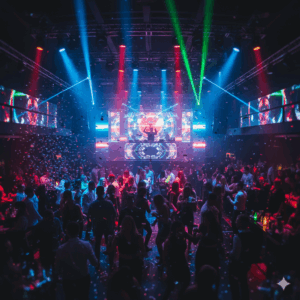
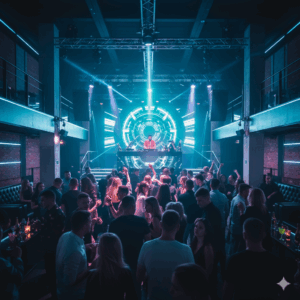
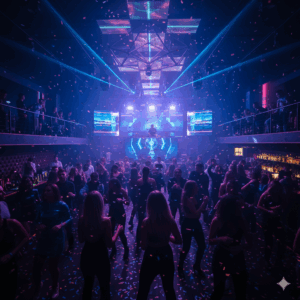
Modern Shinjuku club space (what it feels like): Most high-traffic venues are built around a clear “entry choreography”—ID check at the door, a short corridor that funnels you to lockers or cloak, then an open plan that splits into distinct zones (main floor, bar lounge, and sometimes a quieter room). In Kabukicho’s newer builds, this is literally vertical: multiple basement levels, each with a different sound and lighting identity.
What you actually do inside: For dance clubs, the core “service” is institutional—music programming, floor zoning, drink service, and crowd flow. For VIP, it becomes a formalized social format: table seating, bottle sets, and a defined time block. This is not about private transactions; it’s about how nightlife turns movement, sound, and proximity into a predictable experience.
Typical use cases: Visitors often split into two patterns—(1) “weekday reset” (short stay before last train) and (2) “late-night immersion” (midnight entry and beyond). Some venues explicitly design for the first pattern by opening earlier and pricing early entry differently.
1. Where should you start in best club Shinjuku?
2. How do you access top Shinjuku club areas?
3. What do prices, time windows, and age rules look like?
4. Which venue types and “services” matter in Shinjuku clubs?
5. How do reservations, etiquette, and phrases work?
1. Where should you start in best club Shinjuku?

If you want a big, multi-zone experience, use official floor maps to match your music taste to the right area.
1-1 What “club” means in Shinjuku (and why Kabukicho wins)
In Shinjuku, “club” can mean a dance club, a ticketed live venue, or (in some conversations) a host/hostess-style venue. This guide is about dance clubs and club-adjacent venues where the main product is music, space design, and crowd flow. Kabukicho dominates because it concentrates multiple “night infrastructure” pieces—stations, late hours, and venue density—into a walkable grid.
For a Kabukicho mega-venue built as a multi-area “junction,” see the venue concept and floor structure on the official ZEROTOKYO pages:
Official ZEROTOKYO concept & floor maps (Japanese).
1-2 Two anchor picks that cover most travelers
If your goal is to “do Shinjuku once and feel you got it,” these two anchors are the easiest to plan around:
- ZEROTOKYO: multi-level, multi-area programming (main hall + separate zones). Official access info and station walk times are published on:
ZEROTOKYO Access (Japanese). - WARP SHINJUKU: explicitly designed for two time blocks and multiple floors (including a lounge-like bar space). See the official concept and floor lineup on:
WARP SHINJUKU About (Japanese).
These two anchors also make logistics easier: you can plan your night around a single neighborhood, then add a second stop (Golden Gai bars or a live show) without complicated transfers.
1-3 A practical “first night” structure
The simplest structure is: early entry (before midnight) if you want lower prices and a lighter crowd, or late entry (after midnight) if you want peak energy. Some venues publish explicit early/late windows, so you can decide based on numbers instead of vibe guesses.
Zepp Shinjuku (TOKYO) official schedule (Japanese).
2. How do you access top Shinjuku club areas?

2-1 Kabukicho Tower area: the easiest hub for visitors
Kabukicho’s newer complex design puts multiple entertainment functions into one address block. For example, ZEROTOKYO publishes station-to-venue walk times (useful for meeting friends and timing entry).
Official access details:
ZEROTOKYO Access (Japanese).
If you want a broader view of Kabukicho as an “attraction cluster,” the Shinjuku tourism association lists many Kabukicho spots (including the tower complex) here:
Shinjuku tourism: Kabukicho spots (Japanese).
2-2 Golden Gai as a “second stop” (micro-bars after the club)
Golden Gai is the opposite of a mega-club: tiny bars packed into a narrow grid, where the “service” is a counter conversation format and a curated room mood. It works well as a second stop because you can downshift from loud music to small-space socializing without leaving Kabukicho.
The Shinjuku tourism association publishes a clear description plus station walk times (e.g., from Shinjuku Station and Shinjuku-sanchome):
Shinjuku tourism: Golden Gai (Japanese).
2-3 Use official walk-time numbers, not intuition
Table 2: Access & Hours
| Station | Walk Time | Hours | Area (JP Link) |
|---|---|---|---|
| Seibu-Shinjuku Station | 1 min | Event-based (example events open 11PM) | Official website (Japanese) |
| JR Shinjuku Station | 7 min | Event-based (example events open 11PM) | Official website (Japanese) |
| Shinjuku Station / Shinjuku-sanchome Station | 5 min (from Shinjuku Station) | Varies by bar (many operate late) | Official website (Japanese) |
Walk times above are taken from official access pages (or official tourism listings). Club hours often shift by event; use the official schedule/ticket page for your date.
3. What do prices, time windows, and age rules look like?

Entry is typically limited to age 20+ with ID checks, and some venues are cashless (plan your payment method).
3-1 Door charges: the numbers you can plan with
Shinjuku pricing is easiest when you treat it as a “time window” system. Some venues publish explicit early/late brackets with different fees. For example, WARP SHINJUKU lists a regular admission structure with early vs. late times and weekday vs. weekend patterns:
WARP SHINJUKU SYSTEM / Admission Fee (Japanese).
For event-based venues, the cleanest number is the door price on the event page itself. ZEROTOKYO event pages often show door and advance ticket prices alongside the opening time:
ZEROTOKYO event page example (Japanese).
3-2 Age rules and ID checks (what to bring)
Many Shinjuku nightlife venues operate with a consistent age gate: 20+ and an ID check at entry. ZEROTOKYO states that entry is for ages 20 and above and that ID checks are conducted for all guests:
ZEROTOKYO System / ID check info (Japanese).
WARP SHINJUKU also notes an age limit and ID confirmation in its rules section:
WARP SHINJUKU System / rules (Japanese).
3-3 A quick fee comparison table (club vs. live)
Table 1: Venue Types & Base Fees
| Venue Type | Typical Fee | Session Time | Area (JP Link) |
|---|---|---|---|
| Event-based mega club (multi-area) | Door example: ¥3,500 / Fastpass example: ¥3,000 | Example open: 11PM | Official website (Japanese) |
| Multi-floor dance club (time-window pricing) | Men: ¥1,000–¥4,000 (by day/time), Women: ¥800–¥1,000 | Example windows: Open–24:00, then 24:00–04:30 | Official website (Japanese) |
| Ticketed live venue (club-adjacent) | Event tickets vary (examples shown on schedule, including ¥10,000 and ¥6,000) | Open/Start times shown per event | Official website (Japanese) |
Fees above are taken directly from official pages (examples). Club pricing can change by event or campaign; always confirm on the official schedule/system page for your date.
Cashless policy (Japanese).
4. Which venue types and “services” matter in Shinjuku clubs?
4-1 Multi-area mega clubs: why the floor map matters
In a mega club, the “service” is not only the DJ lineup—it’s the ability to move between micro-environments without leaving the building. That’s why official floor maps are the quickest decision tool: they tell you whether you can step out of the main hall into a lounge or a smaller ring-style space when you need a different intensity.
ZEROTOKYO explicitly describes itself as a multi-area entertainment “junction,” and publishes floor maps on its official About page:
ZEROTOKYO floor maps (Japanese).
4-2 Multi-floor clubs with time-block design
Another Shinjuku pattern is the “two-block night”: a more casual, familiar-music window early, then a deeper club window later. WARP SHINJUKU describes a concept with multiple floors (including a lounge-like bar space) and an early opening approach:
WARP SHINJUKU concept & floors (Japanese).
If you want to optimize cost and crowd density, compare WARP’s published time windows against your arrival time:
WARP admission fee by time/day (Japanese).
4-3 Club-adjacent: live shows as a structured “first act”
If you prefer a more structured start, a ticketed live show can be your “first act,” then you shift into a club later. The value is predictability: you know start time and ticket price in advance, and you can plan your after-show move to Kabukicho clubs.
Zepp Shinjuku (TOKYO) publishes event listings with open/start times and prices on the official schedule page:
Zepp Shinjuku (TOKYO) official schedule (Japanese).
5. How do reservations, etiquette, and phrases work?

Bring photo ID, follow dress-code guidance (no extreme casual), and learn a few Japanese phrases to reduce friction at the door.
5-1 Reservations: door entry vs. tickets vs. VIP
Think of Shinjuku reservations as three channels:
- Door entry: arrive and pay the admission fee (often varies by time). WARP publishes its fee structure and time windows:
WARP System / Admission Fee (Japanese). - Advance tickets: buy an event ticket in advance for predictable entry. ZEROTOKYO event pages show door vs. advance pricing:
ZEROTOKYO event ticket section (Japanese). - VIP: book a table for a defined social format (seating, bottle sets, and time blocks). ZEROTOKYO publishes VIP reservation channels and reception times:
ZEROTOKYO VIP info (Japanese).
Table 3: Reservation & Eligibility
| Method | Lead Time | Eligibility | Official (JP Link) |
|---|---|---|---|
| General entry (door) | Same day (arrive within the listed time window) | Typically 20+ with photo ID check | Official website (Japanese) |
| Advance event ticket | Before arrival (recommended on popular nights) | Typically 20+ with photo ID check | Official website (Japanese) |
| VIP table reservation | In advance (VIP reception times published) | Typically 20+ and venue rules apply | Official website (Japanese) |
This table summarizes published official options. VIP pricing and plans can vary by event; confirm on the venue’s VIP page or the specific event page.
5-2 Etiquette: dress code, photos, and smooth entry
Shinjuku clubs are generally flexible, but “not extreme casual” is a safe baseline—especially on weekends. ZEROTOKYO states it does not set a special dress code, but notes that staff may refuse entry if attire is not suitable for a public venue (including items like sandals):
ZEROTOKYO dress code guidance (Japanese).
WARP also publishes dress-code guidance and notes that very casual footwear may be refused:
WARP dress code guidance (Japanese).
ZEROTOKYO cashless policy (Japanese).
5-3 Useful Japanese phrases (simple, polite, effective)
You don’t need fluent Japanese to enter, but a few phrases reduce friction and show you understand the “system” of the place.
If you’re using official advance ticketing, it also helps to reference the event page at the door (prices and open time are usually shown):
ZEROTOKYO event pricing example (Japanese).
- “Futari desu.” = “Two people.”
- “Kippu arimasu.” = “I have a ticket.”
- “VIP yoyaku shiteimasu.” = “I have a VIP reservation.”
- “Shiharai wa kādo de ii desu ka?” = “Can I pay by card?”
- “Shashin wa daijōbu desu ka?” = “Is a photo okay?”
For VIP-specific reception details and channels, refer to the official VIP pages:
ZEROTOKYO VIP (Japanese)
and
WARP VIP (Japanese).
6. Summary and Next Steps
Shinjuku nights are exciting, but they can also feel “too open-ended” if you don’t know the local systems: where the real Kabukicho hubs are, when prices change, how to enter smoothly, and which floor fits your music taste. That’s why many travelers search for best club Shinjuku and still end up wasting time in the wrong place, arriving after their ideal time window, or misunderstanding the difference between door entry, advance tickets, and VIP tables.
SoapEmpire makes this simple by turning Shinjuku nightlife into a clear, step-by-step plan. We organize Kabukicho choices around practical needs—access, entry fee, and VIP table options—so you can pick one anchor venue and build a smooth two-stop route (for example: a ticketed live show first, then a dance floor later, or the reverse). We also help you avoid common friction points like cashless payment surprises, ID requirements, and confusing reception channels, using official venue information as the baseline.
What makes SoapEmpire different is our traveler-first formatting: we translate venue “systems” into Plain English, keep the focus on reliable numbers (walk times, time windows, and published fees), and offer guidance across Japan’s major cities—not only Tokyo, but also Osaka, Nagoya, and Fukuoka. If you’re balancing last train timing, budget, or language comfort, our recommendations help you choose a venue that matches your real constraints, not just hype.
You can start by browsing our main site at SoapEmpire (official), then use our guides to decide the right Kabukicho plan for your group size, preferred music, and spending style. If you want the fastest route to a confirmed plan, we can also support your booking steps—especially when you’re comparing multiple time windows or thinking about VIP seating.
For reservations or inquiries, please contact us via the inquiry form.
6-1 A simple two-stop itinerary that fits most people
Here are two easy templates. Pick one based on whether you prefer “structured first act” or “dance floor first”:
- Template A (structured first act): Start at a ticketed show (check open/start and price), then move to Kabukicho club entry later.
Use the official schedule to select your show:
Zepp Shinjuku (TOKYO) schedule (Japanese). - Template B (dance floor first): Enter before midnight to control cost, then choose a second stop (another floor, or Golden Gai micro-bars).
Use official walk-time info to reduce navigation stress:
ZEROTOKYO access (Japanese)
and
Golden Gai access (Japanese).
6-2 Checklist before you go
- Bring photo ID (many venues publish 20+ entry rules).
- Confirm your door/advance ticket price on the official page (examples are shown on event pages).
- Plan payment method (some venues are cashless; check the official system page).
- Pick shoes and outfit that won’t be considered “too casual” (see dress guidance on official pages).
SoapEmpire internal guides you may also like:
Tokyo nightlife guide,
Shinjuku & Kabukicho guide,
How to book (step-by-step).
6-3 FAQ
Q1. How much does it cost to enter a Shinjuku club?
Many venues use door charges in the low thousands of yen. Some publish early/late windows (for example, WARP lists men’s fees from ¥1,000 early to ¥4,000 later on certain days, with a closing window shown up to 04:30 on its system page).
Confirm on:
WARP admission fee (Japanese).
Q2. Do I need to book in advance, or can I just show up?
You can often show up for general entry, but advance tickets can make popular nights simpler. ZEROTOKYO event pages typically show door vs. advance prices (example: door ¥3,500, fastpass ¥3,000).
Check:
ZEROTOKYO event page example (Japanese).
Q3. What ID do foreigners need for Shinjuku clubs?
Many venues operate with an ID check for all guests and an age limit of 20+. ZEROTOKYO lists acceptable photo IDs on its system page (including passport and other photo IDs).
See:
ZEROTOKYO ID check guidance (Japanese).
Q4. Is VIP worth it in Shinjuku?
VIP is worth considering if you have a group, want guaranteed seating, or prefer a “structured social format” (table + time block). ZEROTOKYO publishes VIP reservation methods (online/event page, phone, and LINE) and reception times on its VIP page:
ZEROTOKYO VIP info (Japanese).
If you’re interested in visiting any of these places, SoapEmpire offers a 24-hour booking support service for only $10.
Just send the store name, preferred time, and your name (nickname is fine) to:
artistatakuma@icloud.com.
We’ll take care of your reservation quickly and smoothly.