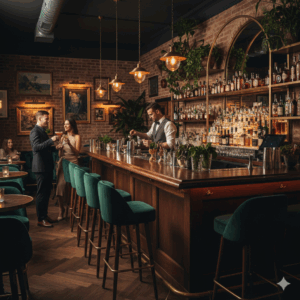
In Tokyo, “gay sauna” can mean a multi-floor men’s sauna with baths, steam rooms, relaxation floors, and private rest spaces, or an underwear-style lounge that blends “rest area + social area” under a defined dress code. Architecturally, these venues are designed around a clear flow: reception → lockers → bathing/sauna zone → lounge/rest zone (sometimes across multiple floors). Many are near major stations, which makes late-night and short-stay visits practical.
Service-wise, the core offering is a paid, time-limited stay that includes bathing/sauna facilities and shared relaxation spaces. Some venues list private rooms and longer stays like “12 hours” or “14 hours” on their official pages, while others emphasize a lounge concept with Wi-Fi, lockers, towels, and basic amenities included in a single entry fee (and sometimes a daytime discount). For example, 24 Kaikan’s official pages list time-based entry fees, and BodyBreath’s official “System” page outlines a lounge-style model with a dress code and pricing tiers:
24 Kaikan official website (Japanese) /
BodyBreath System (Japanese).
Typical visitors range from locals stopping by after work to travelers who want a bath, a quiet reset, and a low-pressure way to read the city’s nightlife. In an ethnographic sense, these venues act as “institutionalized intimacy” spaces: not a bar conversation, not a hotel room, but a structured environment where people negotiate closeness through rules, clothing cues, and shared etiquette. The point is not spectacle—Tokyo’s version is usually about controlled boundaries, clear signage, and predictable systems.
1. Where should you start in gay saunas tokyo?
2. How do you access top areas in Tokyo?
3. What do prices, time limits, and eligibility look like?
4. Which venue types and services fit your style?
1. Where should you start in gay saunas tokyo?
1-1 A simple definition that matches Tokyo reality
In plain terms, a Tokyo gay sauna is a paid men-only bath/sauna-and-rest facility that also functions as a social space. Some are traditional “sauna + bathhouse” buildings with multiple floors (baths, sauna rooms, rest floors, optional private rooms). Others operate closer to a themed lounge with an underwear dress code and a defined “house style.” You can see how the official 24 Kaikan site frames itself as a “hotel & sauna” concept across multiple locations:
24 Kaikan information (English page on official site).
1-2 Why these venues exist (a cultural lens)
Tokyo nightlife is dense, but personal space is carefully managed. Gay saunas institutionalize that balance: they provide a predictable, paid environment where people can cool down, reset, and socialize without the constant noise and negotiation of street nightlife. The “system” (entry fee, stay time, dress code) is not just logistics—it is the cultural technology that makes a semi-intimate space workable among strangers.
1-3 The first-timer flow (what to expect)
Most venues follow a similar rhythm: check-in and pay → receive a key or wristband → change and store belongings → bath/sauna → lounge/rest → shower and exit. Your most important success factor is not “knowing everything”—it’s choosing a venue that publicly explains the rules. For example, BodyBreath’s official “System” page lays out its operating hours, stay model, dress code, and pricing structure:
BodyBreath System (Japanese).
2. How do you access top areas in Tokyo?
2-1 Shinjuku: the easiest “first stop” district
Shinjuku is transit-rich and tourist-friendly, and it also contains Japan’s best-known gay nightlife cluster (Ni-chome). Even if you’re not bar-hopping, the area is practical because many venues are a short walk from Shinjuku-sanchome Station. For a mainstream spa option near this zone, Thermae-Yu publishes clear access details, including a ~2-minute walk from Shinjuku-sanchome Station (E1 exit):
Thermae-Yu access (Japanese).
2-2 Ueno: a second hub with strong station access
Ueno is a practical base if you’re staying on Tokyo’s northeast side or arriving via rail connections that pass through Ueno Station. Some sauna + capsule properties there publish very clear walking times on their official pages. For example, the official page for “Ueno Station Hostel Oriental 1” states about 5 minutes from JR Ueno Station and about 3 minutes from Okachimachi Station:
Ueno Station Hostel Oriental 1 (Official).
2-3 Reading venue location notes the Tokyo way
Tokyo venues often describe access by “nearest station + exit + minutes.” If a venue says “徒歩約2分,” treat that as very accurate. If it says “徒歩すぐ,” that typically means “very close,” but you should still open the official access page and cross-check your map app. BodyBreath’s official access page gives a landmark-style description (near Shinjuku 2-chome) to help you find the entrance:
BodyBreath access (Japanese).
Table 2: Access & Hours
| Station | Walk Time | Hours | Area (JP Link) |
|---|---|---|---|
| Shinjuku-sanchome (E1 exit) | ~2 min | 24 hours | Official website (Japanese) |
| JR Shinjuku (East exit) | ~9 min | 24 hours | Official website (Japanese) |
| JR Ueno / JR Okachimachi | ~5 min / ~3 min | See property details | Official website (Japanese) |
| Shinjuku 2-chome landmark area | Very close (landmark directions) | Wed 17:00 → Mon 12:00 (24h operation in-between) | Official website (Japanese) |
Numbers are taken from each venue’s official access page. If your route app shows a different exit, follow the venue’s exit guidance first, then confirm by map.
3. What do prices, time limits, and eligibility look like?
3-1 Common price logic (the “system”)
Tokyo venues often use a “stay window” model: you pay once and can remain for a defined time. On 24 Kaikan’s official pages, you can see daytime and late-night entry fees listed alongside stay lengths, for example ¥3,300 for a 12-hour stay (daytime) and ¥3,900 for a 14-hour stay (late night), plus an extension fee:
24 Kaikan Ueno (Official) /
24 Kaikan Shinjuku (Official).
3-2 Lounge-style pricing and discounts
Some venues frame themselves as a lounge with a dress code and a single entry fee, sometimes offering daytime discounts. BodyBreath’s official “System” page lists a general entry around ¥1,500, with discount tiers and a weekday daytime discount as low as ¥1,000:
BodyBreath System (Japanese).
3-3 Eligibility and what “bring ID” really means
Many adult nightlife venues in Tokyo may request identification, especially when house rules depend on age. For example, BodyBreath’s official FAQ and system notes explicitly mention an 18+ baseline and that staff may request ID confirmation:
BodyBreath FAQ (Japanese).
If you are visiting a different venue, treat “ID recommended” as a standard best practice.
Table 1: Venue Types & Base Fees
| Venue Type | Typical Fee | Session Time | Area (JP Link) |
|---|---|---|---|
| Multi-floor gay sauna (bath + rest + optional rooms) | ¥3,300–¥3,900 | 12–14 hours | Official website (Japanese) |
| Underwear-style lounge (dress code + lounge concept) | ¥1,000–¥1,500 (daytime discount may apply) | Up to 24 hours (per house system) | Official website (Japanese) |
| Mainstream spa near Shinjuku nightlife (not gay-only) | ¥2,900–¥3,000 (base entry) | Up to 18 hours (06:00–24:00) | Official website (Japanese) |
| Men’s spa day-use (hotel spa model) | ¥1,400–¥1,800 (example courses) | 60–180 min (by course) | Official website (Japanese) |
The goal is “conclusion → number → official source.” Prices and time windows vary by day and season, so confirm the latest on each official page before visiting.
4. Which venue types and services fit your style?
4-1 Multi-floor sauna buildings (classic Tokyo model)
The classic model is a vertical building where each floor has a role: reception/lockers, bathing and sauna floors, relaxation floors, and (sometimes) optional private rooms. On 24 Kaikan’s official Ueno page, you can see an unusually detailed breakdown of floors and facilities—bath areas, sauna types, lounge/rest, training room, and more:
24 Kaikan Ueno (Official).
4-2 Underwear dress code venues (signals and structure)
Some venues organize interaction through “style rules.” A dress code becomes a social cue, not just fashion. BodyBreath’s official system page explicitly states an underwear-based style and describes how the venue expects guests to spend time inside:
BodyBreath System (Japanese).
If you are new, this can actually be easier than a bar: the rulebook reduces ambiguity.
4-3 Mainstream spas used by nightlife travelers
Not every traveler wants a gay-only venue. Tokyo also has high-quality mainstream spas near nightlife zones where visitors go simply to bathe, sauna, rest, and reset. Thermae-Yu publishes a clear fee table and operating flow, which can be helpful if your priority is comfort and predictability:
Thermae-Yu user guide & prices (Japanese).
Think of this option as “sauna culture first,” with nightlife as a secondary context.
5. How do reservations, etiquette, and phrases work?
5-1 Reservations: when you need them and when you don’t
Many venues are “walk-in for entry,” but private rooms can be different. The official 24 Kaikan homepage states that private room reservations should be made by phone (and that email is not used for booking):
24 Kaikan official website (Japanese).
On the mainstream spa side, Centurion’s “Sauna Resort Oriental” page explicitly notes that day-use reservations are not accepted:
Sauna Resort Oriental (Official).
5-2 Etiquette: the Tokyo “quiet clarity” rule
Tokyo sauna etiquette tends to be calm and rule-forward. Read signage, keep your voice low in rest areas, and assume that staff is available if you’re confused. If a venue uses a dress code, follow it exactly; it is part of the social structure, not a suggestion. BodyBreath’s official pages spell out an underwear-based house style and also explain what is included in the fee and how payment works:
BodyBreath System (Japanese) /
BodyBreath FAQ (Japanese).
5-3 Useful Japanese phrases (simple and effective)
You do not need perfect Japanese. Short, polite sentences work well in Tokyo. These phrases are widely understood and help you stay respectful:
- 「初めてです」 (Hajimete desu) — “It’s my first time.”
- 「システムを教えてください」 (Shisutemu o oshiete kudasai) — “Please explain the system.”
- 「英語は大丈夫ですか?」 (Eigo wa daijoubu desu ka?) — “Is English OK?”
- 「すみません、ここで合っていますか?」 (Sumimasen, koko de atteimasu ka?) — “Excuse me, is this the right place?”
- 「大丈夫です。ありがとうございます」 (Daijoubu desu, arigatou gozaimasu) — “I’m OK, thank you.” (a soft, polite decline)
- 「今日は入れますか?」 (Kyou wa hairemasu ka?) — “Can I enter today?”
BodyBreath FAQ (Japanese).
Table 3: Reservation & Eligibility
| Method | Lead Time | Eligibility | Official (JP Link) |
|---|---|---|---|
| Walk-in entry (typical) | Same day | Bring ID (may be requested) | Official website (Japanese) |
| Private room reservation by phone (where offered) | As needed | Venue-specific | Official website (Japanese) |
| Dress code venue entry | Same day | 18+ baseline + house style rules | Official website (Japanese) |
| Mainstream spa day-use | No reservation (per venue note) | Follow property rules | Official website (Japanese) |
“Reservation” often means “private rooms” rather than “entry.” When in doubt, confirm on the official site and call if you need a specific room or timing.
6. Summary and Next Steps
Visiting gay saunas tokyo for the first time can feel confusing for a simple reason: Tokyo’s nightlife is highly structured. A venue may look like a normal building from the street, but inside it runs on a “system” of time limits, floor rules, and small social signals—especially in areas like Shinjuku Ni-chome and Ueno. Travelers often worry about three things: (1) choosing the right venue type, (2) understanding the entry fee and stay time, and (3) communicating politely at reception without stress.
The solution is to treat the night like a simple plan rather than a mystery. First, pick a venue category that matches your comfort level: a classic multi-floor sauna (often easiest for “bath + rest”), an underwear dress-code lounge (clear social structure), or a mainstream spa near nightlife (comfort-first). Second, confirm the numbers on the official website—fees, hours, and whether private rooms require a phone call. Third, arrive earlier on your first visit so you can read signage and learn the flow without rushing.
That’s exactly where SoapEmpire helps. We translate Tokyo nightlife systems into plain English and organize choices so you can act confidently. Our guides focus on practical details—prices, access, and how to pick a venue that fits your style—without hype or awkwardness. If you’re comparing 24 Kaikan-style multi-floor venues and dress-code lounges, we help you understand what the rules actually mean in real life: what you pay, how long you can stay, and how to handle the front desk smoothly.
Most importantly, we offer 24-hour reservation support for a flat $10. This is ideal if you want a private room, a specific timing, or simply want a Japanese-speaking helper to confirm details directly with the venue. You’ll save time, avoid misunderstandings, and keep your trip relaxed—especially if you’re moving between neighborhoods or traveling with limited Japanese. Start with these internal guides for context: Shinjuku Ni-chome nightlife basics, Ueno nightlife & sauna area overview, and How to book Japanese nightlife smoothly.
For reservations or inquiries, please contact us via the inquiry form.
6-1 A safe “first night” plan you can repeat
Pick one area (Shinjuku or Ueno), open the official page, and confirm the “system” (fee + stay time). If you want Shinjuku station clarity, use the official access details from a nearby facility as a navigation anchor:
Thermae-Yu access (Japanese).
Then keep your first visit simple: bath, sauna, lounge, exit. Repeat with confidence later.
6-2 What to check on official pages before you go
- Fee + stay time window (example listings appear on official 24 Kaikan pages): Official page (Japanese).
- Dress code / house style (example: BodyBreath): Official page (Japanese).
- Whether reservations are accepted (example note: some day-use spas do not accept reservations): Official page (Japanese).
6-3 Editor’s note (when info is not clearly published)
※参考情報(editor’s note): Some venues do not publish “walk minutes” or detailed English instructions, and official pages can be very minimal. In those cases, rely on what is explicit (fees, stay time, and contact phone) and use a map app for the final approach. If you need certainty for a private room or a specific time, phone confirmation is the most reliable route, and SoapEmpire can help coordinate.
FAQ
Q1) How much do gay saunas in Tokyo usually cost?
Many venues work on a time-based entry fee. For example, some multi-floor sauna venues list entry around ¥3,300 (daytime) and ¥3,900 (late night) with set stay limits on their official pages, while some underwear-style lounges list entry around ¥1,500 and offer daytime discounts. Always confirm the latest price on the official website before you go.
Q2) Do I need a reservation to enter?
Most entries are walk-in. Some venues state that private rooms can be reserved by phone, while day-use at some mainstream spas states reservations are not accepted. If you want a specific private room or plan to arrive late, calling ahead is the safest option.
Q3) What should I bring and what is the basic etiquette?
Bring cash (some venues are cash-only) and an ID in case staff requests age verification. Follow house rules, keep conversations low-volume in quiet areas, and respect consent: a polite “no” is normal and should be accepted immediately.
Q4) Where are the easiest areas to start in Tokyo?
Shinjuku (near Ni-chome / Shinjuku-sanchome) is the most tourist-friendly hub with easy transit access. Ueno is another major sauna area and is convenient for travelers staying on the northeast side of the city.
If you’re interested in visiting any of these places, SoapEmpire offers a 24-hour booking support service for only $10.
Just send the store name, preferred time, and your name (nickname is fine) to:
artistatakuma@icloud.com.
We’ll take care of your reservation quickly and smoothly.
“`
::contentReference[oaicite:0]{index=0}