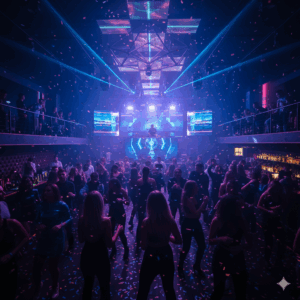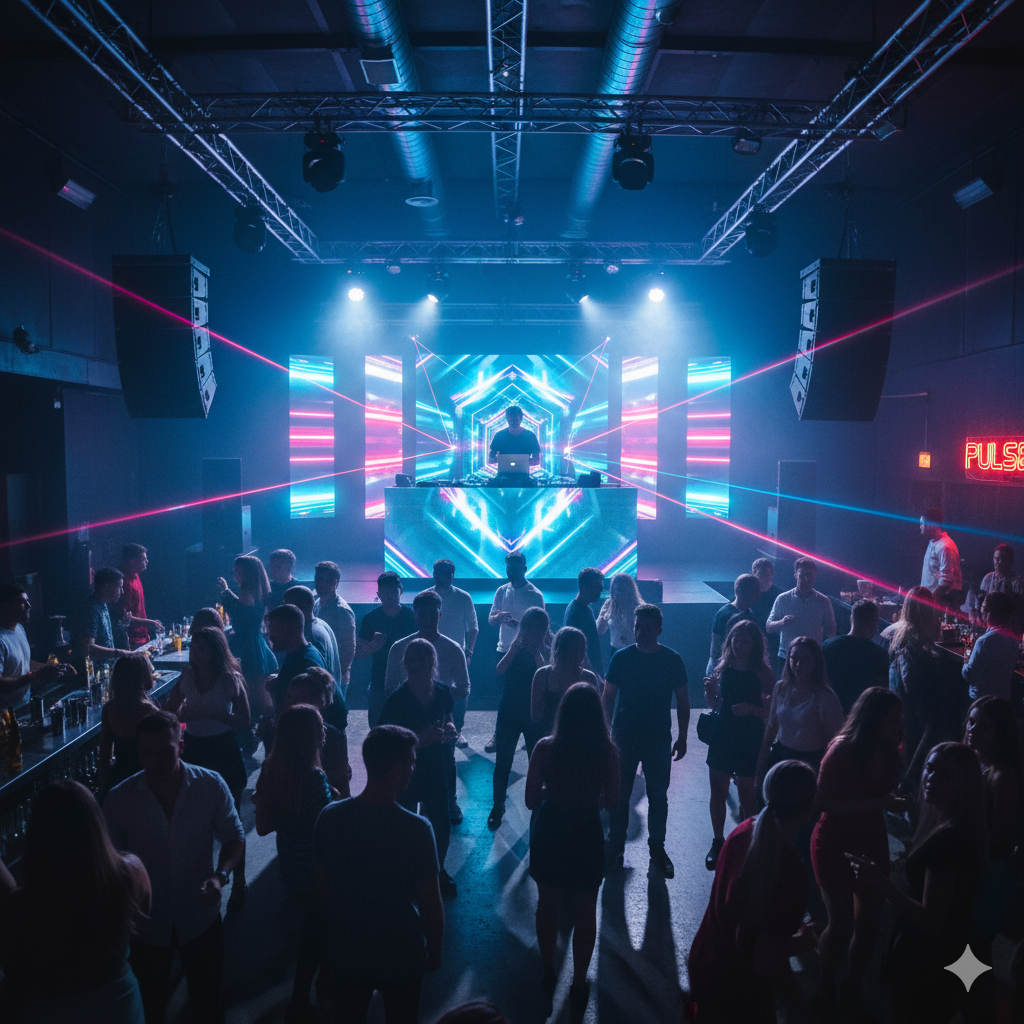
Roppongi’s club scene is “designed movement”: you transition through clear steps (entrance → ID check → payment/tickets → floor choice → last train vs. late-night flow). Architecturally, many venues use a layered layout—front desk and corridor lighting that slows you down, then an abrupt “reveal” into the main floor where sound and light become the social language. This is part of a broader urban pattern in Tokyo nightlife: spaces are built to create predictable, safe-feeling routes for crowds while still delivering a sense of “special night” performance.
Service content is usually structured around (1) entry and drink-ticket systems, (2) dance-floor access, (3) bar service, and (4) optional seating upgrades (VIP tables / private rooms). Some places are closer to “club lounges” (music + food + cocktails) and work well for a first stop; others are “dance-first” and feel like a late-night peak.
In plain terms: if you want easy logistics, anchor your night around Roppongi Station exits and connected complexes like Tokyo Midtown, which is directly connected to the station via the Oedo Line Exit 8 and underground routes from the Hibiya Line. Tokyo Midtown official access (Japanese)
Table of Contents
1. Where should you start with roppongi night clubs?
2. How do you access top areas in Roppongi at night?
3. What do prices, time, and entry rules look like?
4. Which venue types and services fit your style?
5. How do reservations, etiquette, and useful phrases work?
1. Where should you start with roppongi night clubs?
1-1. A simple first-night route (lounge → club → disco)
If it’s your first time in Roppongi, the easiest way to enjoy the night is to follow the “energy curve.” Begin somewhere that lets you talk (music is present but not dominating), then go to a dance floor when the crowd is ready, then finish somewhere comfortable and familiar-feeling.
A practical example is starting at a lounge-style venue like R2 SUPPERCLUB, which explicitly positions itself as a refined club lounge and states that cover charge is free. The point is not “saving money”; it’s controlling the pace of your night—arrive, settle, and then decide whether you want a harder club environment later. R2 SUPPERCLUB official website (Japanese)
1-2. Why Roppongi feels different (international + compact)
Roppongi is compact: multiple nightlife “micro-zones” sit within walking distance of Roppongi Station exits and big complexes. This creates a specific social rhythm: people arrive in waves (post-dinner), drift between venues, and re-gather in clusters at late-night peaks.
The infrastructure supports that drift. For example, Tokyo Midtown is directly connected to Roppongi Station (Oedo Line Exit 8 and an underground route from the Hibiya Line), which makes it an easy meeting hub before you move to clubs. Tokyo Midtown official access (Japanese)
1-3. Choosing your vibe: cover charge, VIP table, dress code
Three sub-keywords explain most choices here: cover charge, VIP table, and dress code. Some venues focus on entry + drink tickets; others highlight seating packages; almost all prefer a “smart night out” look.
As a reference point, V2 TOKYO publishes a clear entrance-fee system (weekday/weekend) and also lists VIP table set pricing (2-hour set) on its official site. V2 TOKYO official website (Japanese)
2. How do you access top areas in Roppongi at night?
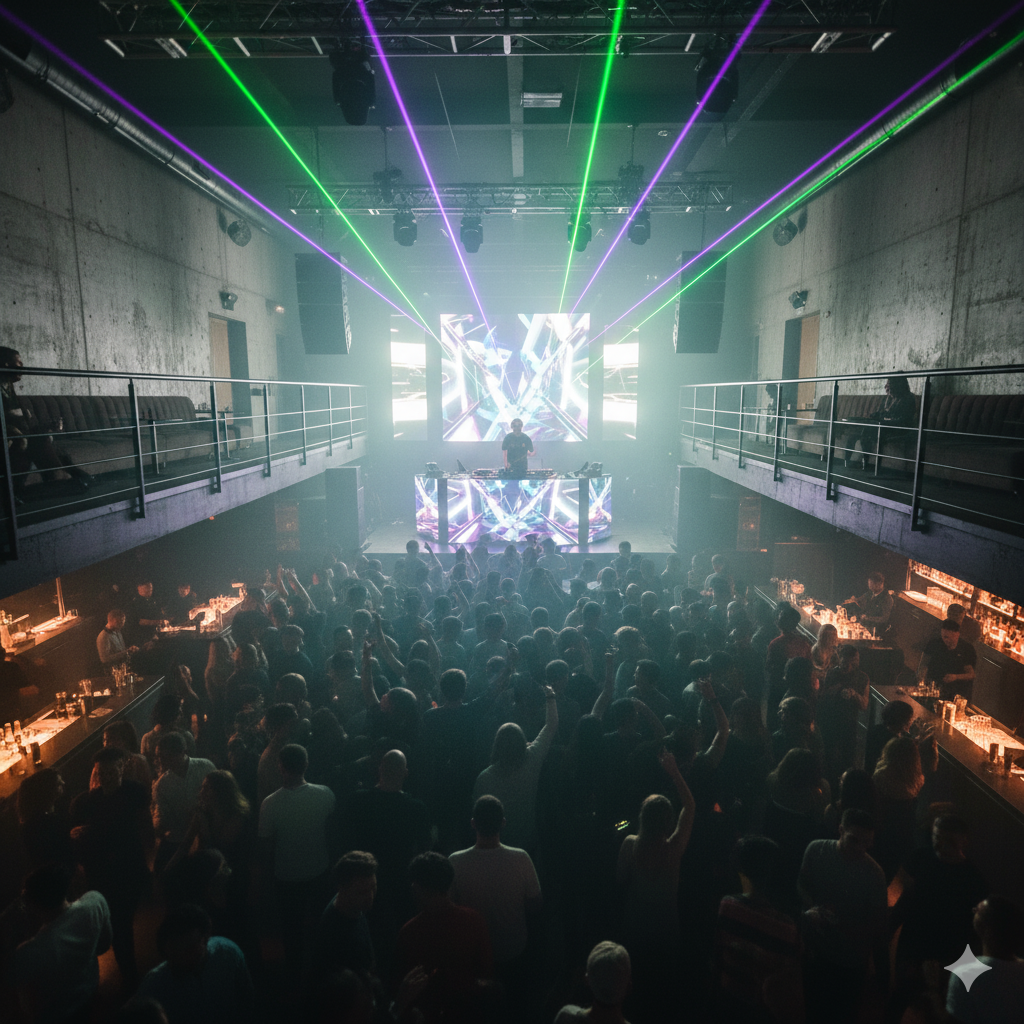
2-1. The exits that matter (Hibiya Line / Oedo Line)
At night, “the right exit” is the real shortcut. Tokyo Metro provides an exit guide for Roppongi Station (Hibiya Line) showing nearby landmarks and which exit leads where (including Tokyo Midtown and Roppongi Hills-related destinations). Tokyo Metro Roppongi Station yard map (Japanese)
If you’re using the Oedo Line, the Tokyo Metropolitan Bureau of Transportation also maintains official station information for Roppongi Station (E-23). Toei Subway Roppongi Station info (Japanese)
2-2. Tokyo Midtown as a meeting hub (direct connection)
If you need a simple “meet here” spot, Tokyo Midtown works because access is straightforward: it’s directly connected from the Oedo Line via Exit 8, and also reachable by underground passage from the Hibiya Line. Tokyo Midtown official access (Japanese)
Tokyo Midtown’s official access page also gives concrete walking-time references from nearby lines (for example, Nogizaka Station is about 3 minutes on foot from Exit 3). Tokyo Midtown official access (Japanese)
2-3. Venue-specific shortcuts (walk times from exits)
When a venue publishes its own access, trust it: it’s usually the most practical route. For example, V2 TOKYO states it is a short walk—1 minute from Roppongi Station Exit 7 (Oedo Line) or Exit 4B (Hibiya Line). V2 TOKYO official website (Japanese)
R2 SUPPERCLUB similarly publishes a concise route: from Hibiya Line Exit 4B, it’s about 2 minutes on foot toward Nogizaka, and it also notes a comparable short walk from the Oedo Line side. R2 SUPPERCLUB official website (Japanese)
Table 1: Venue Types & Base Fees
| Venue Type | Typical Fee | Session Time | Area (JP Link) |
|---|---|---|---|
| Large “superclub” (dance-first, ticket system) – V2 TOKYO | Men weekday ¥2,000 (1 drink ticket); weekend ¥4,000 (2 drink tickets); women free entry | Entry covers the night; VIP tables shown as 2 hours set pricing | Official website (Japanese) |
| Hybrid club + bar (early free bar entry, later club cover) – CROSS ROPPONGI | Weekday after 22:00: men ¥1,500, ladies ¥1,000; weekend after 22:00: men ¥2,500 | 20:00–22:00 bar entry free; 22:00–last club+bar entry | Official website (Japanese) |
| Retro disco club (early happy hour + ticket entry) – MAHARAJA ROPPONGI | Standard: men ¥3,500 (2 drinks), ladies ¥2,500 (2 drinks); happy hour from ¥1,000 ladies / ¥2,000 men | Open hours vary by day; weekend listed as 19:00–5:00 | Official website (Japanese) |
| Dinner-to-late club lounge (music + food + cocktails) – R2 SUPPERCLUB | Cover charge free (food & drink menu style) | Mon–Sat 17:00–05:00; Sun 17:00–03:00 (L.O. 02:30) | Official website (Japanese) |
Numbers are shown exactly as published on each venue’s official page. Event nights and seasons can change pricing, so treat these as a baseline and check the official site on the day you go.
Table 2: Access & Hours
| Station | Walk Time | Hours | Area (JP Link) |
|---|---|---|---|
| Roppongi Station (Oedo Line Exit 7 / Hibiya Line Exit 4B) → V2 TOKYO | 1 min | Nightly (see system/VIP details) | Official website (Japanese) |
| Roppongi Station (Hibiya Line Exit 4B) → R2 SUPPERCLUB | 2 min | Mon–Sat 17:00–05:00; Sun 17:00–03:00 | Official website (Japanese) |
| Tokyo Midtown (direct connection from Roppongi Station) | Direct (Oedo Exit 8) | Complex hours vary (shops/restaurants listed) | Official website (Japanese) |
| CROSS ROPPONGI (Roppongi 6-chome area) | Entry windows start 20:00 | 20:00–22:00 bar entry; 22:00–last club+bar entry | Official website (Japanese) |
“Direct” means the complex is connected via station exits/underground routes as published. “Last” is used exactly where the venue uses it; closing time can vary by night.
3. What do prices, time, and entry rules look like?
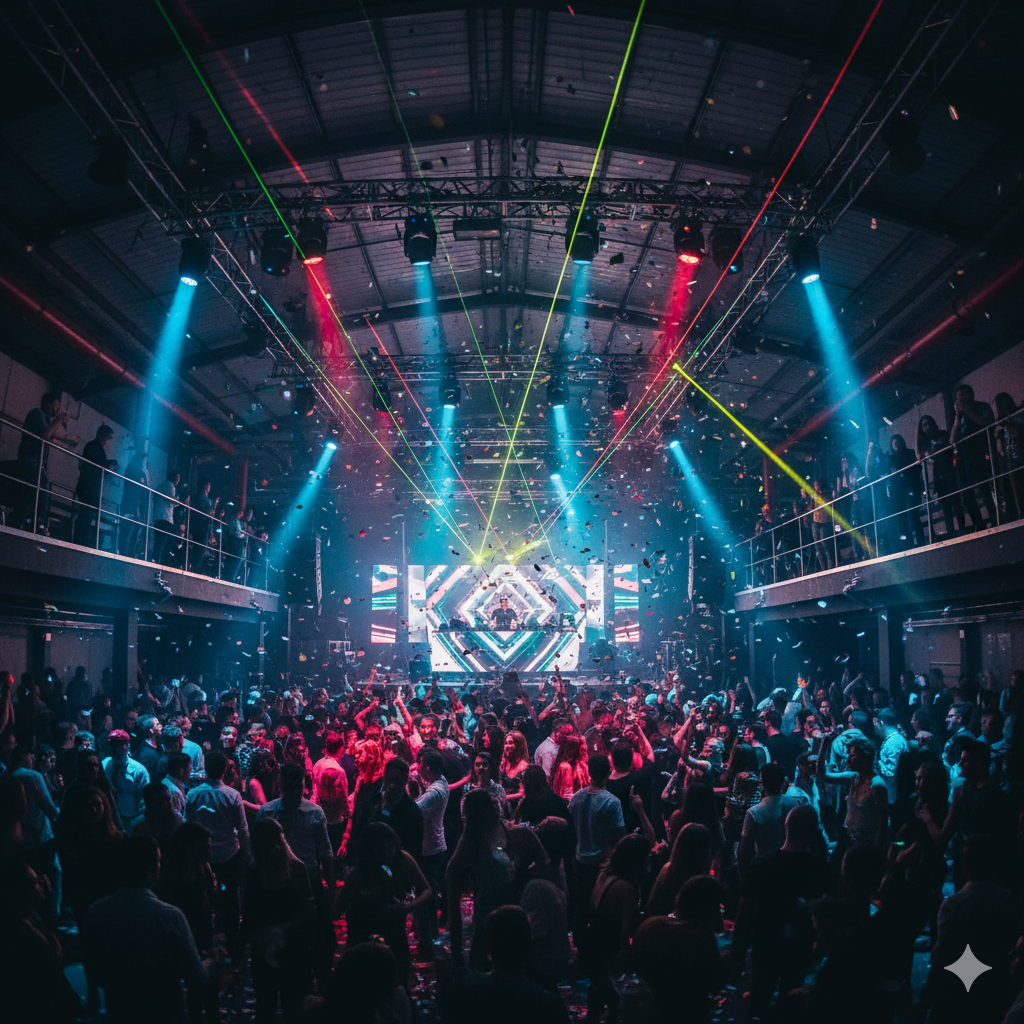
3-1. Typical cover charge ranges (real numbers from official pages)
If you want a concrete baseline, use official system pages rather than hearsay. For dance-first clubs, one common pattern is “entry includes drink tickets.” V2 TOKYO publishes men’s weekday entry at ¥2,000 (1 drink ticket) and weekend entry at ¥4,000 (2 drink tickets), with women’s entry listed as free. V2 TOKYO official website (Japanese)
For a retro disco-style option, MAHARAJA ROPPONGI publishes standard entrance fees of men ¥3,500 (2 drinks) and ladies ¥2,500 (2 drinks), plus a happy-hour range (for example ladies ¥1,000 / 1 drink in the listed window). MAHARAJA ROPPONGI charge page (Japanese)
For a hybrid club + bar format, CROSS ROPPONGI publishes time-window pricing such as weekday post-22:00 men ¥1,500 and weekend post-22:00 men ¥2,500. CROSS ROPPONGI system page (Japanese)
3-2. VIP tables: what you’re actually paying for
“VIP table” in Tokyo clubs often means a seating package with a set duration, plus required bottle orders. The value is not only comfort; it’s social structure: you have a fixed home base, and your group can separate and return without losing each other in a dense crowd.
V2 TOKYO’s official page describes VIP table reservations as a 2-hour set and lists example pricing (with additional service charge described on the page). V2 TOKYO official website (Japanese)
MAHARAJA ROPPONGI also publishes VIP room table charges (e.g., Gold Room ¥2,000 / Platinum Room ¥3,000) and notes these are per person for 2 hours, separate from entry and consumption. MAHARAJA ROPPONGI VIP page (Japanese)
3-3. Eligibility and ID checks (what to prepare)
The most universal rule is age eligibility: most mainstream nightclubs in Tokyo operate on a 20+ model (because that aligns with Japan’s legal drinking age). Venues also set dress expectations so the room keeps a consistent mood.
CROSS ROPPONGI explicitly states an age restriction of 20 and over and that ID checks are required for entry. CROSS ROPPONGI system page (Japanese)
V2 TOKYO also states that guests are asked to present identification such as a driver’s license or passport, and that dress-up is requested. V2 TOKYO official website (Japanese)
Table 3: Reservation & Eligibility
| Method | Lead Time | Eligibility | Official (JP Link) |
|---|---|---|---|
| Walk-in entry (standard cover system) | Same day | Bring photo ID; age rule shown as 20+ | Official website (Japanese) |
| VIP table reservation (set-time packages) | Recommended 1–3 days (editor’s note) | Age verification + venue dress expectations | Official website (Japanese) |
| Private room / VIP room use (disco-style venue) | Reserve ahead for groups | VIP room pricing shown as 2 hours per-person charge | Official website (Japanese) |
“Lead time” reflects practical planning rather than a strict rule (editor’s note). Eligibility rules come from the official venue pages linked.
4. Which venue types and services fit your style?
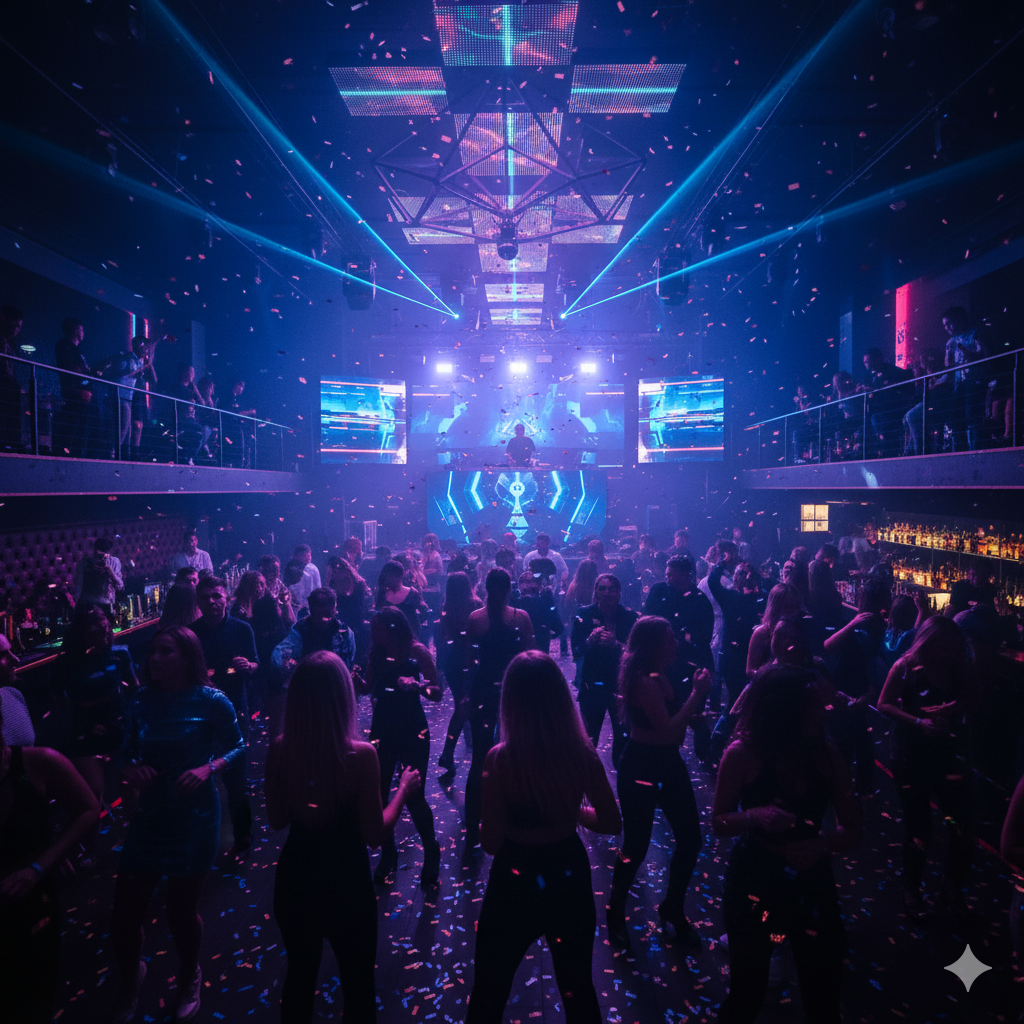
4-1. Club lounge (music + food + cocktails)
A club lounge is your best “first stop” format. You can eat, you can sit, and you still get music and the feeling of a night out. This is also where mixed groups often feel most comfortable because the space supports both conversation and movement.
R2 SUPPERCLUB describes itself as a refined club lounge in Roppongi, and it clearly states cover charge is free—so you can treat it as a flexible base while you decide your next move. R2 SUPPERCLUB official website (Japanese)
4-2. Dance-first superclub (tickets, lighting, big-room feel)
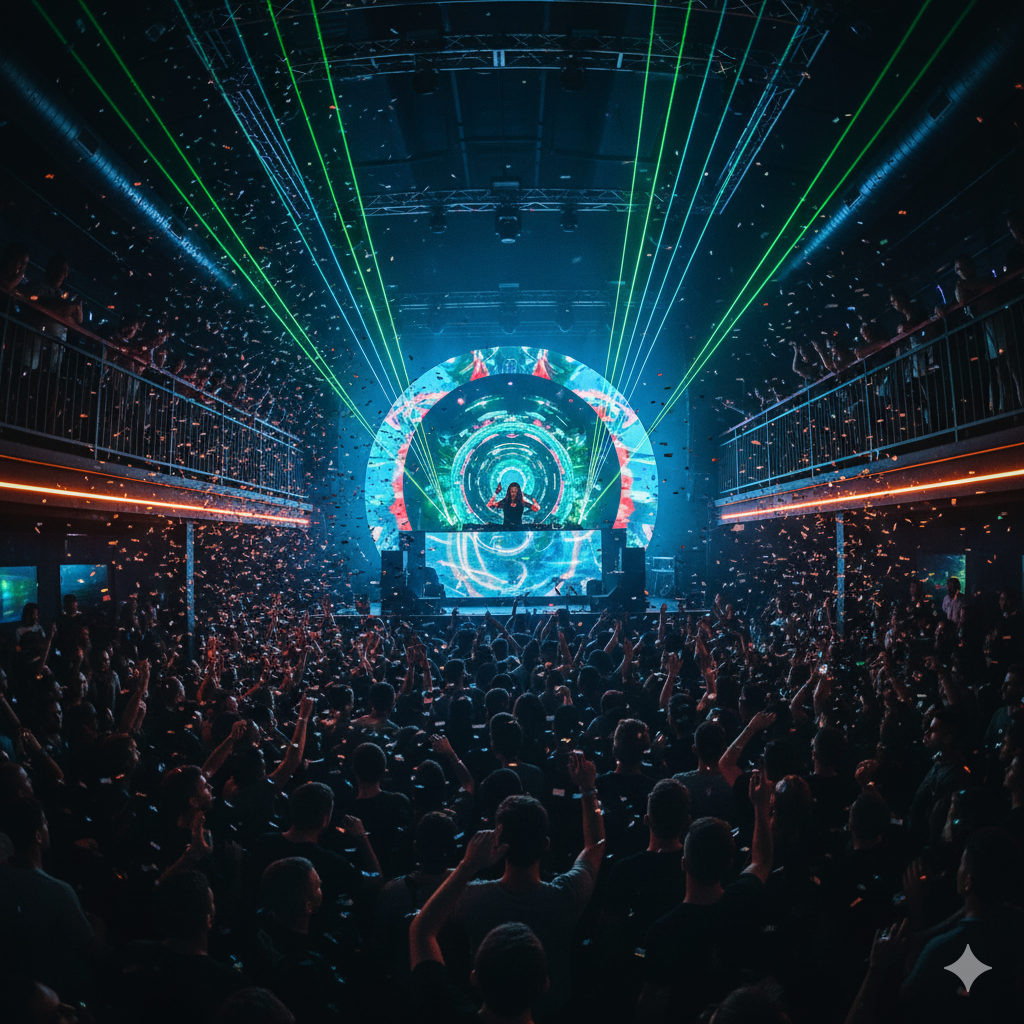
A superclub is about scale: strong sound, staged lighting, and an audience that expects “peak moments.” This is where you go if you want the room’s energy to carry you. It’s also where drink tickets and VIP seating packages become part of the core system.
V2 TOKYO publishes its entrance-fee system and VIP table structure, which is useful because it shows how the venue organizes participation: entry + drink tickets for general admission, and a set-time package for tables. V2 TOKYO official website (Japanese)
4-3. Hybrid spaces (club + bar + “choose your intensity”)
Hybrid venues are practical because they let you adjust intensity without changing buildings. You can stay in the bar area early, then join the club area later. This mirrors a common Tokyo nightlife preference: a gradual transition from polite socializing to louder collective dancing.
CROSS ROPPONGI’s system page shows exactly this structure: early entry focuses on the bar area (free admission in the listed window), then the club + bar area after 22:00 with published fees. CROSS ROPPONGI system page (Japanese)
The venue’s main page also frames the concept as a curated entertainment space—useful context if you’re deciding whether you want a “story-driven” club environment rather than a purely dance-focused one. CROSS ROPPONGI official website (Japanese)
5. How do reservations, etiquette, and useful phrases work?
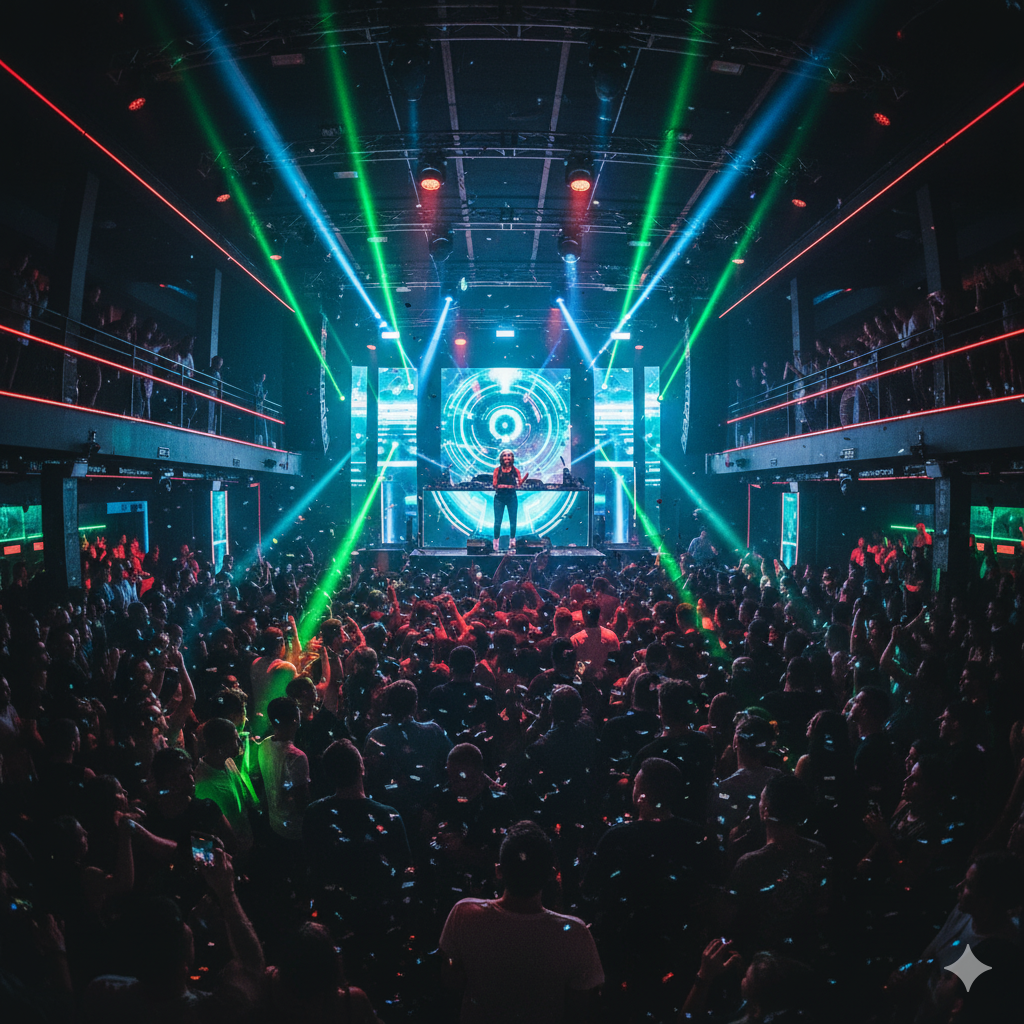
5-1. Reservations: when you need them (and when you don’t)
For most guests, walk-in entry is normal. Reservations become important when you want a table, a private room, or a fixed base for your group. Think of VIP seating as a “logistics tool” as much as a luxury item.
V2 TOKYO lists VIP table reservations and describes the set-time nature of the seats (with structured pricing). Use the official page to understand the rules before you message or call. V2 TOKYO official website (Japanese)
MAHARAJA ROPPONGI also provides VIP room details, including per-person charges and a clear statement that VIP rooms are available for general use. MAHARAJA ROPPONGI VIP page (Japanese)
5-2. Etiquette in plain English (the “why” behind the rules)
Tokyo clubs lean into “institutional comfort”: rules exist so strangers can share a crowded space without friction. Dress expectations are not only about fashion—they’re a signal that you’re ready to participate in the venue’s atmosphere.
MAHARAJA ROPPONGI publishes dress-code examples (such as avoiding overly casual items) so visitors can align with the room’s style. MAHARAJA ROPPONGI charge page (Japanese)
CROSS ROPPONGI likewise notes a dress code and age requirement—use these as your “entry checklist” to keep the start of your night smooth. CROSS ROPPONGI system page (Japanese)
5-3. Useful Japanese phrases (quick, polite, and effective)
You can do most of the night in English, but a few phrases help at the entrance and bar—especially when music is loud. Keep them short and polite.
Table 4: Tips & Phrases Quick Ref
| Situation | Japanese | Plain English meaning | Official (JP Link) |
|---|---|---|---|
| At the door (entry) | 「入れますか?」(Hairemasu ka?) | Can I enter? | Official website (Japanese) |
| ID check | 「パスポートあります。」(Pasupooto arimasu.) | I have my passport. | Official website (Japanese) |
| Ordering a drink | 「これください。」(Kore kudasai.) | This one, please. | Official website (Japanese) |
| VIP / seating inquiry | 「VIPは空いてますか?」(VIP wa aitemasu ka?) | Is VIP available? | Official website (Japanese) |
The linked official pages are provided as “grounding” for entry rules and venue systems; the phrases are practical travel language (editor’s note) rather than official venue text.
6. Summary and Next Steps
Many visitors struggle with the same problem in roppongi night clubs: you can find names online, but it’s hard to convert that into a smooth, confident plan. The details that actually matter—cover charge rules, the right station exit, VIP table availability, and how strict the dress code feels on that particular night—are exactly the details that get lost when you’re tired, jet-lagged, or coordinating a group.
SoapEmpire solves this by turning nightlife “research” into a simple checklist and a real reservation workflow. We organize choices using practical sub-keywords—cover charge, VIP table, dress code, and access from Roppongi Station—so you don’t waste time walking in circles or second-guessing your route. If your priority is flexibility, we’ll suggest a lounge-style start (so you can talk and settle in), then a dance-focused venue for peak energy, and finally a comfortable end option. If your priority is certainty, we’ll help you secure VIP seating or a private-room style plan where available, so your group always has a base.
Our advantage is that we are built for travelers and international residents: we clarify fees in plain English, keep location guidance practical (which exit, which direction, what the venue expects), and support major city nightlife across Japan—not only Tokyo, but also Osaka, Nagoya, and Fukuoka. Most importantly, we offer 24-hour booking support for only $10 (flat fee), which is ideal when time zones, language, or last-minute changes make direct booking stressful.
If you want the “easy version” of a Roppongi night out, use SoapEmpire to lock the essentials: pick two venues that match your style, confirm entry rules and the best arrival timing, and let us handle the reservation messages. You keep the fun part—music, atmosphere, and the social energy—while we handle the administrative friction.
You can explore more guides on SoapEmpire. For reservations or inquiries, please contact us via the inquiry form.
6-1. A 3-step plan you can reuse
Step 1: Pick a meeting hub that reduces confusion. Tokyo Midtown is directly connected from Roppongi Station, which makes it a stable start point. Tokyo Midtown official access (Japanese)
Step 2: Choose your “peak venue.” If you want a large-scale dance environment, use a system page like V2 TOKYO’s to understand baseline fees before you go. V2 TOKYO official website (Japanese)
Step 3: Choose a finish venue based on comfort (music you recognize, earlier opening, seating). MAHARAJA ROPPONGI publishes both charge and VIP info, which makes planning easier. MAHARAJA ROPPONGI charge page (Japanese)
6-2. Handy internal guides (SoapEmpire)
If you want a broader context for Tokyo nightlife navigation and venue selection, these internal guides can help:
- Tokyo Red-Light Districts: What Travelers Should Know
- How to Book Nightlife Venues in Japan (Step-by-step)
- Osaka Nightlife Guide (Area-by-area)
- Tokyo Nightlife Dress Code: Simple Rules That Work
6-3. Final checklist (fast, practical)
- Bring a passport or acceptable photo ID (many venues state ID checks).
- Decide if you want flexible walk-in or a VIP table base.
- Use the correct station exit to reduce friction (yard map helps).
- Keep 2–3 short Japanese phrases ready for entry and ordering.
Station exit reference: Tokyo Metro Roppongi Station yard map (Japanese)
FAQ
Q1) How much is the typical cover charge in Roppongi?
It depends on the venue type. As published on official pages, examples include men weekday entry at ¥2,000 at V2 TOKYO, and standard entry at MAHARAJA ROPPONGI of men ¥3,500 / ladies ¥2,500 (with drinks included as listed). Check official system pages before you go:
V2 TOKYO official website (Japanese),
MAHARAJA ROPPONGI charge page (Japanese).
Q2) Do I need a reservation for roppongi night clubs?
Usually no for basic entry, but reservations matter for VIP tables or private rooms. V2 TOKYO and MAHARAJA ROPPONGI both publish VIP-related information on their official pages, which is the best place to start:
V2 TOKYO official website (Japanese),
MAHARAJA ROPPONGI VIP page (Japanese).
Q3) What’s the easiest way to meet friends before going out in Roppongi?
Use Tokyo Midtown as a meeting hub because it’s directly connected to Roppongi Station via the Oedo Line Exit 8 and underground routes from the Hibiya Line. Then move together to your venue using the correct station exit guidance:
Tokyo Midtown official access (Japanese),
Tokyo Metro Roppongi Station yard map (Japanese).
Q4) What ID and dress code should I expect?
Many venues state ID checks and age rules (commonly 20+), plus a smart dress expectation. For example, CROSS ROPPONGI states age restriction and ID checks, while V2 TOKYO states ID presentation and requests dress-up:
CROSS ROPPONGI system page (Japanese),
V2 TOKYO official website (Japanese).
If you’re interested in visiting any of these places, SoapEmpire offers a 24-hour booking support service for only $10.
Just send the store name, preferred time, and your name (nickname is fine) to:
artistatakuma@icloud.com.
We’ll take care of your reservation quickly and smoothly.