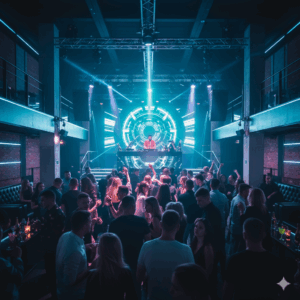
If you’re curious about happening bars tokyo, think “members-only adult social bars” where the focus is on privacy, house rules, and guest-to-guest interaction (not staff-provided sexual services).
Your best plan is simple: pick an area near your hotel, confirm the venue’s system (membership + entry charge), then follow their access instructions (many ask you to call from a landmark).
For travelers who want a smoother start, SoapEmpire can help you organize venue choices and booking steps without guesswork.
In Tokyo nightlife, some spaces are designed around “institutionalized intimacy”: the venue sets a layout, rules, and a social script so strangers can meet with less friction than in a normal bar. Happening bars (ハプニングバー) sit inside that ecosystem as members-only bars with strong privacy rules, controlled entry, and a clear expectation that guests communicate first.
Spatially, many use a bar-counter + lounge pattern, with optional semi-private zones. The front desk (or counter) functions like a “threshold”: ID check, membership procedure, a short rule briefing, then you enter the social area. This creates a predictable flow—important in a city where people often prefer structured interaction over random approaches.
Service content is usually framed as “communication space” rather than a menu of acts. Some venues explicitly state that they are not a sex-service business and that women are also guests (not staff). For example, Silent Moon and Collabo both describe themselves as member-only spaces and clearly separate their concept from staff-provided sexual services: see
Official system & rules (Japanese)
and
Official venue concept (Japanese).
Many venues require two forms of ID (often including a health insurance card) and enforce smartphone/camera restrictions. These are normal “privacy architecture” features in this genre, not personal judgments—just part of the system.
1. What are happening bars tokyo and how do they work?

1-1 A plain-English definition (without stereotypes)
In Tokyo, “happening bar” is a category label used for adult-oriented venues where the main product is the setting: lighting, seating zones, and rules that support conversation and mutual introductions. What happens beyond that depends on guest consent and the venue’s boundaries. Many venues describe themselves as a “members bar” or “communication space,” and some explicitly state they are not a sex-service shop—for example, Silent Moon writes that it is not a “fuzoku” (sex service) business:
Official system & membership rules (Japanese).
1-2 Why so many are members-only
“Members-only” is less about exclusivity and more about predictability. Venues commonly require an intake step: you show ID, sign a membership form, and confirm you accept house rules. This stabilizes the social environment so guests can relax. Some places ask for two IDs (often including a health insurance card) as part of their entry system—examples appear on official pricing/system pages such as COLORS BAR and Silent Moon:
Official pricing & membership requirements (Japanese),
Official system page (Japanese).
1-3 Typical flow: entrance → bar → zones → exit
The “flow” is usually consistent across Tokyo:
- Arrival: many venues ask you to call from a nearby landmark or station exit (privacy + easier navigation).
- Check-in: membership procedure, fee payment, brief explanation of rules (phone/camera restrictions are common).
- Social area: bar counter and lounge seating encourage conversation first.
- Optional zones: some have quieter corners or semi-private areas; rules differ by venue.
- Exit: some venues discourage guests leaving together immediately (privacy and boundary management), so follow staff guidance if stated.
You can see examples of “call for guidance” access instructions on official access pages like Mille-feuille:
Official access instructions (Japanese).
1-4 How this differs from other adult nightlife venues
A key difference is who provides the “service.” In many adult nightlife genres, staff provide structured companionship; in happening bars, venues often position staff as facilitators who enforce rules, explain systems, and keep the environment comfortable—while interaction is primarily among guests. Collabo, for example, frames itself as a members club/communication space and notes that women are also customers:
Official concept page (Japanese).
2. Which Tokyo areas are easiest for first-timers to access?
2-1 Shinjuku: Kabukicho energy + Shinjuku-sanchome access
Shinjuku is convenient because multiple lines converge and nightlife is dense. If you want a more guided approach, ARABESQUE tells first-time visitors to call from Shinjuku-sanchome Station’s C4 exit and provides clear day/night hours and charges:
Official ARABESQUE system (Japanese).
For station info, Tokyo Metro’s official station page helps you orient:
Tokyo Metro Shinjuku-sanchome Station info (Japanese).
2-2 Shibuya (Dogenzaka): compact routes + “call points”
Dogenzaka is a classic “short-walk” nightlife slope with lots of landmarks. Mille-feuille publishes both address and a first-visit instruction (call from the Inokashira-line “Avenue Exit” area / Natural Lawson or nearby landmark), plus a long operating window:
Official Mille-feuille access (Japanese).
Tokyo Metro’s official Shibuya Station page is also useful when you’re choosing exits:
Tokyo Metro Shibuya Station info (Japanese).
Another Dogenzaka option is Silent Moon, which publishes a straightforward system and address range:
Official Silent Moon system & access info (Japanese).
2-3 Ueno / Okachimachi: simpler grids and clear station exits
Ueno-Okachimachi is easier for many visitors because the streets are more regular and station navigation is simpler than Shibuya. HONEY TRAP states it’s about a short walk from JR Okachimachi Station and provides a full access/address block:
Official HONEY TRAP access (Japanese).
If you want official station facilities and maps, JR East provides a dedicated station info page:
JR East Okachimachi Station info (Japanese).
RUSK is another Ueno/Okachimachi-area choice that publishes both address and a clear “walk from station” note along with its hour blocks:
Official RUSK system & access (Japanese).
2-4 Akihabara / Iwamotocho: transport convenience for travelers
Akihabara is convenient if you’re staying near Tokyo Station, Ueno, or Asakusa. Collabo publishes multiple nearby station options (JR Akihabara, Hibiya Line Akihabara, Iwamotocho on the Toei Shinjuku Line) plus a reservation-based participation method:
Official Collabo system (Japanese).
For station pages, you can check:
Tokyo Metro Akihabara Station info (Japanese),
JR East Akihabara Station info (Japanese),
Toei Subway Iwamotocho Station info (Japanese).
2-5 Roppongi / Nishiazabu: upscale night routes and late hours
Roppongi and Nishiazabu are often chosen by visitors who want a more “international” late-night atmosphere. If you’re navigating exits, Tokyo Metro’s Roppongi station diagram can help you identify exit numbers:
Tokyo Metro Roppongi station map (Japanese).
*Table 2: Access & Hours*
| Station / Landmark | Walk Time | Hours (typical) | Area (JP Link) |
|---|---|---|---|
| Shinjuku-sanchome Station (call from C4 exit) | — (call-from-exit) | Day 13:00–19:00, Night 18:00–05:00, Sun 14:00–24:00 | Official website (Japanese) |
| Shinjuku Station / Higashi-Shinjuku (route guidance) | — (route steps) | Part 1 13:00–19:00, Part 2 19:00–05:00, Part 3 05:00–13:00 | Official website (Japanese) |
| Shibuya (Mark City / Avenue Exit call point) | — (call point) | 10:00–05:00 (daily) | Official website (Japanese) |
| JR Okachimachi Station (Ueno area) | 2 min | Night 19:00–05:00 (plus day blocks on some days) | Official website (Japanese) |
| Akihabara (JR / Hibiya Line) + Iwamotocho | 2–5 min | Check “Schedule/News” (irregular sessions) | Official website (Japanese) |
Notes: “Call-from-exit/landmark” is a common access method used by member-only venues. Hours shown are pulled from each venue’s official access/system pages; always re-check before you go.
Tip: For first-time navigation, save the station page + the venue access page in your phone browser before you leave your hotel. Example station references:
Tokyo Metro Shibuya,
Tokyo Metro Shinjuku-sanchome.
3. How much do happening bars in Tokyo cost and who can enter?

3-1 The standard fee structure: membership + charge (sometimes tickets)
Many Tokyo venues split pricing into:
- Membership fee (入会金): usually paid once, sometimes re-paid if you lose a card or re-register.
- Entry/charge (チャージ / 入場料): often different in “day” vs “night” parts.
- Drink system: some include free/partly free drinks; others use tickets/stamps.
Silent Moon is a clear example of a “charge + drink-ticket” model:
Official system (Japanese).
Mille-feuille publishes day-part and night-part pricing in a simpler “part-based” model:
Official system (Japanese).
3-2 Real examples (official numbers) to set expectations
Tokyo pricing varies by venue positioning and time. Below are official examples so you can calibrate your budget.
*Table 1: Venue Types & Base Fees*
| Venue Type (example) | Typical Fee (first-time single male) | Session Time | Area (JP Link) |
|---|---|---|---|
| Shinjuku members bar (ARABESQUE) | Night: ¥14,000–¥17,000 (entry ¥11,000 + membership ¥3,000; Fri/Sat higher) | Night 18:00–05:00 | Official website (Japanese) |
| Kabukicho entertainment-style members bar (COLORS BAR) | Standard: ¥18,000 (entry ¥13,000 + membership ¥5,000) | Part 2 19:00–05:00 | Official website (Japanese) |
| Dogenzaka “secret dining bar” style (Mille-feuille) | Part 2: ¥20,000 (entry ¥14,500 + membership ¥5,500) | Part 2 17:00–05:00 | Official website (Japanese) |
| Dogenzaka secret bar (Silent Moon; ticket-based drinks) | First-time: ¥17,000 (membership ¥6,000 + charge ¥7,000 + tickets ¥4,000) | Mon–Sat 20:00–LAST | Official website (Japanese) |
| Akihabara reservation-based communication space (Collabo) | Participation: ¥15,000 (membership ¥5,000 + fee ¥10,000) | Session-based (check schedule) | Official website (Japanese) |
Notes: The “Typical Fee” column uses official published numbers and adds the first-time membership fee when listed separately. Always confirm current pricing on each official system page.
3-3 Eligibility: age, ID, and entry screening
Most venues clearly state minimum age and ID requirements. Common patterns:
- Age: many specify 20+ (Japan’s adult ID standards often align with this in nightlife settings).
- Two IDs: several venues ask for a health insurance card plus a photo ID (passport / driver’s license / photo MyNumber card).
- Entry screening: some mention a short interview or judgment at registration.
Examples from official pages:
COLORS BAR pricing & membership requirements (Japanese),
Silent Moon ID rules (Japanese),
Mille-feuille rules & ID list (Japanese).
3-4 Payment methods and what’s usually included
Payment options vary. Mille-feuille explicitly lists cash, credit cards, and QR payments (and notes some exclusions):
Official payment methods (Japanese).
Some venues include free drinks (or partially free drink systems), while others use stamps/tickets (Silent Moon):
Official drink-ticket system (Japanese).
*Table 4: ID & Payment Quick Reference*
| Venue | ID Mentioned | Payment Mentioned | Official (JP Link) |
|---|---|---|---|
| COLORS BAR | Insurance card + photo ID (passport etc.) | (See venue page) | Official website (Japanese) |
| Silent Moon | Insurance card required + photo ID | Ticket/stamp drink system | Official website (Japanese) |
| Mille-feuille | Photo ID list shown (passport, etc.) | Cash / cards / QR payments (per site) | Official website (Japanese) |
| Collabo | Photo ID + insurance card check for first time | (See venue page) | Official website (Japanese) |
Notes: Requirements vary. Bring passport + one additional ID if you can, and read the venue’s official membership rules before you go.
Notice: If a venue’s official rules specify “insurance card required,” treat it as a hard requirement. Check the official system pages first (examples: COLORS BAR, Silent Moon).
4. What venue types and services should you expect?

4-1 Communication-bar style vs “secret bar” style
Tokyo venues often communicate their identity through wording:
- Communication space: framed as a members club, sometimes with reservation-only sessions (Collabo):
Official system (Japanese). - Secret bar: a smaller, privacy-forward bar with strict rules and a clear “not a sex service shop” statement (Silent Moon):
Official system & rules (Japanese). - Dining-bar framing: emphasizes food/drink and longer hours (Mille-feuille):
Official system (Japanese).
4-2 Space design: why the layout matters
The venue layout shapes behavior. A visible bar counter encourages “public” conversation first; lounges allow longer chats; semi-private corners reduce social pressure for guests who want privacy. In ethnographic terms, the venue creates “zones of intimacy” with architectural cues rather than explicit instructions. Even when venues are adult-oriented, the system pushes interaction to start with communication and consent.
COLORS BAR openly describes itself as a members-only bar with a non-ordinary atmosphere and publishes an official shop/map page for navigation:
Official MAP & shop info (Japanese).
4-3 Food and drink systems: “included,” “ticketed,” or “bring-your-own”
Drink systems are part of the venue identity:
- Ticket/stamp drinks: Silent Moon uses a stamp/ticket method and explains it on the official system page:
Official system (Japanese). - Free/partly free drinks: some venues state that drinks are free or partly included (COLORS BAR notes free drinks with some paid items):
Official pricing (Japanese). - Bring-in friendly: Collabo mentions stocked basics plus bring-in support:
Official top/schedule notes (Japanese).
4-4 Events and “time parts” in Tokyo nightlife
Many venues divide the day into “parts” (day / evening / late night), each with different pricing. This is a common Tokyo nightlife technique: the venue doesn’t just sell drinks, it sells a time window and a social density. Official pricing pages show this clearly (COLORS BAR parts; Mille-feuille Part 1/Part 2; ARABESQUE day/night):
COLORS BAR parts & pricing (Japanese),
Mille-feuille parts (Japanese),
ARABESQUE day/night system (Japanese).
5. How do reservations, etiquette, and useful Japanese phrases work?
5-1 Reservations: when you must book vs when you can walk in
Some venues operate like standard nightlife (walk-in possible), while others are explicitly reservation-based. Collabo is clear: it is “completely reservation-based” and asks you to book by phone:
Official participation method (Japanese).
Other venues prioritize privacy guidance: ARABESQUE and Mille-feuille instruct first-timers to call from a station exit or landmark before they guide you to the exact location:
ARABESQUE access instructions (Japanese),
Mille-feuille access instructions (Japanese).
5-2 Etiquette: house rules are the “service contract”
In this genre, etiquette is not vague; it is written into the venue’s rules. Common rules include restrictions on phones/cameras, limits on group entry, and bans on aggressive behavior. These rules create a predictable environment for guests who value discretion.
Examples of explicit rule framing can be found on official pages such as:
COLORS BAR membership rules (Japanese),
Silent Moon membership rules (Japanese),
Mille-feuille member rules (Japanese).
5-3 Consent-first communication: what “being polite” means here
“Consent-first” in Tokyo nightlife is often expressed as calm, explicit checking rather than big gestures. Even if you’re confident, slow down. A basic rhythm is:
- Start with conversation at the bar or lounge.
- Ask permission before any physical contact.
- If someone says no (or seems unsure), step back immediately and keep the mood friendly.
This aligns with how venues describe unacceptable behavior (e.g., no forcing, no unwanted touching). For a venue-stated example, ARABESQUE explicitly forbids forcing others and invites guests to tell staff if something happens:
Official Q&A / rules section (Japanese).
5-4 Useful Japanese phrases (simple, polite, effective)
These phrases are plain and polite—good for foreigners in Shinjuku nightlife, Shibuya Dogenzaka, Akihabara, or Ueno:
- “Hajimete desu.” (はじめてです) — “It’s my first time.”
- “Koko kara denwa shite mo ii desu ka?” (ここから電話してもいいですか?) — “Is it okay if I call from here?”
- “Kitei (ruuru) wo kakunin shite mo ii desu ka?” (規定(ルール)を確認してもいいですか?) — “Can I confirm the rules?”
- “Sawatte mo ii desu ka?” (触ってもいいですか?) — “May I touch you?”
- “Kyou wa hanashi dake ni shimasu.” (今日は話だけにします) — “Today I’ll keep it to conversation.”
- “Daijoubu desu / Yamete kudasai.” (大丈夫です/やめてください) — “I’m okay / Please stop.”
*Table 3: Reservation & Eligibility*
| Method | Lead Time | Eligibility | Official (JP Link) |
|---|---|---|---|
| Phone reservation (required) | Before visit | Adults; ID check (photo ID + insurance card); session-based entry | Official website (Japanese) |
| Call from station exit for guidance | At arrival | Adults; membership registration; rules briefing | Official website (Japanese) |
| Call from landmark (first-time access) | At arrival | Adults; system/parts; follow access instructions | Official website (Japanese) |
| Members-only entry + ticket drink system | Same day | Adults; insurance card required + photo ID; group limits | Official website (Japanese) |
Notes: “Lead Time” reflects the official process style: reservation-required venues want a pre-call; call-from-landmark venues want you to call at the specified point so they can guide you discreetly.
6. Summary and Next Steps
Visiting happening bars tokyo sounds mysterious at first because the “real” entry process is not like a normal bar. It’s not just about finding a pin on a map. Many venues use call-from-landmark access, time-part pricing, and members-only registration to protect privacy and keep the atmosphere stable. For travelers, the friction is usually practical: Which area is easiest (Shinjuku nightlife vs Shibuya Dogenzaka)? Which venue fits your comfort level (members-only bars with guided entry vs reservation-based sessions)? What should you bring (ID, sometimes two forms)? And how do you avoid simple mistakes like arriving at the wrong time part or missing a required phone call?
That’s where SoapEmpire helps. We’re a Japan-based nightlife portal that organizes the confusing pieces—prices, access steps, and entry rules—into a clear plan, in plain English. Instead of scrolling through multiple Japanese pages at midnight, you can decide your preferred area (Shinjuku, Shibuya, Ueno/Okachimachi, Akihabara) and your preferred style (quiet “secret bar” vibe, dining-bar vibe, or structured communication space), then follow one simple checklist. We also help you interpret official system pages so you understand what “membership + charge” really means in yen, and what “call from the Avenue Exit” or “call from station exit C4” looks like in real life.
SoapEmpire’s biggest advantage is practical support: 24-hour booking support for only $10. If a venue requires a reservation call, if you want help confirming the right time part, or if you’re unsure which access instruction applies to first-time visitors, we can assist. You stay in control of your experience—our role is to reduce confusion and help you follow house rules smoothly. We also keep your planning “Tokyo-realistic”: short walking routes, late-night timing, and the small etiquette details that matter most in members-only nightlife spaces.
For reservations or inquiries, please contact us via the inquiry form.
6-1 A simple first-visit checklist
- Pick one area near your stay: Shinjuku-sanchome, Dogenzaka, Okachimachi, Akihabara/Iwamotocho.
- Read the venue’s official “system” page and note the part hours + total cost (membership + charge).
- Prepare ID (passport + additional ID when requested; some venues require an insurance card).
- Follow access instructions exactly (call-from-exit/landmark is common).
- Keep it simple: conversation first, ask permission, respect phone/camera rules.
Official pages to start with:
ARABESQUE system,
COLORS BAR pricing,
Mille-feuille system,
Silent Moon system,
Collabo system.
6-2 Related SoapEmpire guides (internal)
- Tokyo nightlife area primer: districts and station logic
- How to book Japanese nightlife venues (what to say, what to prepare)
- Shibuya nightlife guide: Dogenzaka routes and timing
- Shinjuku nightlife guide: Kabukicho and Shinjuku-sanchome
6-3 Editor’s note on gaps and verification
※参考情報(editor’s note): Venue systems and special event pricing can change. This guide uses official system/access pages whenever possible. If any detail is unclear, treat the venue’s official page as final and re-check before you go.
FAQ
Q1: What is the typical first-time cost for a single man at a happening bar in Tokyo?
A common pattern is membership + entry charge, so totals often land around ¥15,000–¥20,000 depending on venue and time part. Check official system pages for exact totals (examples: ARABESQUE, COLORS BAR, Mille-feuille).
Q2: Do I need a reservation, or can I walk in?
It depends. Some venues are reservation-based (Collabo states it is completely reservation-based by phone), while others ask first-timers to call from a station exit/landmark for guidance (ARABESQUE, Mille-feuille). Always follow the venue’s official instructions: Collabo, ARABESQUE, Mille-feuille.
Q3: What documents should foreigners bring?
Bring your passport, and be prepared that some venues request an additional ID and may require a health insurance card. Requirements vary and are listed on official pages (examples: Silent Moon, COLORS BAR).
Q4: What’s the best time of day for a calmer first visit?
Many venues publish “day parts.” A calmer first visit is often earlier in the evening or during a day part when available (for example, ARABESQUE and COLORS BAR list day-part hours on their official system pages). Use the official hours to choose a lower-pressure time window: ARABESQUE, COLORS BAR.
If you’re interested in visiting any of these places, SoapEmpire offers a 24-hour booking support service for only $10.
Just send the store name, preferred time, and your name (nickname is fine) to:
artistatakuma@icloud.com.
We’ll take care of your reservation quickly and smoothly.
“`