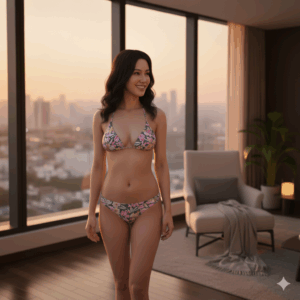
In modern Japanese cities, kyabakura spaces are designed to feel “easy to enter but carefully managed inside.” You’ll typically see a street-level or elevator entrance, a front desk that confirms your seat type (main floor vs VIP), and a guided route to a table zone with controlled lighting and sound. The layout is not random: it supports a clear flow—arrival, seating, timed service, check, and exit—so the experience stays predictable.
What actually happens is institutionalized intimacy: a cast member sits next to you, keeps the conversation moving, pours drinks, and uses polite physical proximity (like close seating and guided gestures) as part of “hospitality staging.” It is a structured social performance rather than a free-form bar chat.
Typical use-cases are business socializing, short weekday visits (a single set), and longer late-night sessions (multiple extensions). Many venues now highlight inbound readiness (credit cards, clear menus, sometimes English support), which makes kyabakura easier for visitors to navigate.
Culturally, kyabakura sits inside Japan’s urban night economy: it concentrates around major stations, entertainment streets, and mixed-use buildings where nightlife is already normalized as part of city rhythm.
1. Where should you start in japanese kyabakura?
1-1. Kyabakura in plain English: a timed hospitality format
A kyabakura is basically a time-based “hosted bar table.” You pay for a set time (often 50–60 minutes), sit at a table, and a cast member joins you for conversation, drink-pouring, and attentive hosting. The structure is standard across cities: set fee → optional nomination fees → optional extensions → service/tax → checkout.
Some regions label the same style differently. For example, in Hokkaido (Sapporo), venues often use the term “new club” for what many people elsewhere call kyabakura, and the explanation still emphasizes time-based pricing and add-on fees for nominations, bottles, and service charges. You can see this general definition on a major group’s FAQ: Official website (Japanese).
1-2. The basic flow from entry to checkout
The front desk usually confirms (1) whether you have a nominated cast member, and (2) whether you want the main floor or a VIP room. If you walk in “free” (no nomination), staff may ask your preferred style (chatty, calm, upbeat) so they can rotate cast members and help you decide.
One venue’s “how to enjoy” page breaks down this flow in a very direct way—from checking crowd/cast status, to telling the front desk your seat type, to choosing free vs nomination, and then asking staff for the bill when you’re done: Official website (Japanese).
1-3. What to prepare before you go
Prepare three things: (1) your time window, (2) your budget range, and (3) whether you want a calm talk-focused visit or a lively group vibe. If you want a predictable first night, look for a venue system page that states the set time, extension fees, and service/tax rules clearly.
Example of a clear system page in Tokyo (Kabukicho) showing an all-time 60-minute set and defined add-ons: Official website (Japanese).
2. How do you access top areas?
2-1. Tokyo: Kabukicho (Shinjuku) for maximum variety
Kabukicho (Shinjuku) is one of Japan’s best-known nightlife clusters, with many venues concentrated in short walking distance from major stations. If you want variety and last-minute options, it’s convenient.
A Kabukicho venue’s access section shows a practical, visitor-friendly pattern: multiple station choices and walking times, such as JR Shinjuku East Exit and nearby subway exits. For example: Official website (Japanese).
2-2. Osaka: Kitashinchi vs Minami—two different moods
Osaka has two common choices. Kitashinchi is often described as a polished business district vibe. Minami (around Namba/Shinsaibashi) is more energetic and casual for groups. Both have plenty of venues, but the “feel” can change your night.
For Kitashinchi, it helps when the venue states walk time from the nearest station clearly. Example: a Kitashinchi venue listing “Kitashinchi Station, 4 minutes on foot” along with hours: Official website (Japanese).
2-3. Nagoya, Fukuoka, and Sapporo: the “one-station rule”
In Nagoya, Nishiki/Sakae is a typical nightlife center—many places are accessible from Sakae Station. In Fukuoka, Nakasu is a famous riverside nightlife zone where venues often share similar building layouts (elevator up to a floor). In Sapporo, Susukino is compact and walkable, which makes it easy to change plans mid-night.
A Nagoya venue’s access page shows a clean example of “exit + walk time,” such as Sakae Station Exit 1 (5 minutes) and Hisaya-odori Station Exit 4 (5 minutes): Official website (Japanese).
Table 1: Venue Types & Base Fees
| Venue Type | Typical Fee | Session Time | Area (JP Link) |
|---|---|---|---|
| Kabukicho (Tokyo) standard main room | ¥12,000 (main room set) | 60 min | Official website (Japanese) |
| Kitashinchi (Osaka) set system | ¥9,000 (set) | 60 min | Official website (Japanese) |
| Nakasu (Fukuoka) early set window | ¥7,000 (20:00–20:59 set) | 60 min | Official website (Japanese) |
| Nishiki/Sakae (Nagoya) main room | ¥8,000 (1 set) | 50 min | Official website (Japanese) |
Numbers shown are base set fees and set times from each venue’s published system page. Your total usually changes with nominations, extensions, bottles/free-drink fees, and service/tax.
Table 2: Access & Hours
| Station | Walk Time | Hours | Area (JP Link) |
|---|---|---|---|
| JR Shinjuku Station (East Exit) | 6 min | 20:00–LAST | Official website (Japanese) |
| Kitashinchi Station | 4 min | 20:00–25:00 | Official website (Japanese) |
| Sakae Station (Exit 1) | 5 min | 20:00–Last | Official website (Japanese) |
“Walk time” is taken from each venue’s own access page, so it’s usually the most practical reference for visitors.
3. What prices, time rules, and eligibility should you expect?
3-1. The set fee is your anchor number
The set fee is the base you can control. Many venues publish it clearly, including time length. For example, a Kabukicho venue lists an all-time main-room set of ¥12,000 for 60 minutes, with an extension fee per 30 minutes and separate service/tax rules: Official website (Japanese).
In Osaka, a Kitashinchi venue publishes a base set fee of ¥9,000 for 60 minutes, plus extension and nomination fees, and a stated service/tax format: Official website (Japanese).
3-2. Extensions and nominations: where totals change fast
Extensions are the most common “surprise” for first-timers, not because they are hidden, but because time moves quickly in a guided social setting. Many venues list 30-minute and 60-minute extension options. For example, one Fukuoka venue publishes extensions of ¥5,000 per 30 minutes (and also a 60-minute option): Official website (Japanese).
Nominations are also standardized: you can enter with a chosen cast member (“hon-shimei”), or pick someone during the visit (“jounai-shimei”). A major group’s FAQ explains these terms and frames them as normal parts of the time-based system: Official website (Japanese).
3-3. Eligibility and “who can enter” basics
Venues generally assume adult customers and often publish their own house rules. Some pages also remind customers about alcohol rules (for example, notes about underage drinking not being allowed). Always follow the venue’s posted rules and staff guidance.
For a clear, “menu-style” example of published rules and pricing sections (main room vs suite room, plus tax/service), you can see a Nagoya venue’s system page: Official website (Japanese).
Table 3: Reservation & Eligibility
| Method | Lead Time | Eligibility | Official (JP Link) |
|---|---|---|---|
| Walk-in (arrive and choose seat type) | Same day | General customers (follow house rules) | Official website (Japanese) |
| Phone reservation when close to arrival | Within 1 hour (example rule) | Subject to crowd/cast status | Official website (Japanese) |
| Reservation available (venue-dependent) | Before visit | Varies; some venues explicitly state “reservation possible” | Official website (Japanese) |
Reservation policies differ by venue and group. The best practice is to rely on each venue’s own “how to” or FAQ page when planning.
4. Which venue types and services match your style?
4-1. Main floor vs VIP room: the biggest experience difference
The main floor is usually a table area where the venue controls the social pace. VIP rooms are more private and often come with additional room charges or higher set fees. For example, a Tokyo venue lists different set fees for main room vs VIP vs suite (and separate room charges for the highest tier): Official website (Japanese).
4-2. “Free entry” rotation vs nomination focus
Free entry (no nomination) can be good if you want to sample the vibe and meet different personalities in short rotations. Nomination is best if you already know who you want to spend time with and prefer a stable conversation partner.
One venue’s “how to enjoy” page explains the idea clearly: free entry involves cast switching roughly in short intervals, while nomination keeps the chosen cast member with you unless they are called away by another nomination: Official website (Japanese).
4-3. Service design: why the format feels “smooth”
Kyabakura is designed as a smooth social service. Staff manage seating and timing; cast members guide the conversation; and the drink system (free-drink, bottle-keep, or menu-based) supports predictable pacing. This is why many venues publish a structured “system” page with set time, extension rules, nomination fees, and service/tax.
For an example of a highly structured price listing (set fee windows, free-drink components, add-ons like nomination, and service/tax percentages), see a Sapporo venue’s published order system: Official website (Japanese).
5. How do reservations, etiquette, and useful phrases work?
5-1. Reservation reality: “often no,” but there are exceptions
Many groups state that seat reservations are generally not available, and customers are seated in arrival order. However, they may accept arrangements for large groups. This is spelled out plainly in a major group FAQ: Official website (Japanese).
Some venues also explain practical exceptions, such as taking a phone reservation if you are arriving soon (for example, within about one hour), depending on crowd and cast status: Official website (Japanese).
5-2. Basic etiquette: clarity beats “guessing”
Good etiquette in kyabakura is not complicated. It’s mainly about clarity:
- State your seat choice: main floor or VIP.
- Confirm whether you are entering free or with a nomination.
- Ask what is included: free-drink fee, bottle-keep, service/tax, and extension timing.
- When you want to end, ask staff for checkout (“okaikei”).
A good reference for this “front desk → system explanation → free vs nomination → checkout” flow is a venue’s published how-to page: Official website (Japanese).
5-3. Useful Japanese phrases (simple and polite)
Here are phrases that keep things smooth without sounding overly formal:
- メインでお願いします (Mein de onegaishimasu) — “Main floor, please.”
- VIPはありますか? (VIP wa arimasu ka?) — “Do you have a VIP room?”
- フリーで入れますか? (Furii de hairemasu ka?) — “Can I enter without nomination?”
- 指名できますか? (Shimei dekimasu ka?) — “Can I nominate someone?”
- 延長はしません (Enchou wa shimasen) — “No extension (for now).”
- お会計お願いします (Okaikei onegaishimasu) — “Check, please.”
If you want structured help choosing an area and avoiding confusion, SoapEmpire’s guides can help:
SoapEmpire official /
Tokyo district overview /
Osaka nightlife planning /
How to book.
6. Summary and Next Steps
Many visitors are curious about japanese kyabakura, but the first barrier is not language—it’s the system. Set fees, extensions, nominations, service charges, and room differences can feel like a lot when you’re tired after travel and just want a smooth night out. Add in the fact that many venues are walk-in focused, and it’s easy to hesitate at the entrance even if you’re genuinely interested.
SoapEmpire solves this by turning the “system” into a simple plan: you choose your city and district, we help you pick the right style (main floor vs VIP), and we prepare the exact phrases and timing you need. Whether your focus is kabukicho variety, kitashinchi polish, nakasu energy, or nishiki access, our guides organize the practical details so you can enjoy the social experience without second-guessing every step. We also help you match your expectations: do you want a calm conversation-heavy set, or a lively rotation where you can meet different personalities? That’s the difference between a good visit and a confusing one.
SoapEmpire’s strength is clarity and coverage. We offer English-friendly guidance across major cities, with transparent explanations for pricing structure, access, and what “free entry” vs “nomination” really means in practice. If you already have a venue in mind, we can help you approach it with confidence. If you don’t, we can narrow options quickly based on your budget range, your available time, and your comfort level. Most importantly, we provide 24-hour booking support for a fixed $10, so you don’t have to handle last-minute calls or uncertainty on your own.
The outcome is simple: fewer awkward moments, clearer expectations at the front desk, and a night that feels intentional instead of improvised. Start with one set, learn the flow, and then scale up—VIP rooms, longer sessions, or a second venue—only when you want to.
For reservations or inquiries, please contact us via the inquiry form.
6-1. A simple first-night checklist
- Choose one area and one venue with a clear system page.
- Set your budget for “one set + possible extension.”
- Decide: free entry (rotation) or nomination (steady hosting).
- Confirm service/tax and extension rules before you start.
6-2. Quick reference links you can keep
System examples:
Tokyo (Kabukicho) system /
Osaka (Kitashinchi) system /
Fukuoka (Nakasu) system /
Nagoya (Nishiki) system.
6-3. SoapEmpire internal guides for planning
Continue with SoapEmpire:
Tokyo district overview,
Osaka nightlife planning,
How to book,
and the main portal https://soapempire.com/.
FAQ
Q1. How much should I budget for a first kyabakura visit?
Plan for “one set + service/tax + one possible extension.” Many venues publish set fees such as ¥7,000–¥12,000 for 50–60 minutes, then add nominations/extensions and service/tax on top. Check a venue’s system page before you go.
Q2. Can I reserve a seat in advance?
Often it’s walk-in seating in arrival order, but policies vary. Some groups say reservations are generally not available except for larger parties, while some venues accept short-notice phone reservations depending on crowd status. Use the venue’s own FAQ/how-to page.
Q3. Is English support common?
It depends on the venue and city. Some venues explicitly promote inbound readiness, while others are Japanese-first. If you want the smoothest experience, prepare simple Japanese phrases and use a booking helper if needed.
If you’re interested in visiting any of these places, SoapEmpire offers a 24-hour booking support service for only $10.
Just send the store name, preferred time, and your name (nickname is fine) to:
artistatakuma@icloud.com.
We’ll take care of your reservation quickly and smoothly.
“`