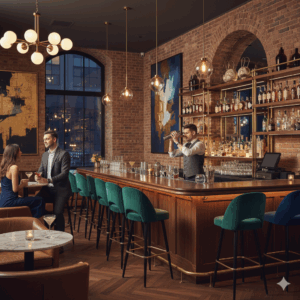
A quick cultural intro to Tokyo club space
Tokyo’s club scene is not just “a place to dance.” It is a carefully designed urban night space where sound, lighting, and movement are structured so strangers can share a rhythm without needing a long conversation. Many venues use layered architecture—main floor + sub floors, staircases, and lounges—to let you choose intensity levels. A typical entrance sequence (queue, cashier, wristband or stamp, then lockers) is part of how the night becomes “official” and social norms reset.
You will also notice how “institutional friendliness” works: clear rules at entry, staff-led guidance, and standardized payment (cash + card + mobile) make the experience predictable even if you don’t speak Japanese. For example, WOMB’s FAQ explains how door payment works (the event page “DOOR” fee), age rules, and common practical details like lockers and drink prices (WOMB FAQ (Japanese)).
1. Where should you start in clubs in tokyo japan?
If you are new to Tokyo’s club scene, the easiest way to avoid confusion is to treat your first night like a single-route plan: one neighborhood, one main venue, one clear end time. You can expand later. This guide uses official pages where possible so you can confirm hours, access, and cover charges directly.
1-1. Shibuya: electronic culture and event calendars
Shibuya is often described as a youth-culture hub, but for nightlife planning the key point is density: many venues are within a short walk, so you can build a flexible night. WOMB is one of the most referenced Shibuya clubs, and its official site provides both an event calendar and practical rules in the FAQ (WOMB official site (Japanese) / WOMB FAQ (Japanese)).
The “institutional” part of Tokyo clubbing is visible here: the calendar explains the format (time window, DOOR fee, and advance tickets), and the FAQ clarifies age checks, what counts as ID, and how door payment works.
1-2. Roppongi: dress-up mega-club energy
Roppongi clubs tend to signal a “dress-up” social style—more visible entry flow, more formal front desk, and clear separation between general admission and VIP seating. V2 TOKYO publishes a detailed system page that lists typical weekday/weekend prices and ID requirements (V2 TOKYO official site (Japanese)).
1-3. Shinjuku: big venues and entertainment-forward nights
Shinjuku’s modern club corridor includes large venues built into multi-use buildings (towers, commercial complexes). For example, ZEROTOKYO’s access page shows it inside Tokyu Kabukicho Tower and gives walk-time references from nearby stations (ZEROTOKYO access (Japanese)). T2 SHINJUKU also publishes station connectivity and opening time information on its official access section (T2 SHINJUKU official site (Japanese)).
If your goal is a high-production “night out” (large lighting rigs, strong sound systems, wide floors), Shinjuku is a natural starting point.
2. How do you access top areas?
2-1. Shibuya: exits and “walking logic”
Shibuya Station is big, so exits are not a detail—they are the route. Tokyo Metro provides official exit guidance for Shibuya Station (Tokyo Metro Shibuya Station exit guide (Japanese)). Once you are on the right side of the station, club access pages typically describe the final steps through Dogenzaka and nearby intersections.
clubasia publishes a clear written route from Shibuya’s Hachiko side up Dogenzaka and toward the “Dogenzaka five-way intersection” (clubasia access (Japanese)).
2-2. Roppongi: simple station exits
Roppongi access is straightforward if you know the exit number. V2 TOKYO lists both the Oedo Line and Hibiya Line exits and states the walk time as 1 minute (V2 TOKYO access section (Japanese)). If you are using Toei Subway guidance for Roppongi Station, the Tokyo Metropolitan Bureau of Transportation also maintains a station page (Toei Subway Roppongi Station page (Japanese)).
2-3. Shinjuku: direct connections and short walks
Shinjuku has multiple “micro-centers” (West Exit business side, Kabukicho entertainment side), so choose the venue first. T2 SHINJUKU states it is directly connected to Shinjuku Station’s D5 exit, and also lists 3 minutes walk from JR Shinjuku West Exit and 1 minute from Seibu-Shinjuku (T2 SHINJUKU access info (Japanese)).
ZEROTOKYO’s access page lists multiple walk times, including 1 minute from Seibu-Shinjuku, 7 minutes from Shinjuku Station, and 8 minutes from Shinjuku-sanchome (ZEROTOKYO access (Japanese)).
2-4. Ginza: club hours and address-first planning
In Ginza, address-first planning is common: you confirm the venue address and hours, then choose the nearest station exit after that. Zouk Tokyo publishes its weekly operating days/hours and address on the official site (Zouk Tokyo official site (Japanese)).
Table 1: Venue Types & Base Fees
| Venue Type | Typical Fee | Session Time | Area (JP Link) |
|---|---|---|---|
| Underground electronic (event-driven) | Example DOOR: ¥4,000 (ADV: ¥3,000) | Example: 23:00–4:30 | Official website (Japanese) |
| Roppongi mega-club (GA + VIP structure) | Weekend regular: ¥4,000 (2 drink tickets) | Night sessions (varies by day/event) | Official website (Japanese) |
| Shinjuku tower venue (walk-time mapped) | Ticketed nights (check schedule) | Late-night sessions (event-based) | Official website (Japanese) |
| Multi-floor mainstream club (time-window pricing) | Example men (weekday early): ¥2,000 / later windows vary | Example: 21:00–05:00 | Official website (Japanese) |
Numbers above are taken from official “system” or “event” pages; Tokyo clubs often change fees per event, so treat these as concrete examples rather than permanent promises.
Table 2: Access & Hours
| Station | Walk Time | Hours | Area (JP Link) |
|---|---|---|---|
| Roppongi (Oedo Line Exit 7 / Hibiya Line Exit 4B) | 1 min | Event-based (check schedule) | Official website (Japanese) |
| Seibu-Shinjuku / Shinjuku / Shinjuku-sanchome | 1–8 min (multiple routes) | Event-based | Official website (Japanese) |
| Shinjuku Station D5 (direct) / JR West Exit | Direct / 3 min | OPEN 22:00–LAST | Official website (Japanese) |
| Ginza (address-first planning) | N/A (use address + map) | Wed/Thu 22:00–4:00; Fri 21:00–4:30; Sat 22:00–4:30 | Official website (Japanese) |
| Shibuya (choose exits carefully) | N/A (exit-based route) | Event-based | Official website (Japanese) |
“Walk time” is shown only where the venue publishes it. In Tokyo, exit numbers (and which side of the station you surface on) can matter as much as distance.
3. What do prices, time, and eligibility look like?
Tokyo clubs commonly communicate prices in a standardized way: “DOOR” means the on-the-night fee paid at the entrance; “ADVANCE” means pre-sale tickets. WOMB’s FAQ explains this terminology directly and also lists practical cost items like lockers and typical drink prices (WOMB FAQ (Japanese)).
3-1. Concrete price examples you can anchor to
One useful planning method is to collect two “reference nights”: a normal weekend event and a special-date event. For example, WOMB’s event page for “WANDERLUST” shows DOOR: ¥4,000 and ADVANCE: ¥3,000, with a time window of 23:00–4:30 (WOMB event page (Japanese)).
For bigger nights, the cover can change by time. WOMB’s New Year countdown listing shows an example where the DOOR price changes at 1:00 (before 1:00 vs after 1:00) and also lists an advance ticket price (WOMB New Year event page (Japanese)). This is why “arrival time” is part of Tokyo price logic.
3-2. System pages: what you get for the fee
Some venues publish “system” pricing that makes budgeting easier. V2 TOKYO lists examples such as weekday men’s pricing (e.g., ¥2,000 for 1 drink, ¥5,000 for all-you-can-drink) and weekend regular admission (e.g., ¥4,000 with 2 drink tickets) (V2 TOKYO system page (Japanese)).
WARP SHINJUKU publishes a system page that includes opening hours (example: 21:00–05:00) and time-window admission patterns (WARP SHINJUKU system (Japanese)). When a venue prices by time window, your “arrive vs peak” choice is basically a budgeting tool.
3-3. Eligibility: age limits, ID, and dress expectations
Tokyo clubs typically require a photo ID at entry. WOMB’s FAQ states that standard club-time events are for 20+ and that ID presentation is required (WOMB FAQ (Japanese)). V2 also states that an ID check is required and lists acceptable IDs such as a driver’s license and passport (V2 TOKYO system (Japanese)).
Some venues publish their own age rules and dress guidance. T2 SHINJUKU’s system page includes an age limit statement (and notes that entry fees can vary by event) plus an explicit request to bring photo ID (T2 SHINJUKU system (Japanese)). clubasia also states that under-20 entry is not allowed for night events and asks for photo ID, and it notes an entry style rule for men’s footwear (clubasia access (Japanese)).
Table 3: Reservation & Eligibility
| Method | Lead Time | Eligibility | Official (JP Link) |
|---|---|---|---|
| Door payment (DOOR fee) | Same day | Typically 20+ with photo ID | Official website (Japanese) |
| Advance tickets (online) | Before event start | Follow venue’s age/ID rule | Official website (Japanese) |
| General admission system (example packages) | Walk-in or event-based | ID check required; underage not admitted | Official website (Japanese) |
| System rules + ID guidance (event fees vary) | Check before you go | Photo ID requested; age rules posted | Official website (Japanese) |
| Night-event entry (route + age rule) | Walk-in | Night events: under-20 not admitted; photo ID requested | Official website (Japanese) |
“Eligibility” here means the minimum entry conditions stated on official pages (age + ID). Individual events may add extra conditions, so always scan the event listing once.
Table 4: Useful Phrases Quick Ref
| Japanese | Romaji | Plain English | Where you use it |
|---|---|---|---|
| 入場できますか? | Nyūjō dekimasu ka? | Can I enter? | Entrance / cashier |
| 当日券ありますか? | Tōjitsuken arimasu ka? | Do you have door tickets? | Entrance (DOOR fee nights) |
| 前売りはどこですか? | Maeurī wa doko desu ka? | Where can I buy advance tickets? | Before going / online help |
| 身分証あります。 | Mibunshō arimasu. | I have my ID. | ID check |
| ロッカーはどこですか? | Rokkā wa doko desu ka? | Where are the lockers? | After entry |
These phrases are designed for predictable “club flow” moments: entry, ticket questions, ID check, and lockers.
If you only remember one thing: check the official page before leaving your hotel. In this guide, the core planning keyword is clubs in tokyo japan—but the real “key” is the official calendar link for your chosen venue.
4. Which venue types and music styles fit your night?
4-1. Underground event spaces: “program-first” nights
In program-first venues, the event itself is the main identity: you go for the artist lineup and the sound direction, and the venue becomes the “container” that shapes how people gather. WOMB’s event pages show this clearly: time window, DOOR/ADV pricing, and lineup structure by floor (WOMB event example (Japanese)).
The ethnographic detail worth noticing is how the floor plan becomes social grammar: the main floor is collective rhythm; side floors are micro-communities; stairs are “transition space” where short conversations happen without competing with the loudest sound.
4-2. Mega-clubs: clear tiers (GA vs VIP) and “front-of-house” formality
Mega-clubs often publish structured pricing and VIP rules that make the experience feel like a packaged night. V2 TOKYO’s system page includes weekday/weekend patterns, an ID check statement, and payment methods (cash, cards, and mobile options) (V2 TOKYO official site (Japanese)).
These venues are good for travelers who want predictable logistics: the “what happens at the door” is spelled out, and the venue is designed so first-timers can move without needing insider knowledge.
4-3. Entertainment-forward towers: large scale, mapped access, and multi-use architecture
Shinjuku venues inside major buildings feel different because the surrounding structure (tower, mall-like corridors, elevator routes) becomes part of the night’s choreography. ZEROTOKYO explicitly situates itself in Tokyu Kabukicho Tower and provides walk times from several stations (ZEROTOKYO access (Japanese)). T2 similarly publishes direct station connectivity and a clear opening time (T2 SHINJUKU official site (Japanese)).
If you like “big room” energy and high production, these spaces often match that preference—while still functioning through the same Tokyo club logic: entry rules, time window, and structured movement.
5. How do reservations, etiquette, and useful phrases work?
5-1. Reservations: what “advance ticket” really means
Tokyo club “reservations” usually mean one of two things: (1) buying an advance ticket for a specific event, or (2) booking a VIP table. WOMB’s FAQ describes how advance ticket purchasing works through the calendar (events that sell advance tickets show a “BUY TICKET” button) and clarifies that you can still pay the DOOR fee at the entrance for most events (WOMB FAQ (Japanese)).
VIP is a separate layer. V2 TOKYO publishes VIP table language (e.g., set time frames and a service charge) on the official page, which signals that VIP is a structured product rather than an informal favor (V2 TOKYO VIP/system info (Japanese)).
5-2. Etiquette: the “quiet rules” that make the night smooth
Tokyo club etiquette is less about complicated behavior and more about respecting the venue’s flow. The entrance is a functional checkpoint: have your ID ready, keep your questions short, and follow staff gestures. Official pages often state age/ID rules clearly—WOMB explains ID types and age rules, and clubasia states night-event age requirements and asks for photo ID at entry (WOMB FAQ (Japanese) / clubasia access (Japanese)).
5-3. Useful Japanese phrases: short and functional
You do not need fluent Japanese to enjoy Tokyo clubs. You need “checkpoint phrases” for entry and logistics. Use the quick-ref table above, and remember that pointing at the event page on your phone also works. If you are asking about ticket types, WOMB’s FAQ language is helpful because it clearly distinguishes “DOOR” and “advance” tickets (WOMB FAQ (Japanese)).
For Ginza planning, simple “hours + address” confirmation is often enough. Zouk Tokyo publishes operating hours and address on its official page (Zouk Tokyo official site (Japanese)).
6. Summary and Next Steps
Planning Tokyo nightlife can feel simple in theory but frustrating in practice: you see a venue name online, then realize the fee changes by event, the entrance time matters, and the most important details are posted in Japanese. That is exactly where SoapEmpire helps. Instead of guessing, we turn official venue information into a clear plan—what time to go, which station exit to use, and what to show at the door—so you can focus on the night itself.
For clubs in tokyo japan, the “winning pattern” is consistent: Shibuya clubs often run lineup-first events with DOOR/ADV pricing on the calendar, Roppongi nightlife tends to publish system pricing and a dress-up mood, and Shinjuku clubs emphasize large-scale venues with mapped access and late opening hours. SoapEmpire organizes this into a traveler-friendly route using your preferred style—Shibuya clubs for underground electronic music, Roppongi nightlife for a polished mega-club experience, or Shinjuku clubs for big entertainment nights—then adds budgeting anchors (cover charge examples, drink expectations, and VIP options when relevant).
Our strength is practical clarity across major cities, but we start with Tokyo: we compile official pages, confirm access notes (exit numbers, walk times), and present the information in plain English without turning the experience into a lecture. If you want help booking a table, confirming an event, or choosing between similar venues, we can handle the communication steps that are hardest for visitors.
You can also explore SoapEmpire’s guides for planning context and neighborhood differences:
Tokyo Nightlife Guide,
Shibuya Club Guide,
Roppongi Nightlife,
Shinjuku Club Guide,
and How to Book.
Learn more about SoapEmpire at https://soapempire.com/. For reservations or inquiries, please contact us via the inquiry form.
6-1. A simple 2-night Tokyo club plan
Night 1: pick one official event page (for example, a Shibuya event with DOOR/ADV listed) and arrive near the start time window. Night 2: choose a different venue type—Roppongi for system pricing and VIP structure, or Shinjuku for large venues with mapped access.
6-2. Your pre-departure checklist
- Open the official page and confirm: time window, DOOR fee, and advance ticket option (example format shown on WOMB event pages).
- Bring photo ID; many venues explicitly list passports as acceptable identification (see WOMB FAQ and V2 system).
- Choose the correct station exit first (e.g., Tokyo Metro Shibuya exit guide).
6-3. FAQ (practical Q&A)
Q1: What is a normal cover charge for Tokyo clubs?
A: It depends on the event. A concrete example is WOMB’s listing where a standard night shows ¥4,000 DOOR and ¥3,000 ADV on the official event page. Always use the venue’s event page to confirm (official example).
Q2: Do I need to buy tickets in advance?
A: Usually no—many events allow door payment. WOMB’s FAQ explains that you can pay the on-the-night fee at the entrance (the “DOOR” price) and that advance tickets are offered for some events (official FAQ).
Q3: What ID should I bring?
A: Bring a photo ID, ideally your passport. Official pages often list acceptable IDs and note that an ID check is required (see WOMB FAQ and V2 system).
Next step: choose one venue and lock the basics (exit + time + DOOR fee). If you want help turning official pages into a clean plan, SoapEmpire can guide you to the best match for your style and schedule.
If you’re interested in visiting any of these places, SoapEmpire offers a 24-hour booking support service for only $10.
Just send the store name, preferred time, and your name (nickname is fine) to:
takuma@skylinks-inc.com.
We’ll take care of your reservation quickly and smoothly.