Fees, hours, and rules can change by event, so use the club’s official pages before you go.
If you want one keyword to remember, it’s dance clubs tokyo—think Shibuya for youthful energy, Roppongi for upscale tables, and Kabukicho for large-scale entertainment.
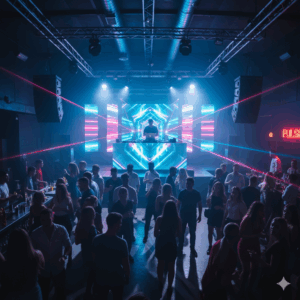
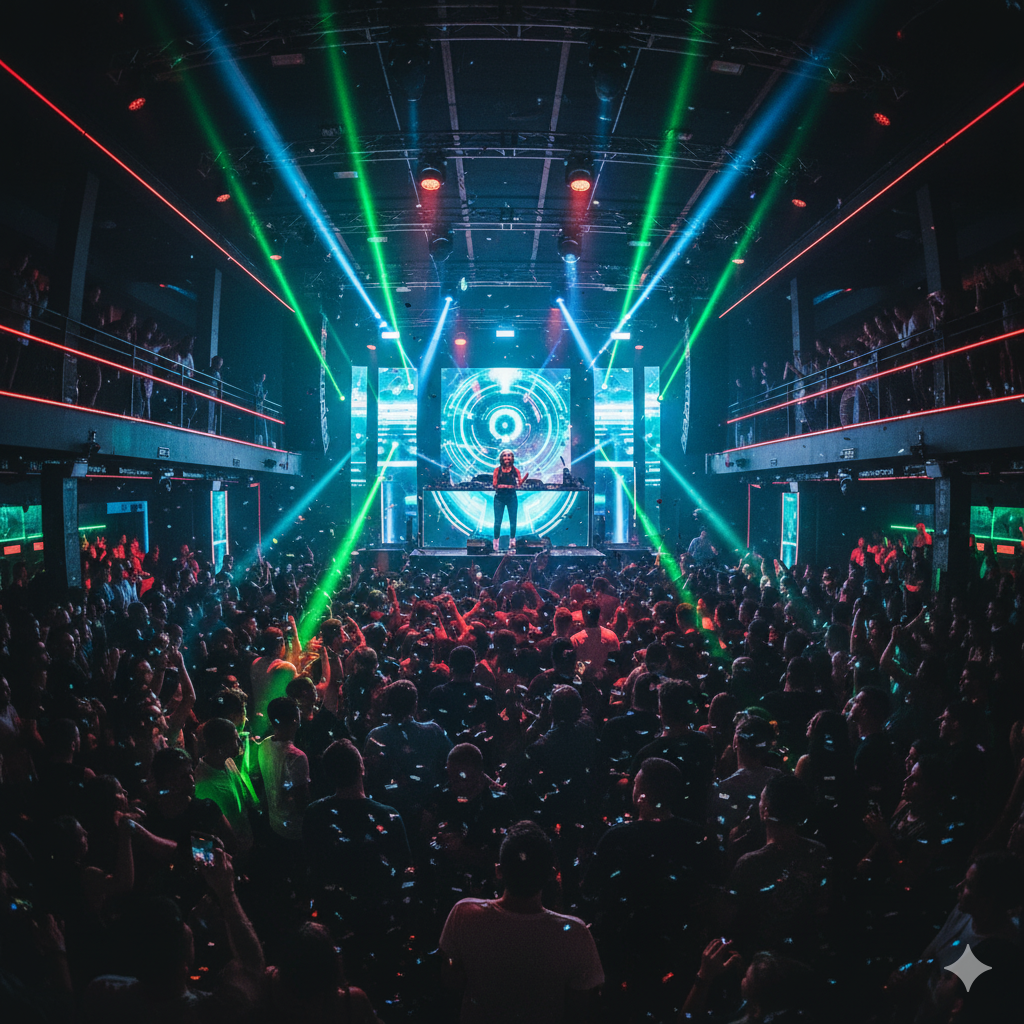
Tokyo’s dance-club scene is an urban “night architecture.” Many venues guide you through a controlled pathway: street queue → entrance staff → ID check → payment → wristband/stamp → locker/cashless setup → main floor and side rooms. These small procedures aren’t just logistics—they shape how strangers share space, negotiate proximity, and build a temporary community around sound and light.
Inside, the environment is usually designed as a set of zones: a high-volume main floor, smaller rooms for different genres, and quieter edges (bar counters, lounge corners, VIP seating). This zoning is a form of “institutionalized intimacy”: not romantic, not personal, but structured closeness—dancing shoulder-to-shoulder, brief conversations at the bar, and synchronized movement under a shared beat.
Age checks and venue policies are strict and standardized because clubs manage crowd flow and alcohol service. For example, WOMB states that standard club-time events are for 20+ with photo ID required, while some daytime/live events may differ—always confirm on the official event page. See: WOMB FAQ (Japanese).
1. Where should you start in dance clubs tokyo?

1-1 Pick an anchor club with a clear identity
A practical first step is to choose a venue whose identity is stable: a location you can find easily, a schedule that’s updated frequently, and a house style you understand (techno-focused, mixed-genre, or “big room” party energy).
In Shibuya, WOMB is a long-running reference point with multiple floors and an international reputation; their official site highlights the multi-floor layout and culture-forward programming. See: WOMB official website (Japanese).
1-2 Understand the Tokyo “night flow”
Tokyo club nights often work like a staged sequence. You will usually (1) queue, (2) show ID, (3) pay an entrance fee or present a ticket, (4) receive a wristband/stamp, (5) put bags in a locker or cloak, and (6) move into the floor zones.
WOMB’s FAQ clarifies that you can usually pay at the door (unless a special event requires advance purchase) and that event pages list the “DOOR” price. See: WOMB FAQ (Japanese).
1-3 Decide your “comfort level” before the music starts
“Comfort level” sounds personal, but it’s also spatial. If you want to meet people and dance close to the booth, you’ll spend more time in the center. If you prefer a calmer pace, you’ll rely on edges: bar counters, side rooms, or lounge corners. Many Tokyo venues deliberately provide these gradients so strangers can share space without constant friction.
2. How do you access top club areas in Tokyo?

2-1 Shibuya: compact streets and “youth-culture” energy
Shibuya’s strength is density: multiple venues and late-night food options within short walking distance. WOMB’s access page describes a route that includes a short uphill walk and specific street landmarks (useful when GPS is noisy in crowded areas). See: WOMB Access (Japanese).
2-2 Roppongi: station-close entries and VIP-oriented layouts
Roppongi nightlife is often built around quick station access and “table culture.” V2 TOKYO lists walk time from multiple Roppongi Station exits (both Oedo Line and Hibiya Line), which is the kind of simple, official detail you can rely on when you’re navigating at night. See: V2 TOKYO official website (Japanese).
2-3 Kabukicho/Shinjuku: big venues and clear station benchmarks
Kabukicho is a high-density night district with large-scale venues and strong “entertainment infrastructure.” ZEROTOKYO’s access page provides walk times from Seibu-Shinjuku Station, Shinjuku Station, and Shinjuku-sanchome Station, plus the facility location inside Tokyu Kabukicho Tower. See: ZEROTOKYO Access (Japanese).
Table 1: Venue Types & Base Fees
| Venue Type | Typical Fee | Session Time | Area (JP Link) |
|---|---|---|---|
| Multi-floor dance club (Shibuya) | Event-based (“DOOR” price listed per event) | Depends on event schedule | Official website (Japanese) |
| Large entertainment complex club (Kabukicho) | Event-based (tickets/door vary) | Often late-night blocks per event | Official website (Japanese) |
| Roppongi “table + dance” club | Weekday men from ¥2,000 (1 drink); weekend regular ¥4,000 (2 drinks) | General admission; VIP seats often 2 hours | Official website (Japanese) |
| Shibuya mainstream dance club (single-floor large) | Men ¥2,100 (1D) early / ¥3,600 (1D) late; Ladies ¥900 (1D) | Open 22:00–4:30 | Official website (Japanese) |
Numbers above are shown as examples from official venue pages. Many Tokyo clubs adjust entry fees by event, so always confirm the latest on the official schedule/system page before you go.
3. What do prices, time, and entry rules look like?

3-1 Entrance fees: simple on paper, flexible by event
Tokyo clubs usually display entry as a small “menu”: fee + drink ticket(s) + time window. TK NIGHTCLUB TOKYO publishes a daily entrance fee grid, showing different prices by time (early vs late) and category. Their official page also notes that prices can change depending on the event. See: TK NIGHTCLUB TOKYO official website (Japanese).
For a Roppongi example with clear numbers, V2 TOKYO lists weekday men’s entry from ¥2,000 (1 drink) and weekend regular entry ¥4,000 (2 drink tickets). See: V2 TOKYO official website (Japanese).
3-2 Time: doors, peak hours, and the “late-night block”
The most important timing decision is whether you arrive early (less crowded, cheaper entry in many places) or later (peak atmosphere, heavier floor energy). Some clubs publish opening hours plainly—TK NIGHTCLUB TOKYO lists 22:00–4:30. See: TK NIGHTCLUB TOKYO official website (Japanese).
VIP seating often runs on fixed blocks. V2 TOKYO states VIP tables are a 2-hour set (and explains what’s included). See: V2 TOKYO official website (Japanese).
3-3 Entry rules: ID checks and payment style
“Entry rules” in Tokyo are less about vibe and more about standardization. WOMB’s FAQ states that standard club-time events are not open to under-20 guests and that photo ID is required at the entrance (with examples of acceptable IDs). See: WOMB FAQ (Japanese).
Some venues also define payment style clearly. ZEROTOKYO’s system page says the venue is cashless (except coin lockers) and requires suitable payment methods (cards/e-money/QR). See: ZEROTOKYO System (Japanese).
Table 2: Access & Hours
| Station | Walk Time | Hours | Area (JP Link) |
|---|---|---|---|
| Roppongi Station (Oedo/Hibiya lines) | 1 min from listed exits | Varies by day/event (check official) | Official website (Japanese) |
| Seibu-Shinjuku / Shinjuku / Shinjuku-sanchome | Seibu-Shinjuku 1 min; Shinjuku 7 min; Shinjuku-sanchome 8 min | Varies by event (check schedule) | Official website (Japanese) |
| Shibuya area (WOMB route landmarks) | Route guide includes ~5 min uphill + ~50 m straight after turning | Event-based | Official website (Japanese) |
| Shibuya (TK NIGHTCLUB) | Use official address + map link | Open 22:00–4:30 | Official website (Japanese) |
Walk times shown above come from official venue access pages. For Shibuya, landmark-based directions can be more reliable than a single “minutes from station” number.
4. Which venue types and music styles fit your night?

4-1 Multi-room clubs: designed for switching moods
Multi-room venues are the most “Tokyo” in the sense that they let you manage intensity. You can spend 30 minutes in a dense main floor, then reset in a smaller room, then return when the set peaks. WOMB’s official description emphasizes multiple sub-floors alongside a main floor with high-end sound and lighting. See: WOMB official website (Japanese).
4-2 Entertainment-complex clubs: “the venue is the city”
Complex-style venues are less about “one room, one crowd” and more about being part of a larger night ecosystem—multiple floors, dedicated VIP systems, and a constant schedule rhythm. ZEROTOKYO positions itself as a night entertainment facility in Kabukicho, with dedicated access and system pages that read like venue infrastructure, not just party promotion. See: ZEROTOKYO official website (Japanese).
4-3 Table-forward clubs: choreography of status and comfort
Roppongi-style venues often treat tables as a parallel “stage.” The table is a base camp: a place to reset, talk, and manage belongings, while the dance floor remains a public commons. V2 TOKYO publishes detailed VIP table pricing and explains that VIP seating is time-based and includes certain entry components. See: V2 TOKYO official website (Japanese).
5. How do reservations, etiquette, and basic Japanese work?

5-1 Reservations: VIP, tables, and official booking tools
In Tokyo, “reservation culture” shows up most strongly in VIP/table usage. Some venues route VIP booking through dedicated systems; for example, ZEROTOKYO links to a TableCheck reservation landing page for VIP bookings. See: ZEROTOKYO VIP booking (Japanese).
For price transparency, some clubs publish VIP pricing directly. TK’s VIP page lists table charge and bottle charge components plus service/tax percentages, and notes a time limit. See: TK NIGHTCLUB VIP (Japanese).
5-2 Etiquette: dress code, ID, and the “quiet rules”
Tokyo club etiquette is mostly “quiet rules” enforced at the entrance: dress presentation, valid photo ID, and following staff guidance. WOMB’s FAQ explains ID requirements and notes that some outfits may be refused if they are not suitable for a public setting. See: WOMB FAQ (Japanese).
For payment etiquette, being prepared matters. ZEROTOKYO states it is a cashless venue (except coin lockers), so arrive with cards/e-money/QR payment ready to avoid blocking the line. See: ZEROTOKYO System (Japanese).
5-3 Useful Japanese phrases: small words that smooth the night
You don’t need fluent Japanese for dance clubs, but short phrases reduce stress at the exact moments that matter: entrance, lockers, bar orders, and asking staff for directions. Try these:
- Entrance / ID: 「身分証あります」(Mibunshō arimasu) = “I have my ID.”
- Tickets: 「当日料金ですか?」(Tōjitsu ryōkin desu ka?) = “Is this the door price?”
- Lockers: 「ロッカーはどこですか?」(Rokkā wa doko desu ka?) = “Where are the lockers?”
- Bar: 「これください」(Kore kudasai) = “This one, please.”
- Water: 「お水ください」(Omizu kudasai) = “Water, please.”
- Leaving: 「ありがとうございました」(Arigatō gozaimashita) = “Thank you very much.”
Table 3: Reservation & Eligibility
| Method | Lead Time | Eligibility | Official (JP Link) |
|---|---|---|---|
| Walk-in (door payment) | Same day | Club time typically 20+ with photo ID | Official website (Japanese) |
| VIP booking (online tool) | Book before your visit | Venue policy applies; follow booking instructions | Official website (Japanese) |
| VIP booking (published pricing) | Reserve ahead for best choice | Time-based seating (example: 2 hours) | Official website (Japanese) |
| Cashless preparation | Before arrival | Bring card/e-money/QR payment | Official website (Japanese) |
Reservation “need” depends on your goal. If you just want to dance, walk-in is common; if you want seating certainty, reserve VIP.
6. Summary and Next Steps
If you remember only three things for dance clubs tokyo, make them these:
(1) pick your area first (Shibuya clubs vs Roppongi nightlife vs Kabukicho mega-venues),
(2) confirm access + system on official pages, and
(3) treat the club as a designed urban space—follow the flow (ID → entry → lockers/cashless → dance zones).
For quick official starting points:
WOMB (Japanese),
ZEROTOKYO (Japanese),
V2 TOKYO (Japanese),
TK NIGHTCLUB TOKYO (Japanese).
Planning a Tokyo night sounds easy until you hit the real-world details: which door to enter, what “system” means on the venue page, whether you need cashless payment, how strict the dress code feels in practice, and how to choose between Shibuya clubs, Roppongi nightlife, and big Kabukicho venues without wasting time in transit. Many travelers also worry about small frictions—language, ID checks, and whether VIP tables are worth it for their group.
SoapEmpire helps you turn those uncertainties into a simple plan. We organize nightlife information so you can compare entry fee patterns, VIP tables, and dress code expectations in plain English, and we make it clear when you must rely on official schedules because event pricing changes. Even if your goal is just dance clubs tokyo, your best night often comes from the same approach we use across Japan: choose one area, define your budget, lock in your timing, and keep logistics minimal.
What makes SoapEmpire different is practical structure. We cover major cities nationwide and translate the “unwritten flow” of Japanese nightlife into steps you can follow: how to arrive, what to prepare at the entrance, how to handle lockers, and how to move between floor zones without stress. If you’re coordinating friends, we also help you decide when VIP tables improve comfort (a base camp) and when general admission is better (more freedom).
If you want extra support, SoapEmpire offers a reliable booking help option and clear guidance for visitors who don’t read Japanese. You can also browse related guides on our site, such as How to Book in Japan, Tokyo Night District Overview, and Osaka Nightlife Guide (these are optional reads if you’re building a wider Japan trip).
Learn more at SoapEmpire official website. For reservations or inquiries, please contact us via the inquiry form.
6-1 A practical one-night plan you can copy
- Choose one anchor venue from the official pages above.
- Confirm access + system rules (ID, payment, dress notes) on the official site.
- Arrive early enough to avoid long lines and to learn the venue layout calmly.
- Use lockers/cloak quickly, then explore one main floor + one side zone.
6-2 What to carry
- Photo ID (passport is the safest universal option).
- A compact wallet and a payment method that matches the venue (cashless if required).
- A small bag that fits easily in lockers (keep it light).
6-3 Where to read next on SoapEmpire
If you want to broaden your Japan nightlife plan beyond clubs, start here:
How to Book,
Tokyo Night District Overview,
Osaka Guide.
FAQ
Q1. How much is the entrance fee for Tokyo dance clubs?
Many venues set entry fees by event and time window. Some clubs publish daily fee tables (for example, TK NIGHTCLUB TOKYO shows different early/late prices), while others ask you to check each event page for the “DOOR” price. Use official pages such as
TK NIGHTCLUB TOKYO (Japanese)
and
WOMB FAQ (Japanese).
Q2. Do I need to book in advance?
For general admission, walk-in is common. For VIP tables, booking is often recommended or required. ZEROTOKYO provides a VIP booking link via TableCheck:
ZEROTOKYO VIP booking (Japanese).
Q3. What ID do I need, and what is the typical age rule?
Many clubs require photo ID at the entrance and commonly set club-time entry at 20+. WOMB states standard club-time events do not allow under-20 guests and requires photo ID:
WOMB FAQ (Japanese).
Always confirm on the venue’s official system/FAQ page.
Q4. Are Tokyo clubs cashless?
Some are. ZEROTOKYO states it is a cashless venue (except coin lockers), so you should bring cards/e-money/QR payment:
ZEROTOKYO System (Japanese).
If you’re interested in visiting any of these places, SoapEmpire offers a 24-hour booking support service for only $10.
Just send the store name, preferred time, and your name (nickname is fine) to:
takuma@skylinks-inc.com.
We’ll take care of your reservation quickly and smoothly.