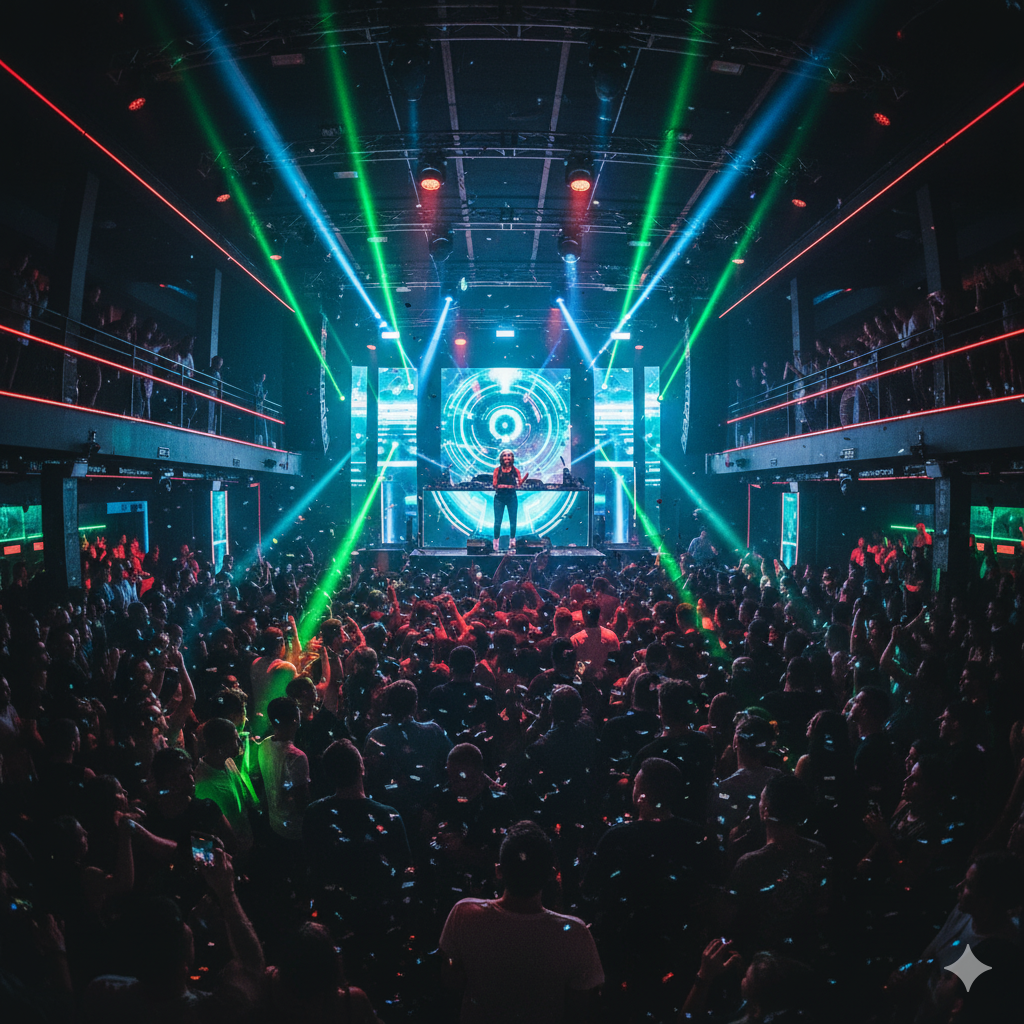
Expect a door charge that often lands in the ¥3,000–¥6,000 zone depending on the lineup, and many nights start around 11PM.
If you want VIP seating, book through official channels rather than guessing at the door.
Tokyo’s hip hop nightlife is built around compact “district clusters” (especially Shibuya) and a few large-scale destinations (notably Shinjuku Kabukicho).
The spaces themselves are highly structured: you move from street → entrance line → ID check → payment/wristband/drink ticket → locker → dance floor.
Think of a club night as a designed urban ritual. Lighting guides movement, staff control flow, and sound systems create a shared tempo that makes strangers feel like one crowd.
Even when the music is “hip hop,” the programming can be open-format (hip hop + R&B + pop edits) depending on the event theme.
In this guide, the goal is simple: help you choose the right area, understand the fee/time system, and handle reservations and etiquette with calm confidence.
We’ll use official venue pages for the practical details.
1. Where should you start in a Tokyo hip hop club plan?
Tokyo nights are organized by event listings more than “this club is always hip hop.”
1-1 What “hip hop night” means in Tokyo
In Tokyo, the word “hip hop” on a schedule often means one of three things:
(1) a lineup of rappers and hip hop DJs,
(2) an open-format party anchored by hip hop and R&B,
or (3) a mixed night where hip hop is one genre among others.
That’s why your best planning tool is the official event calendar, not a generic ranking list.
A good example is a large venue that clearly labels genres, like the ZEROTOKYO event schedule with a HIPHOP filter:
ZEROTOKYO Event Schedule (Official).
Use it as a model: check the date, the genre tag, the open time, and the price.
1-2 The standard “door-to-dancefloor” flow
Most clubs follow the same choreography. You queue, show ID, pay the door fee, receive a wristband and/or drink ticket, and then move through a narrow entry corridor into the main room.
Lockers are common because dance floors are crowded and hands-free movement matters.
This is where Tokyo feels “institutional”: the night is designed to be smooth even with a lot of people.
Staff behavior is usually calm but firm, and the venue’s signs and lighting do a lot of the work for you.
If you follow the flow, you will rarely feel lost.
1-3 A practical shortlist to check first
If you want a strong starting point, check:
ZEROTOKYO schedule (Official) for large HIPHOP-tagged nights,
clubasia events (Official) for Shibuya’s club/live hybrid programming,
and ATOM SHIBUYA (Official) for a straightforward “walk-in and dance” system with posted entrance fees.
For a classic Shibuya name, the venue address and contact are shown on the official HARLEM page:
HARLEM (Official).
2. How do you reach top areas and move between them?
Plan one main district per night, then switch only if you have a clear second event.
2-1 Shibuya: Dogenzaka & Maruyamacho cluster (walkable)
Shibuya’s club zone sits around Dogenzaka and the nearby Maruyamacho blocks. The key benefit is simple: you can move venue-to-venue on foot if plans change.
For directions written plainly, WOMB’s official access page describes the route from the famous 109 area and notes it’s about 5 minutes uphill, then a short 50 meters straight:
WOMB Access (Official).
clubasia is also in the Shibuya cluster and provides an official access description from Shibuya Station’s Hachiko side:
clubasia Access (Official).
This is the kind of page you want to screenshot on your phone before you leave your hotel.
2-2 Shinjuku Kabukicho: one big venue with clear station times
If your priority is a large-scale production night (big lighting, multiple floors, clear genre tags), Shinjuku Kabukicho’s ZEROTOKYO is the obvious anchor.
Their official access page spells it out in the “Tokyo style” you want: closest station first, then exact walk times.
For example, Seibu-Shinjuku Station is listed as 1 minute on foot, Shinjuku Station as 7 minutes, and Shinjuku-sanchome as 8 minutes:
ZEROTOKYO Access (Official).
If you’re searching for a HIPHOP night, start from the official schedule and filter by genre:
ZEROTOKYO Event Schedule (Official).
2-3 Lounge-style options: Shibuya rooftops and Azabu-juban
Not every “hip hop club Tokyo” plan needs a packed basement room.
If you prefer a lounge format (more talking, more views, more table culture), Shibuya has rooftop nightlife like CÉ LA VI Tokyo’s club lounge.
Their official contact page lists club lounge hours (for example, Tue–Thu/Sun/Public Holidays 10PM–4AM, Fri–Sat 10PM–4:30AM):
CÉ LA VI Tokyo Contact & Hours (Official).
For a reservation-forward club vibe in Azabu-juban, 1OAK Tokyo lists weekly hours on the official site (many nights run to 5AM):
1OAK Tokyo (Official).
Table 2: Access & Hours
| Station | Walk Time | Hours (typical) | Area (JP Link) |
|---|---|---|---|
| Seibu-Shinjuku Station (Shinjuku) | 1 min | Event-based (often starts around 11PM) | Official website (Japanese) |
| Shinjuku Station (Shinjuku) | 7 min | Event-based (check schedule) | Official website (Japanese) |
| Shibuya area (Dogenzaka) | ~5 min + 50 m (route detail) | Varies by event | Official website (Japanese) |
| Azabu-juban (Minato) | (Hours listed by day) | Many nights: 11PM–5AM (Fri/Sat often 10PM–5AM) | Official website (Japanese) |
| Shibuya (Tokyu Plaza area) | (Use building access) | Club lounge: 10PM–4AM (Fri/Sat 10PM–4:30AM) | Official website (Japanese) |
Times and routes above are taken from official venue access/hours pages. Event start/finish can shift, so use the venue’s schedule page the day you go.
3. What should you budget for prices, time, and eligibility?
Your actual cost depends on the event and whether you add VIP/table service.
3-1 Real price examples from official listings
Tokyo clubs often publish prices per event, which is why you should read the listing before you leave.
For a clear example in Shinjuku, ZEROTOKYO’s HIPHOP event “Urban Jam” lists a DOOR price of ¥4,000 and a FASTPASS ticket at ¥3,500, with OPEN at 11PM:
ZEROTOKYO “Urban Jam” (Official).
Another ZEROTOKYO HIPHOP listing shows how prices can rise with a special lineup: one HIPHOP event lists DOOR ¥6,000 and notes a separate drink fee may apply:
ZEROTOKYO “OMEN -The Nexus-” (Official).
In Shibuya, clubasia’s event page for “LAST DANCE!” lists DOOR ¥3,000 and OPEN 23:00:
clubasia Event Page (Official).
For a Shibuya club/live space hybrid, CIRCUS TOKYO’s event pages often list ADV and DOOR clearly.
One event page lists ADV ¥2,500 and DOOR ¥3,000 with OPEN/START 23:00:
CIRCUS TOKYO Event Page (Official).
If you want a simpler “walk in and pay by time slot” system, ATOM SHIBUYA posts entrance fees on the official page.
For example, one published schedule shows men at 900円 early and 1,900円 later, and notes it includes 1 drink on certain days:
ATOM SHIBUYA Price (Official).
For a classic Shibuya hip hop venue name, HARLEM’s older event page format shows the typical “ADV/DOOR” structure (for one listing: ADV ¥4,000, DOOR ¥4,500):
HARLEM Event Page (Official).
3-2 Time expectations: when to arrive and how late it runs
Tokyo club timing is late by design. Many headline events open around 11PM, and crowds thicken after midnight.
If you prefer more space, go earlier; if you want peak energy, go later.
Always check the event listing because some “club/live” formats run earlier in the evening.
If you prefer a weekly timetable rather than event-based times, 1OAK Tokyo posts hours by day (for example, many nights list 11PM–5AM, and Fri/Sat 10PM–5AM):
1OAK Tokyo Hours (Official).
3-3 Eligibility basics: age, ID, and dress code
The single most important rule for visitors is: assume late-night entry is 20+ and prepare a photo ID.
clubasia’s access page explicitly states that late-night events do not allow under-20 entry and asks for photo identification:
clubasia Access & Entry Notes (Official).
ATOM SHIBUYA’s official page also states entry is 20+ and mentions dress expectations (for example, certain casual footwear may be refused):
ATOM SHIBUYA Entry Notes (Official).
Some large venues also operate with modern payment rules. For example, ZEROTOKYO event notes can include operational details like cashless policy and ID requirements:
ZEROTOKYO Event Notes (Official).
Table 1: Venue Types & Base Fees
| Venue Type | Typical Fee | Session Time | Area (JP Link) |
|---|---|---|---|
| Large multi-floor “destination” club (example: ZEROTOKYO) | DOOR example: ¥4,000 (event-based) | OPEN example: 11PM | Official website (Japanese) |
| Club/live hybrid in Shibuya (example: clubasia) | DOOR example: ¥3,000 | OPEN example: 23:00 | Official website (Japanese) |
| Underground club space (example: CIRCUS TOKYO) | ADV ¥2,500 / DOOR ¥3,000 (example) | OPEN/START example: 23:00 | Official website (Japanese) |
| Posted “time-slot entrance fee” club (example: ATOM SHIBUYA) | Men example: 900円 → 1,900円 (time-based) | Reception example: 22:00–04:30 | Official website (Japanese) |
| Legacy Shibuya hip hop venue name (example: HARLEM) | ADV ¥4,000 / DOOR ¥4,500 (example listing) | Early/live format example: OPEN 18:30 | Official website (Japanese) |
These fees and times come from official event/price pages and illustrate the range. Always treat the event listing as the final source because Tokyo pricing is usually event-based.
4. Which venue types fit your style and your group?
You’ll enjoy Tokyo more if the venue structure fits your pace.
4-1 Big destination clubs: production, clarity, and multiple floors
Big venues are useful when you want clear information, big sound, and a “one stop” night where you don’t need to move around.
ZEROTOKYO is a good example because official event pages are consistent: they show OPEN time, PRICE, genre, and ticket links.
If your night is built around a specific HIPHOP event, start here:
ZEROTOKYO Event Schedule (Official).
If you’re traveling with a group and want a structured home base, VIP/table service can reduce friction (less queue time, more space to regroup).
ZEROTOKYO’s VIP page explains booking routes (online, phone, LINE) and notes VIP plans vary by event:
ZEROTOKYO VIP (Official).
4-2 Shibuya cluster venues: flexibility and scene texture
Shibuya is great when your plan is “go out and see what’s happening.”
The density of venues means you can pivot based on line length, music, or how your group feels.
The tradeoff is that each place may have a different door system and a different vibe.
Use official access pages as your “micro-map.”
For example, WOMB’s access instructions are written step-by-step:
WOMB Access (Official),
and clubasia’s access page references the route from Shibuya Station’s Hachiko side:
clubasia Access (Official).
4-3 Lounge/table-forward nights: conversation-friendly hip hop energy
Some travelers want hip hop as the soundtrack, not the main activity. If that’s you, lounge formats can be a better fit:
you can hear the DJs, but you can also talk without pushing through a crowd all night.
For Shibuya skyline nightlife, CÉ LA VI’s club lounge hours are listed officially here:
CÉ LA VI Tokyo Contact & Hours (Official).
For an Azabu-juban reservation-driven club, 1OAK lists its hours and provides contact details:
1OAK Tokyo (Official).
Pick one room as your meet-up point so your group doesn’t lose each other.
5. How do reservations, etiquette, and useful phrases work?
On the floor, keep your phone use minimal, follow staff guidance at entry, and have a few Japanese phrases ready.
5-1 Reservation channels you can trust
Tokyo nightlife runs smoothly when reservations stay inside official channels.
WOMB’s premium lounge reservation page points to an official booking form (TableCheck link) and explains it’s designed for seated enjoyment:
WOMB Reservation (Official).
ATOM SHIBUYA provides VIP information and links to its official booking channel (TableCheck) on the VIP page:
ATOM VIP (Official).
ZEROTOKYO’s VIP page explains the main reservation methods (online via event pages, phone, and LINE) and even lists phone/LINE reception hours:
ZEROTOKYO VIP Reservation Methods (Official).
For reservation-focused clubs, the system can be as simple as an official email address.
1OAK’s reservation page tells you to contact the venue directly via email:
1OAK Reservation (Official).
Table 3: Reservation & Eligibility
| Method | Lead Time | Eligibility | Official (JP Link) |
|---|---|---|---|
| VIP via online/phone/LINE (ZEROTOKYO) | Event-based; phone/LINE reception hours listed (example: 20:00–26:00 on stated days) | Late-night events commonly 20+ with photo ID (check event notes) | Official website (Japanese) |
| Premium lounge booking (WOMB) | Submit via official form; confirmation follows | Venue rules apply (check venue terms) | Official website (Japanese) |
| VIP seat booking (ATOM SHIBUYA) | Book via official channel; VIP sets shown from 49,000円 (day-dependent) | Entry stated as 20+; dress code notes on official page | Official website (Japanese) |
| Email reservation (1OAK Tokyo) | Recommended for peak nights; email in advance | Follow venue guidance on arrival | Official website (Japanese) |
“Lead time” varies by crowd level and event importance. When in doubt, book earlier for VIP/table requests and use the venue’s official channel only.
5-2 Etiquette that helps you blend in
Tokyo club etiquette is less about “rules for fun” and more about shared flow.
Move with the crowd, don’t block stairs or corridors, and treat staff instructions as part of the venue’s safety design.
If you need to talk, step to the side rather than stopping in the center of a high-traffic path.
Dress code is usually simple: neat shoes and a clean look.
Some venues explicitly mention footwear limits and may refuse entry if your outfit doesn’t fit the atmosphere, so it’s worth scanning the official entry notes.
For example, ATOM SHIBUYA mentions dress expectations and ID checks:
ATOM SHIBUYA Entry Notes (Official).
5-3 Useful Japanese phrases (quick reference)
You can do almost everything with simple, polite Japanese. Here are phrases that work in Shibuya, Shinjuku, and Roppongi-style areas:
- “Kore wa nanji kara desu ka?” (これは何時からですか?) — “What time does this start?”
- “Door fee wa ikura desu ka?” (ドアフィーはいくらですか?) — “How much is the door fee?”
- “Yoyaku shiteimasu.” (予約しています。) — “I have a reservation.”
- “Eigo no menu arimasu ka?” (英語のメニューありますか?) — “Do you have an English menu?”
- “Koko ni suwattemo ii desu ka?” (ここに座ってもいいですか?) — “Is it okay to sit here?”
- “Shashin no ID arimasu.” (写真付きIDあります。) — “I have a photo ID.”
Most staff are used to helping visitors as long as you approach calmly and follow the entry flow.
6. Summary and next steps for a smooth night out
That simple checklist prevents 90% of nightlife confusion.
6-1 A simple checklist that works every time
- Choose your district: Shibuya for density, Shinjuku for a big “destination” venue.
- Open the official schedule page and pick your event (genre tag + open time + price).
- Bring photo ID and a backup plan (another nearby event listing).
- Decide your style: dance-floor focus (walk-in) or table/lounging (reserve).
If your main anchor is Shinjuku, start with the official access page and the event page:
ZEROTOKYO Access (Official) and
ZEROTOKYO Schedule (Official).
6-2 SoapEmpire links that make planning easier
SoapEmpire organizes nightlife planning into clear steps (area choice, budget, and booking).
If you want a guided flow, browse our related pages:
Tokyo Nightlife Guide,
Shibuya Club Guide,
How to Book (Step-by-step),
and Last Train & Late-Night Transport.
Our main site is SoapEmpire.
For direct questions, you can also reach us through the contact page.
6-3 FAQ (quick answers)
Q1: How much does a hip hop club night in Tokyo usually cost?
Most Tokyo clubs price by event. A practical working range is ¥3,000–¥6,000 at the door, and many venues start around 11PM.
For example, ZEROTOKYO lists DOOR ¥4,000 for a HIPHOP night (Urban Jam) and other HIPHOP events can be higher depending on the lineup:
Official event page.
Q2: Do I need to book in advance or can I walk in?
For regular club entry, walk-ins are common when tickets are available. For VIP tables or lounge seating, booking is often required through the venue’s official reservation channel
(e.g., WOMB premium lounge via official reservation page) or by email for reservation-focused clubs
(e.g., 1OAK reservation page).
Q3: What ID do I need and what is the typical age rule?
Many Tokyo night events are 20+ and require a government-issued photo ID (passport is the simplest for visitors).
Some venues state 20+ explicitly and ask for photo identification at entry, especially for late-night events:
clubasia access notes.
If you’ve ever tried to plan a hip hop club tokyo night from outside Japan, you’ve probably hit the same walls:
schedules that change by event, door fees that depend on the lineup, and booking systems that feel different from what you’re used to.
Add the reality of Tokyo geography—Shibuya’s tight walkable blocks, Shinjuku’s destination venues, and the occasional Roppongi/Azabu-style reservation culture—and it’s easy to waste time just trying to confirm the basics.
SoapEmpire solves that by turning nightlife planning into a clear checklist: pick the area (Shibuya / Shinjuku / Roppongi), confirm the event’s entrance fee and start time, and then choose a booking path (walk-in, guest list, or VIP/table).
We also keep the practical details in one place—access notes, eligibility expectations, and what to prepare—so you can focus on enjoying the music instead of translating fine print at the door.
Our advantage is coverage plus clarity. SoapEmpire is built for travelers and residents who want straightforward English guidance, without skipping the details that actually matter at entry.
We organize options across Tokyo and beyond, summarize typical entrance fee patterns, and explain how guest list or VIP reservations usually work in Japan.
If you’re aiming for a smooth night in Shibuya or Shinjuku—and you’d rather not send multiple messages to multiple venues—our booking support can remove the last-mile stress.
The result is simple: fewer surprises, fewer wrong turns, and a plan that matches your vibe—whether you want a high-energy dance floor, a seated lounge night, or a VIP base for your group.
If you want help turning your chosen event into an actual reservation (or you just want us to sanity-check your plan), SoapEmpire can assist quickly and discreetly.
For reservations or inquiries, please contact us via the inquiry form.
If you’re interested in visiting any of these places, SoapEmpire offers a 24-hour booking support service for only $10.
Just send the store name, preferred time, and your name (nickname is fine) to:
artistatakuma@icloud.com.
We’ll take care of your reservation quickly and smoothly.