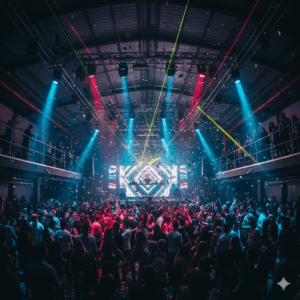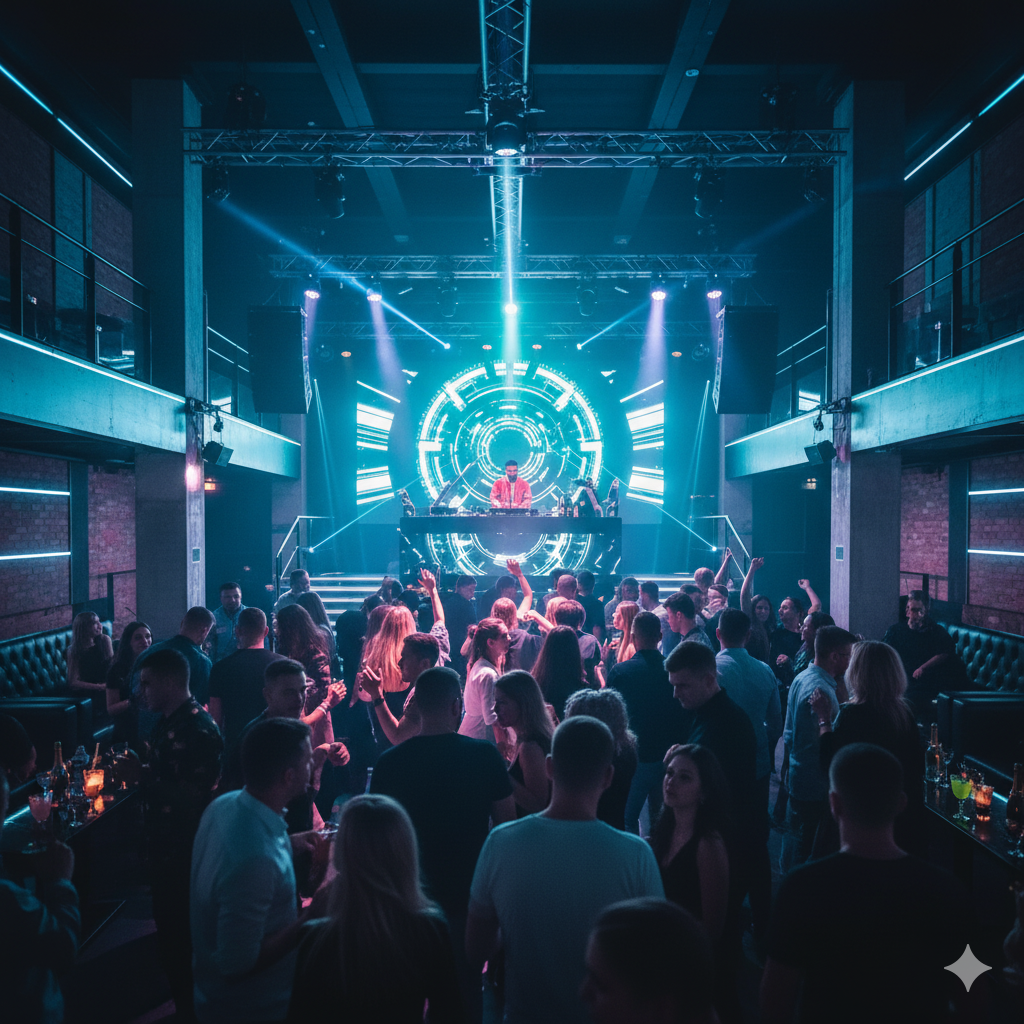
Use official schedules first, then match your budget and the walk time from your station.
If you want the smoothest start, plan your first entry fee around ¥1,000–¥4,200 depending on venue and time.
This guide focuses on modern Shinjuku nightclub spaces as an urban culture: a controlled entrance, a wristband or stamp, lockers or cloak,
and a gradual shift from “early-night socializing” to “late-night dancing.” In Kabukicho, you’ll often see multi-floor layouts where music,
lighting, and crowd density are actively managed by time blocks and door pricing. In Ni-chome, the venue often functions as a community hub:
the night’s theme (genre, dress, audience mix) shapes the room as much as the DJ does.
What you “buy” at a club is not only drinks—it’s access to a curated environment: sound system, performance lighting, staff-guided flow,
and a socially readable set of rules (ID checks, where to queue, when photos are okay). In other words, the club is a designed social machine.
The goal of this article is to help you pick best club shinjuku options without guesswork, using official pages as your starting point.
You’ll find three practical tables below (fees, access, reservations), plus etiquette and Japanese phrases that keep your night simple.
Table of Contents
1. Where should you start when choosing a Shinjuku club?
2. How do you access top areas in Shinjuku at night?
3. What will it cost, how long is a night, and who can enter?
4. Which venue types and services fit your style?
1. Where should you start when choosing a Shinjuku club?
Official website (Japanese).
1-1. Match your night to the music (use official schedules first)
“Best” depends on what you want to hear. Shinjuku nights can swing from big-room EDM and bass events to open-format pop, and from
community-focused themed parties to live-oriented club shows. The fastest way to avoid disappointment is to check the official event schedule:
ZEROTOKYO posts a full calendar here:
Official website (Japanese).
If you’re looking for scene-led programming (themes, audience mix, or strong community nights), Ni-chome’s AiSOTOPE LOUNGE is a prime example.
It publishes event details with time windows and fee structures:
Official website (Japanese).
1-2. Decide between Kabukicho’s “big-room” cluster and Ni-chome’s scene
Kabukicho is a dense nightlife zone where large venues concentrate near major stations. For instance, ZEROTOKYO’s official access page lists walk times
from Seibu-Shinjuku and JR Shinjuku:
Official website (Japanese).
This “station-to-door” efficiency matters late at night because it shapes how quickly crowds refill after peak hours.
Ni-chome (Shinjuku 2-chome) is close to Shinjuku-sanchome station and is known for themed nights and community-driven spaces.
AiSOTOPE’s access page clearly shows the short walk from Shinjuku-3chome (C8 exit):
Official website (Japanese).
1-3. Understand the “entry ritual” (ID, payment style, and flow)
In Shinjuku, the door is a controlled transition: you present ID, pay (or scan), receive a wristband or stamp, and move to lockers or cloak.
This is how the venue keeps the inside environment stable—sound, lighting, and movement all assume a predictable crowd flow.
One practical detail: some venues operate as cashless payment spaces for purchases inside. ZEROTOKYO states that it is a cashless payment venue
(with exceptions like coin lockers) on its official system page:
Official website (Japanese).
Another practical detail is time-block pricing: you pay less early and more after the “club peak” begins. WARP SHINJUKU publishes time-based
admission fees on its system page:
Official website (Japanese).
2. How do you access top areas in Shinjuku at night?
2-1. Kabukicho Tower cluster (fastest “station-to-floor” routes)
If you want a short walk and a large-scale production environment, start with Kabukicho Tower venues. ZEROTOKYO is located at Tokyu Kabukicho Tower (B1–B4),
and its official access page lists walk times:
Seibu-Shinjuku station is 1 min and JR Shinjuku station is 7 min (depending on exit).
Source:
Official website (Japanese).
2-2. Kabukicho 1-chome (multi-floor clubs with steady weekly operations)
WARP SHINJUKU operates as a multi-floor club with a consistent weekly pattern, and its official pages emphasize operating hours into late night.
For venue basics and contact/hours, see:
Official website (Japanese).
For fee blocks by time, see:
Official website (Japanese).
2-3. Shinjuku-sanchome and Ni-chome (short walk, theme-driven nights)
Ni-chome is very walkable from Shinjuku-sanchome. AiSOTOPE’s official access page states 3 min from Shinjuku-3chome station (C8 exit)
and 15 min from JR Shinjuku (east exit).
Source:
Official website (Japanese).
If you want a club-like music environment but with a livehouse structure (tickets, stage schedule), Kabukicho also includes live clubs like Shinjuku club SCIENCE.
Its official access page lists walk times from multiple stations (JR Shinjuku, Seibu-Shinjuku, Higashi-Shinjuku, Shinjuku-sanchome):
Official website (Japanese).
Table 2: Access & Hours
| Station | Walk Time | Hours | Area (JP Link) |
|---|---|---|---|
| Seibu-Shinjuku / JR Shinjuku | 1 min / 7 min | Event-based; example OPEN 11PM | Kabukicho Tower (B1–B4) — Official website (Japanese) |
| Kabukicho (near Shinjuku area) | (Check route by day) | Phone受付 21:00–04:30 | Kabukicho 1-chome (B1) — Official website (Japanese) |
| JR Shinjuku / Shinjuku-sanchome | (Short walk; confirm on page) | 受付時間 22:00–4:30 | Shinjuku 5-chome (7F–8F) — Official website (Japanese) |
| Shinjuku-3chome (C8) / JR Shinjuku | 3 min / 15 min | Event-based; example 22:00–5:00 | Ni-chome (Shinjuku 2-chome) — Official website (Japanese) |
| JR Shinjuku East Exit | 7 min (plus nearby station options) | Livehouse schedule varies (tickets + set times) | Kabukicho 2-chome — Official website (Japanese) |
Hours can change by day and by event. Use the venue’s official schedule/event page for the most reliable OPEN time.
3. What will it cost, how long is a night, and who can enter?
3-1. Cover charges: start with “door price + included drink”
Most Shinjuku clubs communicate entry as a door price plus a drink condition (e.g., “1D” or “ND”). The key habit is to read the official
fee table (or the event detail) and choose your arrival time accordingly.
Example (large event pricing): ZEROTOKYO’s event detail pages can list DOOR pricing and OPEN time. One official event page shows DOOR
¥4,200 with OPEN 11PM (fees vary by event):
Official website (Japanese).
Example (weekly fee blocks): WARP SHINJUKU lists standard admission with time splits; for Fri/Sat it shows OPEN–23:00 men ¥2,000/1D,
23:00–04:30 men ¥4,000/1D (women pricing also listed). Source:
Official website (Japanese).
Example (clear happy-hour vs regular): ATOM SHINJUKU lists Today’s Entrance Fee with 22:00–23:00 men 1900円 and 23:00–04:30 men
3900円, with notes that it includes 1Drink (special days excluded). Source:
Official website (Japanese).
3-2. Time structure: “early social” vs “late dance” (the hidden system)
Many Shinjuku clubs run two recognizable time zones. Early hours function like an urban lounge: conversation, easier movement, and “warm-up” DJ sets.
Later hours compress the room: louder peaks, denser floor, and a higher door price for late arrivals.
WARP’s official description frames the club as operating from 21:00 and emphasizes “two time zones” (from early night to late club time):
Official website (Japanese).
This matches the pricing blocks shown on its system page.
For theme-driven events, the event detail page is your clock. AiSOTOPE’s event detail can explicitly show 22:00–5:00 and a door fee on the same screen:
Official website (Japanese).
3-3. Eligibility: age, ID, and “dress code as a social signal”
Shinjuku clubs are typically strict about entry eligibility because the venue is selling controlled nightlife access, not just drinks.
ATOM states: entry is 20+ and ID checks are required, with photo ID examples (license, passport, etc.):
Official website (Japanese).
Dress code is usually “no special code, but don’t break the room.” ZEROTOKYO states it does not set a special dress code but may refuse entry for outfits
staff judge inappropriate; it also notes it is a cashless venue (except lockers). Source:
Official website (Japanese).
WARP’s system page also includes age limit and ID-check notes. If you’re visiting from overseas, carry your passport or another government-issued photo ID.
Source:
Official website (Japanese).
Table 1: Venue Types & Base Fees
| Venue Type | Typical Fee | Session Time | Area (JP Link) |
|---|---|---|---|
| Mega multi-area night entertainment | Door can be around ¥4,200 on some events | Example OPEN 11PM (event-based) | Kabukicho Tower — Official website (Japanese) |
| Multi-floor nightclub (weekly fee blocks) | Fri/Sat late men ¥4,000/1D (time-based) | OPEN–23:00 / 23:00–04:30 | Kabukicho 1-chome — Official website (Japanese) |
| Club with clear happy-hour pricing | Men 1900円 (early) / 3900円 (late), incl. 1Drink | 22:00–04:30 (fee blocks) | Shinjuku 5-chome — Official website (Japanese) |
| Scene-driven themed club event | Door example ¥4,000 (ND) on a listed event | Example 22:00–5:00 | Ni-chome — Official website (Japanese) |
Fees change by event and season. Treat “typical fee” as a planning baseline, then confirm the exact door price on the official system/event page.
4. Which venue types and services fit your style?
4-1. Mega multi-area venues: when you want scale and production
If your idea of a “best club Shinjuku” is scale—multiple floors, large sound, strong lighting, and an event calendar that feels international—start with
ZEROTOKYO. Its official “About” page frames the venue as an “ENTERTAINMENT JUNCTION” and notes it is composed of multiple floors and areas:
Official website (Japanese).
Practical service cues in mega venues: expect strong staff-guided flow at the entrance, lots of lockers, and payment systems designed for speed.
ZEROTOKYO also states it is cashless for in-venue payments (lockers excluded), which often speeds up bar lines:
Official website (Japanese).
4-2. Multi-floor weekly clubs: a predictable “weekday vs weekend” rhythm
For many visitors, the real luxury is predictability: you can arrive early, pay a lower cover, and still get a full night.
WARP describes its concept and multi-floor variety on its official About page:
Official website (Japanese).
If you prefer a straightforward pricing ladder, WARP’s system page is unusually readable: it lists standard fees for Sun–Thu and for Fri/Sat with
time blocks up to 04:30:
Official website (Japanese).
4-3. Themed scene events and show-lounge options: the night as a “program”
In Ni-chome, the “service” is often the program itself: theme, cast, and time window create a temporary culture inside the venue.
AiSOTOPE’s event pages typically publish a full information block with OPEN time and fee details (example page):
Official website (Japanese).
If you want a nightlife space that is closer to a “show lounge” than a pure dance club, Kabukicho also has entertainment-lounge formats.
the27club states “Open daily from 20:00-26:00” on its official site and outlines its system on the official system page:
Official website (Japanese)
and
Official website (Japanese).
5. How do reservations, etiquette, and useful phrases work?
5-1. Reservations: mostly for VIP/table, not standard entry
Standard entry is typically walk-in (queue → ID check → pay → enter). Reservations become relevant when you want a table, bottle plan, or guaranteed seating.
Many venues link to official booking platforms from their own sites.
WARP SHINJUKU’s official reservation link points to its TableCheck booking page (VIP plans and notes like a 2-hour system appear there):
Official website (Japanese).
ZEROTOKYO also uses an official TableCheck landing page for VIP reservations:
Official website (Japanese).
ATOM SHINJUKU likewise links to TableCheck for VIP seating:
Official website (Japanese).
5-2. Etiquette: follow the venue’s “public rules” (especially photos)
Etiquette in Shinjuku clubs is mainly about respecting the room as a shared space: don’t block pathways, use lockers for large bags, and
follow staff instructions so the crowd stays safe and fluid.
Photography rules vary. Some venues publish clear guidance. ZEROTOKYO’s official system page includes a section about filming/streaming rules and personal-use photos:
Official website (Japanese).
If you’re unsure, ask staff before filming.
Show-lounge formats may also restrict recording. the27club’s system page includes “PAY ATTENTION” items including restrictions on recording:
Official website (Japanese).
5-3. Useful Japanese phrases (simple, polite, and effective)
You can get through most club interactions with short, polite phrases. Here are a few that work across venues:
- 身分証ありますか? (Do you have ID?) → あります (Yes) / パスポートです (It’s my passport.)
- 入場料はいくらですか? (How much is the entrance fee?)
- 1ドリンク付きですか? (Is one drink included?)
- ロッカーはどこですか? (Where are the lockers?)
- 予約しています (I have a reservation.)
- 写真(動画)撮ってもいいですか? (Is it okay to take photos/videos?)
Table 3: Reservation & Eligibility
| Method | Lead Time | Eligibility | Official (JP Link) |
|---|---|---|---|
| Walk-in (standard entry) | Same day (queue-based) | Usually 20+ with photo ID check | Rules/ID info — Official website (Japanese) |
| VIP/Table reservation | Book ahead (time-slot based) | Venue rules apply; plans may note 2-hour system | WARP booking — Official website (Japanese) |
| VIP/Table reservation | Book ahead (VIP zones) | Follow venue rules; ID checks on entry | ZEROTOKYO VIP — Official website (Japanese) |
| Event detail confirmation | Before you go (same day OK) | Check OPEN, fee, and any entry conditions | AiSOTOPE event info — Official website (Japanese) |
Reservation systems and plan minimums differ by venue. Use the official booking link (often provided by the venue) to confirm conditions before paying.
6. Summary and Next Steps
Shinjuku is easiest when you treat nightlife as a system: schedule → access → pricing blocks → entry rules. Start with official pages, because Shinjuku’s “best club” changes by night:
the biggest crowd is often tied to a single event, while the smoothest experience often comes from arriving early and paying a lower cover.
If you want a quick baseline: Kabukicho is strong for big-room spectacle (multi-floor venues and large productions), while Ni-chome is strong for themed community nights with clearly listed event info.
Use the tables above to plan your first move, then confirm the final numbers on the venue’s official page before you leave your hotel.
Many travelers search for the best club shinjuku and then get stuck on the same problems: too many options, unclear door prices, confusing station exits,
and uncertainty about reservations or ID checks. Shinjuku nightlife is fun, but it is also highly “scheduled” and “system-based”—the vibe can change completely depending on the event,
and the price can change depending on the hour. That’s exactly why a practical, structured approach works better than random recommendations.
SoapEmpire helps you plan Shinjuku nights using simple steps: check the official DJ events calendar, confirm the cover charge and time blocks, and choose the easiest route from your station.
If you’re comparing Shinjuku nightclub choices across Kabukicho clubs and Ni-chome events, we organize the key decision points in plain English: entry rules, typical cover charge,
and whether VIP reservation is worth it. We also explain the “ritual” of entry—ID checks, wristbands, lockers, and photo rules—so you can walk in confidently and avoid awkward moments at the door.
What makes SoapEmpire different is that we don’t only list places—we translate how the system works. We focus on the details that actually affect your night:
how long it takes to arrive from the nearest station, how pricing shifts from early hours to peak time, and how to book VIP seating when you want guaranteed space.
Our coverage is nationwide (Tokyo, Osaka, Nagoya, Fukuoka), and we’re built for visitors who want clarity—especially people who don’t read Japanese well but still want to follow the local rules.
If you need hands-on help, SoapEmpire also offers 24-hour booking support for only $10. That service is useful when a venue’s booking page feels complicated,
when you’re not sure which plan fits your group, or when you simply want a fast, smooth reservation without back-and-forth messaging. You tell us the venue and your preferred time; we help you do the rest.
For reservations or inquiries, please contact us via the inquiry form.
6-1. A simple decision flow (works for most visitors)
- Pick your music first: check an official schedule/event page (don’t guess).
- Pick your area second: Kabukicho for scale, Ni-chome for themed community nights.
- Pick your arrival time third: early entry is usually cheaper and less crowded.
- Choose walk-in vs VIP: walk-in is normal; VIP is for guaranteed space and a smoother base camp.
6-2. If you’re visiting from overseas (quick checklist)
- Carry government-issued photo ID (passport is safest) for 20+ entry checks.
- Bring a card or payment method that works for cashless venues (some clubs state cashless policies on official pages).
- Save your venue’s official access page and event page on your phone for easy reference at night.
6-3. SoapEmpire resources (internal guides)
Explore more guides and tools on SoapEmpire:
- Tokyo nightlife districts overview
- How to book smoothly in Japan (step-by-step)
- Osaka nightlife guide (planning and etiquette)
FAQ
Q1) How much is the typical cover charge in Shinjuku clubs?
It depends on the venue and time block. Some official pages show time-based pricing (for example, WARP lists different fees before and after late-night hours),
while event pages can list a single door fee for that night. Start with the venue’s official system or event detail page to confirm the exact number.
Q2) Do I need a reservation to enter a Shinjuku club?
Usually no—most people walk in. Reservations mainly matter for VIP/table seats. If you want VIP, use the venue’s official booking link (often a platform like TableCheck) to reserve a time slot.
Q3) What ID do I need, and is there an age limit?
Many venues state 20+ entry with ID checks and prefer government-issued photo ID. If you’re visiting from overseas, a passport is the safest option.
Q4) What is the best time to arrive?
If the venue publishes time-based fees, arriving earlier can be cheaper and less crowded. For event-led venues, follow the OPEN time on the official event detail page and arrive near opening for the smoothest entry.
If you’re interested in visiting any of these places, SoapEmpire offers a 24-hour booking support service for only $10.
Just send the store name, preferred time, and your name (nickname is fine) to:
artistatakuma@icloud.com.
We’ll take care of your reservation quickly and smoothly.
::contentReference[oaicite:0]{index=0}