Shinjuku Ni-chome Tokyo is a compact nightlife district built around small bars, community venues, and event-based clubs—where the “system” is usually a simple entry/cover + drinks.
The easiest access point is Shinjuku-sanchome (Tokyo Metro / Toei), then a short walk; use official station pages and local associations for reliable navigation and event updates.
If you want a smoother first night, plan your route, bring ID, and learn a few short Japanese phrases—most places are friendly when you follow the house rules.
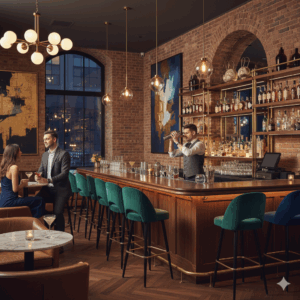
Shinjuku Ni-chome functions like a “micro-nightlife city.” The modern layout is less about big venues and more about dense, vertical nightlife: small counters on upper floors, narrow entrances, compact lounges, and a few event spaces that expand at night. Many buildings are mixed-use, so you’ll often enter through a quiet daytime corridor, find a small reception area, and then step into an intimate room designed for conversation and community.
In practical terms, the experience is structured. A common flow is: greet the staff, confirm the system (entry/cover, drink minimum, time limit if any), order a first drink, and then decide whether you stay, move to a second place, or join an event. Unlike “one-size-fits-all” nightlife districts, Ni-chome offers clearly labeled spaces—some are mixed, some are men-only, some are women-only—so the “performance of contact” is mostly social and conversational: polite greetings, small talk, karaoke, and shared rituals (a toast, a stamp card, an event wristband).
Culturally, Ni-chome is often described as an LGBTQ+ town supported by community groups and local store networks. That matters for visitors because it means there are public-facing events, seasonal festivals, and organized store lists—use them like a map for your first night, not just as “extra information.”
1. Where should you start in Shinjuku Ni-chome Tokyo?
1-1. What Ni-chome is (and isn’t)
Ni-chome is widely recognized as an LGBTQ+ nightlife area, and a useful first step is to treat it as a community-supported district rather than a single “attraction.” One of the clearest entry points is the official site of a local association that introduces the town and its activities:
Shinjuku Ni-chome Nijiiro Tomonokai (official, Japanese).
“Not everyone goes to the same kind of place” is the main rule. You’ll see categories such as MIX (mixed clientele), MEN ONLY, WOMEN ONLY, and event-based venues. This is not a barrier; it’s a navigation system. When you pick places that match your group, your night becomes simpler and more respectful.
1-2. How the district is organized: small doors, big variety
Ni-chome is compact, but it’s “tall.” Many bars sit on upper floors, and the street-level signboards are part of the local wayfinding culture. A practical move is to rely on curated lists rather than guessing from the street.
For example, the Nijiiro Tomonokai site publishes a members list with venue categories (MIX / MEN ONLY / WOMEN ONLY) and basic location details:
Participating venues list (official, Japanese).
Think of this like your “first-night directory.”
1-3. Community networks: why “official lists” matter
Ni-chome’s nightlife is supported by store networks and event organizers. Another official reference point is a local business group’s member listing, which notes it has 77 member stores (as of the date shown on the page):
Shinjuku Ni-chome Shinkokai member list (official, Japanese).
2. How do you access top streets in Ni-chome?
2-1. The easiest rail hub: Shinjuku-sanchome (Tokyo Metro / Toei)
For most visitors, the simplest hub is Shinjuku-sanchome. It is a major station on Tokyo Metro and links well to the neighborhood. Tokyo Metro reports an average daily ridership of 152,460 (FY2024) on its station information page:
Tokyo Metro: Shinjuku-sanchome station info (official, Japanese).
The Toei Shinjuku Line also serves Shinjuku-sanchome, and the Tokyo Metropolitan Bureau of Transportation provides station details and usage data, including 35,577 average daily boardings (FY2024) and 37,090 average daily alightings (FY2024):
Toei Subway: Shinjuku-sanchome station info (official, Japanese).
2-2. Walking: keep it simple and landmark-based
Ni-chome navigation works best when you use one or two landmarks and then switch to building signboards. If you’re visiting adjacent nightlife micro-areas, official tourism pages can even provide walk-time benchmarks.
Example: Shinjuku’s tourism association describes Golden Gai access as 5 minutes on foot from JR Shinjuku and also 5 minutes from Shinjuku-sanchome (Tokyo Metro / Toei), which can help you calibrate distance in this part of town:
Shinjuku Golden Gai (official tourism page, Japanese).
※参考情報(editor’s note):From Shinjuku-sanchome, many Ni-chome streets are typically within a short walk (often under 10 minutes), but the exact route depends on which block and which building you are targeting.
2-3. Tourist information, maps, and “human help”
If you want printed maps and practical advice, the Shinjuku Tourist Information Center is a straightforward option. Its published opening hours are 10:00–19:00 (closed only during the year-end period shown on the page):
Shinjuku Tourist Information Center (official, Japanese).
Table 2: Access & Hours
| Station | Walk Time | Hours | Area (JP Link) |
|---|---|---|---|
| Shinjuku-sanchome (Tokyo Metro) | ※参考情報(editor’s note):~5–10 min to many Ni-chome blocks | Station services typically run from first train to last train | Official website (Japanese) |
| Shinjuku-sanchome (Toei Shinjuku Line) | ※参考情報(editor’s note):~5–10 min to many Ni-chome blocks | Station access is available from first train to last train | Official website (Japanese) |
| Golden Gai (reference point) | Official benchmark: 5 min from Shinjuku-sanchome | Varies by shop | Official website (Japanese) |
| Shinjuku Tourist Information Center | Near Shinjuku Station area | Published hours: 10:00–19:00 | Official website (Japanese) |
Note: Walk times depend on the exact building and exit used. Use official station pages for exits and station layouts, and treat editor’s-note walk times as rough orientation.
3. What budget, time, and ID checks should you expect?
3-1. Cost structure: why “systems” feel different here
Many Ni-chome venues are small and intentionally personal. That changes pricing: instead of “big-club tickets,” you often see a simple “system” (charge/cover + drinks). The best way to get a clean, published price is to use organized events where the fee and benefits are written out.
For example, a bar-hopping style event on the Nijiiro Tomonokai site lists an advance ticket of ¥3,000 with 5 drink tickets, and a same-day ticket of ¥3,500 with 5 drink tickets:
Event listing (official, Japanese).
※参考情報(editor’s note):For regular walk-in bars, cover/charge and drink prices vary widely by venue type, location (ground floor vs. upper floors), and whether it’s a weekend.
3-2. Time planning: short stays beat long marathons
Ni-chome nights are often designed as “two to four stops,” not one long sit. A common rhythm is: first venue to warm up, second venue to meet people or enjoy karaoke, third venue to close out. If you’re attending an event, the event page will often publish a start/end window that helps you plan your movement.
If you rely on trains, station pages are the most dependable place to jump to timetables and station facilities (e.g., for exits, elevators, and last-train planning):
Tokyo Metro station page (official, Japanese).
3-3. ID checks and eligibility: what to carry
Alcohol service is restricted to people aged 20+ under Japan’s law prohibiting drinking by those under 20:
e-Gov law database (official, Japanese).
Some organized events also state eligibility clearly. One Nijiiro Tomonokai event description, for instance, includes ID checking at reception and indicates participation conditions (as written on the event page):
Event details (official, Japanese).
Table 1: Venue Types & Base Fees
| Venue Type | Typical Fee | Session Time | Area (JP Link) |
|---|---|---|---|
| Bar-hopping style event ticket | Advance: ¥3,000 (with 5 drink tickets); Same-day: ¥3,500 (with 5 drink tickets) | Example event window includes reception + evening route (see listing) | Official website (Japanese) |
| Community summer festival drink booth (reference pricing) | Beer / canned drinks: ¥500; “Rainbow ale”: ¥1,000 | Festival-style, short purchase-and-move flow | Official website (Japanese) |
| Walk-in small bar (counter-style) | ※参考情報(editor’s note):often around ¥1,000–¥3,000 cover + drinks (varies) | Typically 30–90 minutes per stop | Official website (Japanese) |
Note: Event tickets provide the clearest published pricing. Walk-in bar pricing varies by venue and night; confirm the “system” at entry.
4. Which venue types match your night style?
4-1. Counter bars: the “small room” social technology
The most common Ni-chome experience is the compact bar: a few seats, a bartender who sets the tone, and a social atmosphere built on greetings and short conversations. This is where plain Japanese helps the most (more phrases in Section 5).
To pick a bar that fits your group, use the official member listings that label audience categories. The Nijiiro Tomonokai directory is helpful because it explicitly marks venues as MIX, MEN ONLY, WOMEN ONLY, or event-dependent:
Venue directory with categories (official, Japanese).
4-2. Cafes, lounges, and event spaces: when nights “scale up”
When you want a larger crowd, look for event-driven lounges and clubs. These places often switch formats by night—music events, themed parties, community gatherings—so the best practice is to check the organizer’s event page first.
The Nijiiro Tomonokai event page demonstrates how organized nights can publish start/end times, reception points, and ticket pricing in one place:
Events and schedules (official, Japanese).
4-3. Nearby micro-areas in Shinjuku: add a second chapter to your night
If you want to broaden your Shinjuku nightlife beyond Ni-chome, nearby areas offer different “night architectures.” Golden Gai is a famous micro-bar district described by Shinjuku’s tourism association as a dense cluster of small drinking spots in a compact zone:
Shinjuku Golden Gai (official tourism page, Japanese).
For visitors comparing multiple nightlife styles across Japan (Tokyo, Osaka, Nagoya, Fukuoka), SoapEmpire also maintains city-by-city guides and practical booking help:
SoapEmpire,
Tokyo nightlife area overview,
Osaka guide,
How to book (step-by-step).
5. How do you book, behave, and speak politely?
5-1. Reservations: what “booking” usually means in Ni-chome
Many small bars operate on walk-in flow, but event nights often require advance purchase or at least checking details. If your plan includes an organized bar-hopping night, the event listing typically includes ticket windows and reception instructions (and sometimes the reception venue):
Event booking details (official, Japanese).
If you want to select venues by category before you arrive, use the official member list (MIX / MEN ONLY / WOMEN ONLY / event-dependent), then decide on one or two anchors:
Venue list (official, Japanese).
5-2. Street etiquette and shared space rules (simple, practical)
Good Ni-chome etiquette is mostly “city etiquette.” Shinjuku’s official tourism guidance for visitors summarizes key manners such as trash handling, queuing, photography awareness, and smoking rules:
ENJOY RESPECT “SHINJUKU” (official tourism page, Japanese).
For smoking specifically, Shinjuku Ward states that street smoking is prohibited across the ward and notes implementation from July 1, 2025:
Shinjuku City: street smoking prohibition (official, Japanese).
5-3. Useful Japanese phrases (plain and polite)
These phrases are short, polite, and widely understood. Use them exactly as written:
- Hajimete desu. (It’s my first time.)
- Koko ii desu ka? (Is it okay to sit here?)
- Shisutemu wa nan desu ka? (What’s the system/charge?)
- Hitotsu onegaishimasu. (One, please.)
- Osusume wa nan desu ka? (What do you recommend?)
- Okaikei onegaishimasu. (The bill, please.)
If you can say just two things—“first time” and “what’s the system?”—your night becomes easier and more respectful.
6. Summary and Next Steps
Visiting Shinjuku Ni-chome Tokyo can feel confusing at first—not because it’s unfriendly, but because the district runs on small, venue-by-venue “systems.” One door might be a relaxed MIX bar with a simple cover and conversation, while the next is an event space with a ticket window, start time, and audience category. For travelers and newcomers, the real challenge is choosing the right first stop, understanding the cover-charge culture, and moving smoothly between places without wasting your night on trial-and-error.
SoapEmpire solves that problem with clear, practical planning. We translate the important parts of nightlife logistics into plain steps: where to start around Shinjuku-sanchome station, how to read venue categories (MIX / MEN ONLY / WOMEN ONLY), how bar-hopping events work, and how to confirm the system politely at the door. Whether your focus is LGBTQ nightlife, Shinjuku 2-chome community events, or simply finding a comfortable bar that matches your vibe, we organize the choices so you can spend more time enjoying and less time guessing.
Our strength is coverage and support. SoapEmpire is a nationwide nightlife portal across major cities (Tokyo, Osaka, Nagoya, Fukuoka), with English-friendly explanations of pricing patterns, access routes, and venue selection. When you need help, we offer 24-hour reservation support for a fixed $10—especially useful when a venue prefers Japanese communication, or when you want to coordinate timing for a group. You can also use our internal guides to compare neighborhoods and plan multi-city trips: Tokyo nightlife area overview, Osaka guide, and How to book.
The benefit is simple: you walk into the night with a plan that fits your budget, your time, and your comfort level. You’ll know which venue type you’re aiming for, what ID you should carry, and how to ask the key question—“What’s the system?”—without stress. If you want to turn a first visit into a smooth, memorable night in Shinjuku Ni-chome Tokyo, SoapEmpire can be your practical partner from the first station exit to the last toast.
For reservations or inquiries, please contact us via the inquiry form.
6-1. A simple “first-night” checklist
- Pick one anchor venue from an official list (MIX is easiest for mixed groups).
- Choose one optional event from the organizer’s published schedule.
- Carry physical ID and confirm the system at entry.
- Keep street behavior calm; follow the venue’s photo policy.
6-2. Official references to keep bookmarked
- Ni-chome association: Nijiiro Tomonokai (official)
- Venue categories directory: Members list (official)
- Event listings: Events (official)
- Station access: Tokyo Metro station page (official)
6-3. Planning beyond Ni-chome
If your trip includes multiple cities, use SoapEmpire’s city guides and booking help to compare neighborhoods and systems without confusion:
SoapEmpire,
Tokyo nightlife area overview,
Osaka guide,
How to book.
Table 3: Reservation & Eligibility
| Method | Lead Time | Eligibility | Official (JP Link) |
|---|---|---|---|
| Buy an event ticket (bar-hopping format) | Published ticket window (example shown on listing) | Example listing includes reception ID check and participation conditions; carry ID | Official website (Japanese) |
| Choose venues by category (MIX / MEN ONLY / WOMEN ONLY) | Same day planning works | Check each listing’s category before visiting | Official website (Japanese) |
| Confirm the drinking age rule | Before you go | Alcohol is restricted to 20+ | Official website (Japanese) |
Note: “Eligibility” can mean age rules, venue category, or event participation conditions. Always follow the venue’s stated category and system.
FAQ
Q1. How much money should I budget for a first night in Ni-chome?
A clean way to budget is to use published event pricing first. For example, some bar-hopping style events list ¥3,000 (advance) or ¥3,500 (same-day) with 5 drink tickets on the official event page. For walk-in bars, pricing varies, so confirm the “system” at entry.
Q2. Do I need a reservation to visit bars in Shinjuku Ni-chome Tokyo?
Often no—many small bars are walk-in. However, events may have ticket windows and reception steps. Check official listings (events and members directories) before you go so you know the category and format.
Q3. What ID rules should I expect?
Carry physical ID. Alcohol service is restricted to people aged 20+ under Japan’s law, and some events also state ID checking at reception. A passport or residence card is the safest option.
If you’re interested in visiting any of these places, SoapEmpire offers a 24-hour booking support service for only $10.
Just send the store name, preferred time, and your name (nickname is fine) to:
artistatakuma@icloud.com.
We’ll take care of your reservation quickly and smoothly.