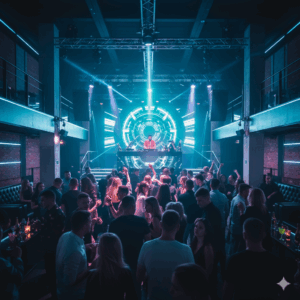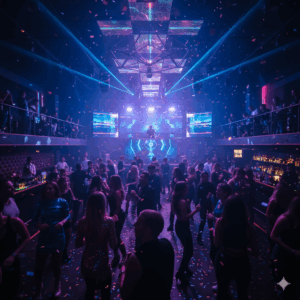
Tokyo’s club scene is built around “designed movement”: you pass a clear entrance checkpoint, move into a main floor with high-volume sound and lighting, then branch into quieter edges (bar lines, lounge corners, smoking rooms, VIP tables). This layout is not accidental—it helps venues control pacing, crowd density, and social interaction without needing complicated instructions.
In many venues, the “service” is not a single thing—it’s a structured bundle: entry + a drink ticket set, plus optional upgrades (all-you-can-drink plans, table packages, or reserved seating). Some clubs explicitly publish prices and table rules (for example, V2 TOKYO’s “System” page lists weekday and weekend options, plus table packages and access notes). See Official website (Japanese).
You’ll also notice a cultural balance between freedom and formality: many places have flexible fashion, but still ask for adult ID checks and “public-appropriate” clothing standards. For example, WOMB’s FAQ explains how door payment and tickets work, and also lists basic price ranges like soft drinks starting from 500 yen. See Official website (Japanese).
1. Where should you start if you’re new to Tokyo night clubs?

1-1. Three starter areas in plain terms
Think of Tokyo club nights as “district-based.” You usually commit to one zone for the night because moving across the city late can cost time and energy.
- Shibuya: youth-driven dance floors, music variety, and fast entry cycles. WOMB is a well-known Shibuya venue with a clear FAQ describing door payment vs advance tickets. See Official website (Japanese).
- Roppongi: “dress-up” mood, bottle/table culture, and a more lounge-forward feel. V2 TOKYO publishes weekday/weekend systems and table rules. See Official website (Japanese).
- Kabukicho (Shinjuku): big entertainment buildings and mixed crowds. ZEROTOKYO is a large facility in Tokyu Kabukicho Tower, with an official access page listing station walk times. See Official website (Japanese).
1-2. The “club flow” (what happens step-by-step)
Most Tokyo clubs follow a consistent flow:
- Entrance check: staff confirm age and basic dress appropriateness.
- Payment: you pay door/entry (or show a ticket), then receive drink tickets or wristband-type proof depending on the venue.
- Main floor and edges: loud central floor + quieter bar/lounges at the perimeter.
1-3. Picking one venue: what to check before you go
Before heading out, check three things on the venue’s official pages:
- Access: address and a simple route (WOMB posts an access description and address). See Official website (Japanese).
- System: entry fee style + drink ticket rules (V2 TOKYO lists weekday/weekend options). See Official website (Japanese).
- ID check & dress rules: even “no dress code” venues can refuse clearly unsafe footwear or outfits; ZEROTOKYO states “no particular dress code” but still allows refusal for inappropriate outfits. See Official website (Japanese).
2. How do you access the top club areas fast and safely?

2-1. Shibuya: short walks, dense choices
Shibuya is compact: many venues are reachable on foot once you arrive near central Shibuya. For a clear official example, WOMB’s access page gives the venue address and a short route description. See Official website (Japanese).
If you want a classic “club + live house” hybrid in Shibuya, clubasia publishes an official access page with directions and entry ID notes. See Official website (Japanese).
2-2. Roppongi: station-adjacent, more planned nights
Roppongi club nights often feel more “planned” because table booking and dress expectations are more common. V2 TOKYO’s official site states access from Roppongi Station exits as a 1-minute walk (Oedo Line Exit 7 / Hibiya Line Exit 4B). See Official website (Japanese).
2-3. Kabukicho: the mega-building approach
Kabukicho is known for vertical entertainment—many venues inside large buildings rather than standalone street-level clubs. ZEROTOKYO is located in Tokyu Kabukicho Tower (B1–B4), and the official access page lists walk times from multiple stations. See Official website (Japanese).
Table 2: Access & Hours
| Station | Walk Time | Hours | Area (JP Link) |
|---|---|---|---|
| Seibu-Shinjuku Station (Kabukicho) | 1 min | Varies by event; check schedule | Official website (Japanese) |
| Roppongi Station (Oedo/Hibiya) | 1 min | Open daily (system varies) | Official website (Japanese) |
| Shibuya (Udagawa-cho / Center) | — (check venue route) | 22:00–04:30 | Official website (Japanese) |
| Shibuya (Dogenzaka/Maruyama-cho area) | — (route posted) | Check calendar | Official website (Japanese) |
Numbers are taken from official venue pages where explicitly stated (e.g., station walk times on ZEROTOKYO’s access page and V2’s access notes; TK’s official access page lists opening hours). When a venue’s hours vary by event, treat the calendar as the final source.
3. What do prices, time rules, and age checks really mean?

3-1. Entry fee logic: door, tickets, and drink bundles
“Cover charge” in Tokyo often includes a drink component (like 1D/2D drink tickets) rather than being a pure door fee. This is why you may see price lines like “MEN 2,000yen / 1D” on official system pages.
Example: CLUB TK SHIBUYA publishes entrance fees by weekday/weekend and time blocks, including drink ticket rules (e.g., “MEN 2,000yen / 1D” early on weekends, and “MEN 3,500yen / 2D” after midnight on weekends). See Official website (Japanese).
3-2. Time rules: why “2-hour” shows up in VIP
VIP/table service is a structured product: you pay for a reserved zone that reduces standing time, protects personal space, and creates a stable social “base.” Many venues set a standard table session time to keep rotation fair.
V2 TOKYO’s official site explains that VIP tables are “2 hours” per seat and lists table packages and service charges. See Official website (Japanese).
3-3. Age and ID: what “photo ID” means in practice
Tokyo clubs commonly require proof you are 20+. ZEROTOKYO’s system page lists acceptable IDs (passport, driver’s license, resident cards, etc.) and notes that copies/images/expired IDs are not accepted. See Official website (Japanese).
Table 1: Venue Types & Base Fees
| Venue Type | Typical Fee | Session Time | Area (JP Link) |
|---|---|---|---|
| Roppongi mega-club (system + VIP tables) | Weekday (men) ¥2,000 / 1 drink or ¥5,000 all-you-can-drink; Weekend regular ¥4,000 / 2 drink tickets | VIP tables often 2 hours per seat | Official website (Japanese) |
| Shibuya large floor club (time-based entrance tiers) | Example: weekend men ¥2,000 / 1D (22:00–24:00) then ¥3,500 / 2D (after 24:00) | Open 22:00–04:30 | Official website (Japanese) |
| Shibuya club with flexible ticketing (door or advance) | Fees vary by event; confirm “DOOR” and ticket options on the event page | Depends on event/night | Official website (Japanese) |
“Typical fee” lines above are taken from official published systems where explicitly listed (V2 TOKYO and TK SHIBUYA). For venues that price per event, treat the venue’s official calendar/event pages as the final source.
4. Which venue types match your vibe and expectations?

4-1. Dance-first clubs: sound, lighting, and long floors
Dance-first clubs emphasize audio/visual intensity and a strong main floor. Your “comfort” tools are usually simple: lockers, a cloak, and knowing drink prices.
WOMB’s FAQ lists practical details like coin lockers (multiple sizes) and drink baseline pricing (e.g., soft drinks from 500 yen, cocktails around 700 yen range on the FAQ). See Official website (Japanese).
4-2. Lounge/table-forward clubs: “designed intimacy” without pressure
Table-forward clubs create structured intimacy: your group’s space is clearly defined, service timing is standardized, and social interaction is “opt-in” rather than forced by crowding. This is a common pattern in Roppongi.
V2 TOKYO publishes VIP table rules and pricing structure, including that all seats are a 2-hour set and may involve table charges and bottle orders. See Official website (Japanese).
4-3. Dress expectations: “no dress code” still has boundaries
Even when venues say “no particular dress code,” they may refuse entry for outfits they judge inappropriate for public settings. ZEROTOKYO states this clearly (and also warns that casual footwear like beach sandals may be restricted for safety). See Official website (Japanese).
Some venues explicitly set a dress code to match their atmosphere. For example, SEL OCTAGON TOKYO’s English page lists items that can be refused at the door. See Official website (Japanese).
5. How do reservations, etiquette, and useful phrases work?

5-1. Reservations: when you need them and how to request
You typically reserve when you want guaranteed seating, a calmer base, or you’re arriving later at night. A good reservation message includes: venue name, date, arrival time, number of people, and whether you want a table or just general entry.
Examples of “official contact points”:
- WOMB lists a Premium Lounge reservation email on its access page. See Official website (Japanese).
- CLUB TK SHIBUYA includes “BOOK THE TABLE” and contact/reservation links on official pages (see system/access). See Official website (Japanese) and Official website (Japanese).
- V2 TOKYO highlights VIP reservations and provides contact/access details on the official site. See Official website (Japanese).
5-2. Etiquette that matters in Tokyo clubs
Tokyo club etiquette is mostly about keeping shared space comfortable:
- Have your ID ready at the entrance; venues like ZEROTOKYO state that all guests are checked and must be 20+. See Official website (Japanese).
- Follow venue rules on re-entry and lockers; WOMB’s FAQ notes policies like no re-entry in general and locker/cloak options. See Official website (Japanese).
- If the venue is cashless, don’t assume cash will work; ZEROTOKYO explicitly says it is cashless (except lockers). See Official website (Japanese).
5-3. Useful Japanese phrases (simple and effective)
You don’t need perfect Japanese—short, clear lines help a lot at the door and bar:
- 「入場できますか?」(Nyuujou dekimasu ka?) = “Can I enter?”
- 「身分証あります。」(Mibunshou arimasu.) = “I have my ID.”
- 「予約しています。」(Yoyaku shiteimasu.) = “I have a reservation.”
- 「何時までですか?」(Nanji made desu ka?) = “Until what time?”
- 「ドリンクはどこですか?」(Dorinku wa doko desu ka?) = “Where do I get the drink?”
Table 3: Reservation & Eligibility
| Method | Lead Time | Eligibility | Official (JP Link) |
|---|---|---|---|
| Walk-in entry (pay at door) | Same day | 20+ and ID required (venue policy) | Official website (Japanese) |
| VIP / Table reservation | Earlier is better (especially weekends) | Venue rules apply; table sessions often 2 hours | Official website (Japanese) |
| Email inquiry for lounge/VIP | Recommended: 1–3 days | Varies by venue/event | Official website (Japanese) |
| Time-tier entrance system | Arrive early to save | Fees can change after midnight; check official system page | Official website (Japanese) |
This table focuses on rules and numbers explicitly stated on official pages (ID/20+ on ZEROTOKYO’s system page; 2-hour VIP structure and packages on V2’s official site; time-tier fees on TK SHIBUYA’s official system page).
6. Summary and Next Steps
6-1. A simple plan you can reuse
- Pick the district: Shibuya (dance-first), Roppongi (table-forward), Kabukicho (mega facility).
- Pick one venue with a clear official rules page (system/access/FAQ).
- Arrive early if you want lower entry tiers (when the system is time-based).
- Decide: walk-in vs reserve a table for comfort.
6-2. Quick checklist (what to hold in your hand)
- Photo ID (passport is simplest). ZEROTOKYO’s system page lists acceptable IDs. See Official website (Japanese).
- Payment method (some venues are cashless). See Official website (Japanese).
- Venue address/access (save it offline). Example: WOMB access page. See Official website (Japanese).
6-3. Related SoapEmpire guides (internal links)
If you want to compare nightlife styles beyond clubs—or plan across multiple cities—these SoapEmpire guides help you choose faster:
Planning a club night in Tokyo sounds easy until the small details stack up: which district matches your mood, whether the venue is cashless, how entry tiers change after midnight, and what “VIP” really buys you (space, time limits, and a calmer base). If you’ve ever felt unsure about Shibuya club scene choices, Roppongi mega-clubs table rules, Kabukicho nightlife building layouts, or even simple things like cover charge bundles and dress code boundaries, you’re not alone—Tokyo’s nightlife is welcoming, but it is also highly systematized.
SoapEmpire helps you turn that system into a clear plan. Instead of guessing, you can map your night around official rules and realistic pacing: pick one area, pick one venue with published “system” information, then decide whether you want walk-in energy or a reserved table experience. We organize the essentials in plain English—prices (and what they include), access notes, how long sessions typically run, and what to prepare for ID checks—so you can focus on the fun rather than logistics.
Our advantage is coverage and support. SoapEmpire is built as a Japan-wide nightlife portal (Tokyo, Osaka, Nagoya, Fukuoka, and more), and we translate “local-style” information into simple decision points. You’ll see which venues are most compatible with international visitors, how to choose between dance-first floors vs lounge-forward nights, and how to communicate clearly when you want a reservation. If you decide you want help with coordination, SoapEmpire offers a 24-hour booking support service for only $10—a small fixed cost that can save a lot of time and uncertainty.
Use SoapEmpire when you want consistency: the right district, the right entry plan, and the right tone (from relaxed to premium). Whether your goal is a straightforward first-time club night or a more curated table-focused evening, we help you align expectations with reality—without pressure and without confusing jargon.
For reservations or inquiries, please contact us via the inquiry form.
FAQ
Q1: How much is entry at Tokyo night clubs?
It depends on the venue and time. Some venues publish time-tier systems (for example, TK SHIBUYA shows different prices before and after midnight), while others price by event and ask you to check the event page. Always confirm on the official “System” or FAQ pages before going.
Q2: Do I need to book in advance?
For general entry, walk-in is common. If you want guaranteed seating or a calmer base, reserve a table/VIP in advance using the venue’s official reservation link or contact method (many venues list this on their access/system pages).
Q3: What ID do I need, and is it really 20+?
Most Tokyo clubs require guests to be 20+ and to show photo ID. A passport is the simplest option for visitors. Some venues also publish details of acceptable IDs on their official system pages.
If you’re interested in visiting any of these places, SoapEmpire offers a 24-hour booking support service for only $10.
Just send the store name, preferred time, and your name (nickname is fine) to:
takuma@skylinks-inc.com.
We’ll take care of your reservation quickly and smoothly.