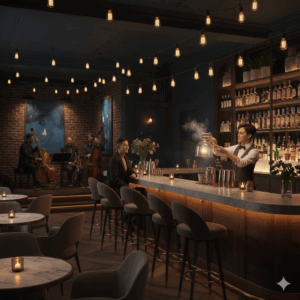
Start with one “easy entry” venue (standing bar or no-cover shot bar), then expand by vibe (mixed, men-focused, women-focused, drag, DJ).
This guide focuses on systems: access routes, typical costs, entry rules, and simple phrases that keep your night smooth.
The “gay district” in Tokyo is not a single boulevard with one uniform vibe. It is a carefully organized nightlife ecology.
Many places are inside multi-tenant buildings with small doors and short counters; the design keeps interactions close, personal, and manageable.
Instead of big crowds in one room, Ni-chome often distributes people across dozens of micro-venues, where you “belong” for one drink, then move on.
What happens inside is usually not complicated: you enter, pay a simple system (no cover, or a cover + one drink), and the staff helps you settle in.
The key service is not “luxury,” but a structured kind of social contact—conversation, music, karaoke, drag performance, and community events—packaged in small spaces that feel safe and intentional.
If you want the most direct, practical definition, Ni-chome’s local group frames the area as a place where LGBTQ+ people can be themselves and where the town is actively supported:
Official website (Japanese).
In other words: treat Ni-chome like a “night map of small rooms.” Once you understand the room-by-room system, the experience becomes simple and welcoming.
1. Where should you start in the gay district in Tokyo?

1-1. What “gay district” means in Tokyo (in real life)
The phrase “gay district in Tokyo” usually points to Shinjuku Ni-chome, a dense cluster of LGBTQ+ bars, clubs, and community-friendly hangouts.
Locally, the area is often treated as a cultural commons: people come to relax, meet friends, and move between places without needing a big plan.
The Ni-chome community group describes its mission as supporting and energizing the town as a globally known LGBTQ+ area:
Official website (Japanese).
1-2. Pick a “low-friction” first stop (then expand)
Your first stop should reduce uncertainty: simple entry rules, clear hours, and an easy-to-understand system.
AiiRO CAFE explicitly states “No Table Charge” and publishes its operating hours (open daily) on its official page:
Official website (Japanese).
If you prefer an indoor shot-bar style, EAGLE Tokyo lists “No cover charge” and “cocktails from 700yen” on its official group site:
Official website (Japanese).
1-3. A 3-step plan for your first night
Tip: Use this simple structure so you don’t overthink it.
- Warm-up in a standing bar or no-cover shot bar (learn the streets and the vibe).
- Move to a “mixed” bar if you want conversation, or a DJ/club space if you want energy.
- Finish with one last calm drink near the main streets before you head back to the station.
If you want community-style nights that connect multiple venues, the Ni-chome community group also runs event-style bar-hopping formats and publishes details (timing, ticket rules) on its official events page:
Official website (Japanese).
2. How do you access Shinjuku Ni-chome and move around?

2-1. The “gateway” station: Shinjuku-sanchome
For most visitors, Shinjuku-sanchome is the easiest base because it has multiple exits and sits right beside the Ni-chome grid.
The Tokyo Metro yard map lists many exits (including E-series exits) and nearby landmarks; it’s the simplest official reference for choosing the exit you want:
Official website (Japanese).
2-2. The calmer gateway: Shinjuku-gyoemmae
If you want a slightly calmer approach, Shinjuku-gyoemmae Station can be convenient.
Tokyo Metro provides an official exit guide for that station as well:
Official website (Japanese).
This route is useful if you want to start with a quieter dinner and then walk into Ni-chome later, rather than arriving directly into the busiest streets.
2-3. Practical navigation: think “exits and buildings,” not long walking
Ni-chome is compact, but first-timers often lose time because bars are inside small buildings and on upper floors.
The best tactic is to pick one “anchor” venue with a clearly published address and hours, then branch out.
For example, ARTY FARTY’s official access page lists its exact address (and the separate address for THE ANNEX):
Official website (Japanese).
Table 1: Access & Hours
| Start Point | Best Reference | Late-Night Hours Example | Area (JP Link) |
|---|---|---|---|
| Shinjuku-sanchome Station | Use the official exit/yard map (E exits are often convenient) | EAGLE TOKYO BLUE: 20:00–4:00 (Mon–Thu), 18:00–4:00 (Fri–Sun) | Official website (Japanese) Official website (Japanese) |
| Shinjuku-gyoemmae Station | Use the official station exit map to surface near the park side | AiiRO CAFE: open daily 18:00–24:00 (DJ nights listed on the site) | Official website (Japanese) Official website (Japanese) |
| Pick a venue “anchor” (address first) | Use official access pages (buildings + floors matter) | ARTY: 20:00–3:00 (Wed–Thu), 20:00–5:00 (Fri/Sat) | Official website (Japanese) Official website (Japanese) |
Station maps are the most reliable “ground truth.” Venue hours can change on event nights; always confirm on the official page linked in the last column.
3. What do prices, time, and entry rules look like?

3-1. The three common payment styles
Most places fit one of these styles:
- No cover / no table charge: you pay per drink and can leave anytime.
- Cover charge: a fixed fee at entry (sometimes includes a drink).
- Event door fee: common for club nights, often includes a drink ticket.
AiiRO CAFE states “No Table Charge” on its official site:
Official website (Japanese).
EAGLE Tokyo lists “No cover charge” and “cocktails from 700yen”:
Official website (Japanese).
3-2. Real price examples (so you can budget calmly)
If you want a transparent cover system, Bar Private publishes it clearly.
Expect a straightforward cover of 2,200 yen, then order drinks as you like:
Official website (Japanese).
If you want a classic “no cover” bar that is widely recognized in the district, Gold Finger’s official site states the bar opens daily at 18:00 and is no charge:
Official website (Japanese).
(Its bar/about page also advertises a first-drink price of 1000yen in certain settings:
Official website (Japanese).)
For a club-style example with explicit door pricing, AiSOTOPE LOUNGE event pages often list structured fees.
One published event example shows a door fee of ¥4,000 (with alternatives like discounts or U24 pricing on that event page):
Official website (Japanese).
3-3. Entry rules: events can include age checks and ID checks
Many everyday bars keep entry simple. However, certain organized events can request age confirmation or ID checks.
For example, Ni-chome’s community event page describes an ID check flow and states participation is for 20+ in that event format:
Official website (Japanese).
Notice: Door fees and rules can change by event night. Your safest approach is: decide your budget first, then check the official page for that venue before you go.
Table 2: Venue Types & Typical Costs
| Venue Type | Typical Cost | Time Pattern | Official (JP Link) |
|---|---|---|---|
| Standing / open-air bar (easy entry) | No table charge: ¥0 (order drinks) | Pop in for 30–90 min (editor’s note) | Official website (Japanese) |
| Shot bar (no cover) | Cocktails from 700yen + no cover | Often late hours (example until 4:00) | Official website (Japanese) |
| Mixed bar with clear cover system | Cover (charge) 2,200 yen | Comfortable for a longer sit (varies by night) | Official website (Japanese) |
| Iconic “no cover” bar | No charge stated: ¥0 (order drinks) | Opens daily from 18:00 | Official website (Japanese) |
| Club / event night (example event page) | Door example: ¥4,000 (event-specific) | Late block example: 21:00–5:00 | Official website (Japanese) |
“Typical cost” is a mix of official statements and event-page examples. If a night is event-based, treat the event page as the final pricing rule.
4. Which venue types match your vibe and comfort level?

4-1. Standing bars: fast, social, and low commitment
A standing-style venue is the easiest way to feel the neighborhood without pressure.
AiiRO CAFE describes itself as open-air and boundary-less (nationality, gender, sexuality) and publishes “Open everyday” hours on its official page:
Official website (Japanese).
Socially, this format “standardizes friendliness.” You don’t need a long introduction—people are already moving, ordering, and chatting in short cycles.
4-2. Bar ecosystems: tiny counters, strong community memory
Ni-chome is famous for small counter bars. The counter is not just furniture; it’s a social technology.
A clear “charge” system helps guests relax because the cost is known upfront.
Bar Private states its cover charge as 2,200 yen and presents itself as beginner-friendly and welcoming to a range of guests:
Official website (Japanese).
If you want a no-cover style, EAGLE Tokyo lists “No cover charge” on its official page and also publishes hours and address:
Official website (Japanese).
4-3. Clubs and event spaces: “the night becomes a program”
Clubs in Ni-chome often function like cultural programs: DJs, performance, themed nights, and ticket systems.
AiSOTOPE LOUNGE event pages show structured fee categories and time windows; one example lists door ¥4,000 and open 21:00–5:00:
Official website (Japanese).
Another example event shows a simple “first drink” format: ¥1,000 for the first drink, then normal pricing after:
Official website (Japanese).
Tip: How to choose your “best fit” in 20 seconds
- If you want easy entry: choose “no cover / no table charge.”
- If you want conversation: choose a clear cover-charge bar.
- If you want a shared highlight: choose an event page with a published door fee.
5. How do reservations, etiquette, and useful phrases work?

5-1. Reservations: usually not needed (but event pages matter)
In Ni-chome, “reservation” is often not a standard bar concept—most venues are built for quick walk-ins.
The bigger factor is whether a night is an “event night.” If it is, treat the official event page as your rulebook.
AiSOTOPE LOUNGE publishes event fee categories and entry notes directly on its event pages:
Official website (Japanese).
For community-style formats, Ni-chome’s local group also publishes ticket structure and participation steps on its official events page, including advance ticket pricing:
advance 3,000 yen and door 3,500 yen (in the listed example):
Official website (Japanese).
5-2. Etiquette: “quiet efficiency” in narrow streets
Ni-chome is dense, with many small entrances close together. The best etiquette is simple:
be polite to staff, keep your voice down outdoors, and avoid blocking doorways while you decide.
For general visitor manners in Shinjuku, the local tourism association provides an “ENJOY RESPECT” guidance page:
Official website (Japanese).
5-3. Useful Japanese phrases (simple and enough)
Table 3: Useful Phrases for Ni-chome
| Situation | Japanese | Plain English | Official (JP Link) |
|---|---|---|---|
| Say you’re new | はじめてです (Hajimete desu) | It’s my first time. | Official website (Japanese) |
| Ask about the system | システムは? (Shisutemu wa?) | What’s the charge / system? | Official website (Japanese) |
| Ask if it’s okay to enter | 入ってもいいですか? (Haitte mo ii desu ka?) | May I come in? | Official website (Japanese) |
| Ask about today’s entry rules | 今日はイベントですか? (Kyou wa ibento desu ka?) | Is there an event tonight? | Official website (Japanese) |
You don’t need perfect Japanese. A calm tone and one key sentence (“first time” + “system?”) is usually enough for staff to guide you.
Table 4: Reservation & Entry Rules (Practical Reference)
| Situation | Best Approach | Typical Rule | Official (JP Link) |
|---|---|---|---|
| Walk-in bar night | Just enter and confirm the system | Cover example: 2,200 yen (at one bar) | Official website (Japanese) |
| No-cover quick stop | Order one drink, then decide | No cover + drinks from 700yen | Official website (Japanese) |
| Club/event night | Read the event page before you go | Door example: ¥4,000 (event-specific) | Official website (Japanese) |
| Community bar-hop event | Buy advance tickets if offered | Advance 3,000 yen, door 3,500 yen (listed example) | Official website (Japanese) |
Think “official page first.” Ni-chome changes mood by day and event—checking one page can prevent most confusion.
6. Summary and Next Steps
If you’re planning a night in the gay district in Tokyo, the biggest challenge is rarely “finding a place.”
The real friction is understanding Ni-chome’s small-room systems: which venues are walk-in, which nights are event-based, what the charge includes, and which station exits help you arrive without wandering.
Shinjuku Ni-chome is dense and exciting, but it’s also a neighborhood where doors can be small, floors can be hidden, and rules can shift depending on the night.
That’s why first-timers sometimes spend more time translating pages and searching buildings than actually enjoying the atmosphere.
SoapEmpire helps you navigate that “system layer” in plain English. We organize the essentials—Shinjuku Ni-chome access, typical pricing patterns (no cover vs. cover charge vs. door-fee events), and venue types like LGBTQ bars, gay clubs, drag shows, and saunas—so you can choose based on comfort rather than guesswork.
We treat Ni-chome as a living part of Tokyo’s urban night culture: a place where social contact is structured, safe, and intentional through small venues and predictable payment rules.
Instead of pushing one “best bar,” we help you build a route that fits your schedule and budget, whether you want a relaxed first drink, a conversation-heavy counter bar, or a full DJ event night.
Our practical advantage is support. If you already know the venue you want (or you only know the vibe you want), SoapEmpire can help you confirm the right official page, understand what the system means, and avoid timing mismatches—especially on nights when clubs run special entry rules.
We also cover major city hubs across Japan, so if Tokyo is one stop on a larger trip, you can keep the same planning style in Osaka, Nagoya, or Fukuoka.
To keep planning simple, you can also read our related guides:
Tokyo red-light district guide,
How to book nightlife venues,
Osaka soapland guide.
For SoapEmpire’s official site, visit SoapEmpire.
For reservations or inquiries, please contact us via the inquiry form.
6-1. A beginner-friendly route (repeatable)
- Arrive via Shinjuku-sanchome and use the official exit map.
- Start at a venue that states no cover or no table charge.
- Add one cover-charge bar only if you want deeper conversation.
- If you want a club, read the event page first and accept the door-fee system as part of the night.
Official station exit map reference:
Official website (Japanese).
6-2. Quick checklist before you step inside
- Does the official page say “no cover” / “no table charge” / a cover amount?
- Are hours published (and do they change on event nights)?
- Do you know the building name and floor?
- If it’s an event: do you accept the door fee and entry conditions?
6-3. FAQ
Q1: Where exactly is the gay district in Tokyo?
Most people mean Shinjuku Ni-chome. Use Shinjuku-sanchome Station as your main gateway and navigate by station exits and venue addresses.
Q2: How much does a typical night out cost in Ni-chome?
Many bars are no-cover or have a clear cover charge, then you pay per drink. Club/event nights can have published door fees (often including a drink ticket) on the official event page.
Q3: Can I go solo or with non-LGBTQ friends?
Yes. Start with “easy entry” venues that state no cover/no table charge or describe themselves as welcoming and beginner-friendly, then move based on vibe.
Q4: Do I need Japanese to enjoy Ni-chome?
Not necessarily. Many places are used to international visitors. Learn two phrases—“It’s my first time” and “What’s the system?”—and you can handle most situations politely.
If you’re interested in visiting any of these places, SoapEmpire offers a 24-hour booking support service for only $10.
Just send the store name, preferred time, and your name (nickname is fine) to:
artistatakuma@icloud.com.
We’ll take care of your reservation quickly and smoothly.